

BY DR TONY M MONDA
Soul music traces its roots to traditional Blues and the Gospel music of the Black churchs in the United States of America. Many soul artists come from the South, among others, Ray Charles, who pioneered the soul music genre during the 1950s by combining blues, rhythm and blues, and gospel styles.
Popular Soul music developed in the African-American community throughout the United States in the late 1950s and early 1960s.
Most pioneers of Soul of the 1950, such as Ray Charles, Etta James, Sam Cooke, Clyde McPhatter, Little Richard, Hank Ballard and James Brown who was known as the “Godfather of Soul”, learned music performing in gospel groups in their community churches.
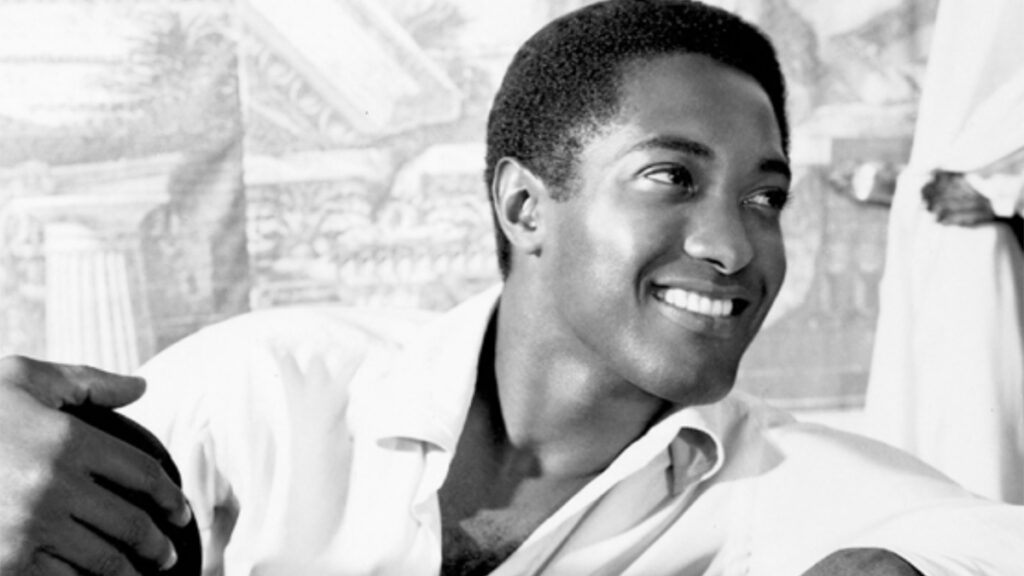
Sam Cooke, whose 1962 recording of “Bring it on Home to Me” has been described as perhaps the first record to define the soul experience. “Together with Jackie Wilson and James Brown, Cooke achieved ‘crossover’ success, especially with his 1957 hit” Reet Petite”. He even was particularly influential for his dramatic delivery and performances.
Although gospel had inspired secular Black music for a long time, the transformation of a Gospel song ‘My Jesus Means the World to Me’ into a secular ‘I Got a Woman’ in 1954 by Ray Charles, in collaboration with Ahmet Ertegum of Atlantic Records, established ‘Soul Music’ as a distinct musical genre.
‘Southern Soul’, the starting point of the genre, is named after the geographic area where it first developed, the South of the United States, where jazz, blues and rock ‘n roll also stem from. According to AllMusic, “Soul music was the result of the urbanization and commercialization of rhythm and blues in the 60s”. The Acoustic Music organization asserts: the “first clear evidence of soul music shows up with the ‘5 Royales’, an ex-gospel group that turned to R&B and in Faye Adams, whose “Shake A Hand becomes an R&B standard”. Aretha Franklin, originally a gospel singer, began to make secular recordings in 1960 and emergd as the most important female soul singer Catchy rhythms stressed by handclaps and extemporaneous body moves, are an important feature of soul music. Other characteristics are a call and response between the lead vocalist and the chorus and an especially tense vocal sound.
The style also occasionally uses musical improvisions, additions, twirls, and auxiliary sounds. Soul music reflects the African-American identity, and stresses the importance of an African-American culture. It became popular for dancing and listening, where U.S. record labels such as Mowtown, Atlantic and Stax were influential during the Civil Rights Movement in America.
Racial differences have been a prominent factor in the emergence of music genres in the United States where racial inequalities lasted into the era of recorded music. Initially Soul music was strongly linked to the racial group of African-Americans. It was viewed as a politically charged kind of music during the Civil Rights Movement, expressing the struggles of repressed and discriminated African-American people in America.
Additionally, different racial groups were targeted by different marketing programs/strategies because African-Americans also were a music buying community. initially music labels also explicitly labelled music by and for African-Americans as race music, but after a time the moniker ‘Rhythm and Blues’ was introduced for ‘Black Music’ and names such as ‘Country & Western’ was introducedfor music for rural, white people. The alignment of a music genre with racial boundaries was in part determined by well-placed individuals such as journalists.
The new-found African-American consciousness of the 1950s and 1960s, led to new styles of music that boasted pride in being Black; it emerged from the power struggle to raise Black Americans; awareness of their African ancestry and brought such a creative genre of music. The development of soul music was also closely related to changing racial boundaries, oppression and discrimination. Soul music was considered an embodiment of change for Black communities. The success of the music could, be related to changing attitudes towards race in the United States and the success of the Civil Rights Movement in pushing towards racial equality. The ‘crossover’ success of soul grew simultaneously with social changes.
In the early 1960s as soul music flourished, dominated the U.S. African-American music charts and many recordings crossed over to a young White public that gradually became interested in the music they heard on the radio.
The popularity of the genre reached its peak in 1966, when a soul record ‘You Can’t Hurry Love’ by The Supremes reached the top of the Pop Charts. This was a revolutionary moment because soul music had crossed over to a white audience and was now accessible mass audiences.
Soul also became popular around the world. Small soul scenes began popping up around the UK, in the early 1960s particular in Liverpool, which had an established African community from which artists such as Chants and Steve Aldo emerged. However, during the 1960s British soul acts were unable to connect with the mainstream market. Soul also had a direct influence on Rock music and the the music of Africa.
Around 1994, Soul music had a resurgence in the United States as Neo Soul with artists like Erykah Badu,
Angie Stone and Lauren Hill as some of the most popular female artists of the genre; a mixture of modern R&B, Hip Hop and Classic Soul. Artists such as Tony! Toni! Tone! and D’Angelo are considered to be the voice of this genre. Joss Stone, Alicia Keys and John Legend are a new generation of Neo Soul artists.
Several other subgenres and offshoots of soul music such as New Orleans Soul and Philadelphia Soul developed in relation to specific music labels.
Most people associate ‘soul music’ to Motown and its owner Berry Gordy – a production label that capitalised on the growing popularity of the genre during the 1960’s and developed its characteristic style of soul music. Southern Soul music, or more specifically Memphis Soul, is a style of soul music associated with the Stax record label in Memphis, Tennessee, whose register included soul artists such as Otis Redding and Isaac Hayes. Otis Redding was a huge success at the Monterey Pop Festival in 1967.
The growth of the soul genre has a very explicit starting point. From 1954 onwards many recordings crossed over into the Pop Charts in the U.S., Britain and elsewhere. By 1968, the soul music genre had begun to splinter.
The key subgenres of soul include the Motown style – a more pop-friendly and rhythmic style; Deep Soul and Southern Soul, driving, energetic soul styles combining R&B with southern Gospel Music sounds; Memphis Soul – a shimmering, sultry style; New Orleans Soul, which came out of the rhythm and blues style; Chicago Soul, a lighter gospel-influenced sound; Philadelphia Soul, a lush orchestral sound with doo-wop-inspired vocals; as well as Psychedelic Soul, a blend of psychedelic rock and soul music.
Dr. Tony Monda holds a PhD. in Art Theory and Philosophy and a DBA in Post-Colonial Heritage Studies. E-mail: tonym.MONDA@gmail.com
About Author

