

By Gabriel Manyati
The floodlights at Alexandra Sports Club cut through the crisp spring night air in Harare as the bassline echoed across the sports field, drawing thousands into a dense, swaying mass.
Long before the headline icons stepped onto the stage, the heavy lifting of the evening was already being driven by a single, disciplined instrumental powerhouse.
Hands thrust into the air, voices joining in chorus with melodies written decades ago, the audience was reacting not just to the memory of golden-era hits, but to the sharp, tight arrangements ringing out from the stage.
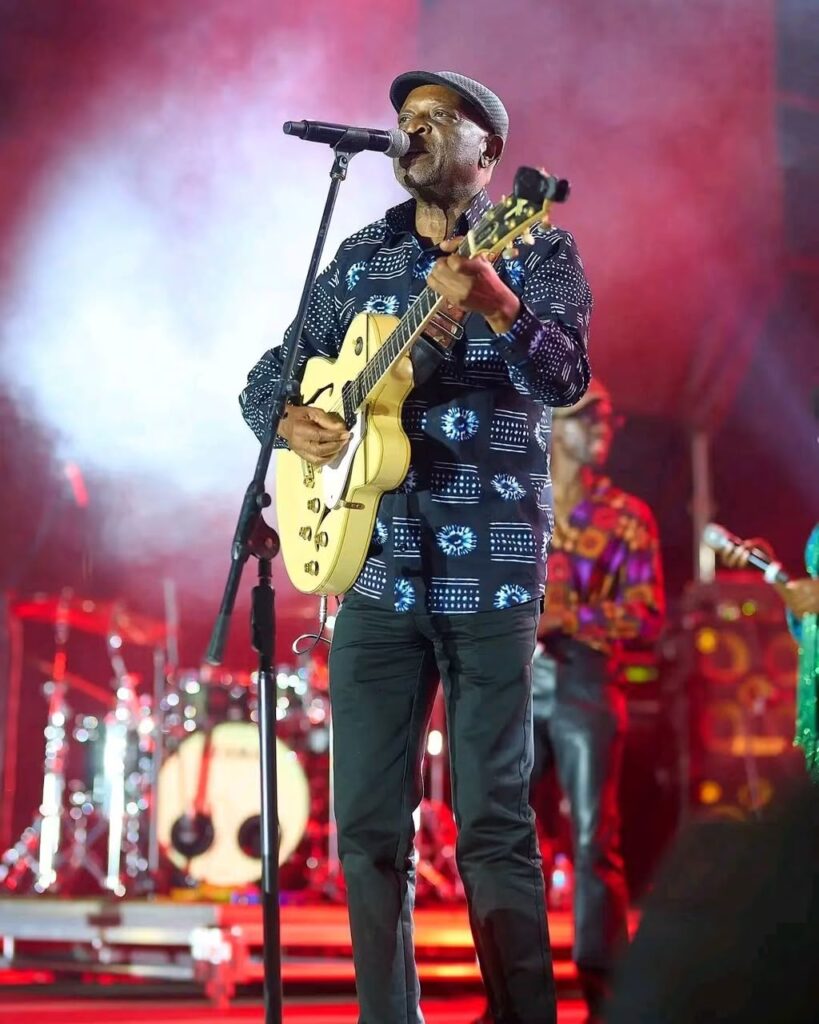
Tanga WekwaSando on stage at Ecobank Legends Night
On Saturday, 26 September 2026, the Ecobank Legends Night Africa 2.0 unfolded not merely as a star-studded retrospective, but as a live demonstration of how a contemporary ensemble can recalibrate an entire country’s musical history.
The Ecobank Legends Night began as a localised homage to Zimbabwean heritage, originally anchored around the legacy of the late icon Oliver Mtukudzi.
Over time, the initiative expanded into a broader platform celebrating the titans of southern and central African sound. The 2026 edition marked a significant leap in scale and ambition.
The lineup brought together international powerhouses alongside a formidable contingent of national treasures.
Malian legend Salif Keita and Congolese soukous veteran Yondo Sister shared the bill with local giants including Alick Macheso, Leonard Zhakata, Tanga weKwaSando, Albert Nyathi, Sandra Ndebele, Jeys Marabini, IYASA, Ivy Kombo, Cool Crooners, and Mai Patai.
Yet, binding this vast array of genres, languages, and generations together was not a recorded playback system or a loose assembly of session players, but InTotal Band.
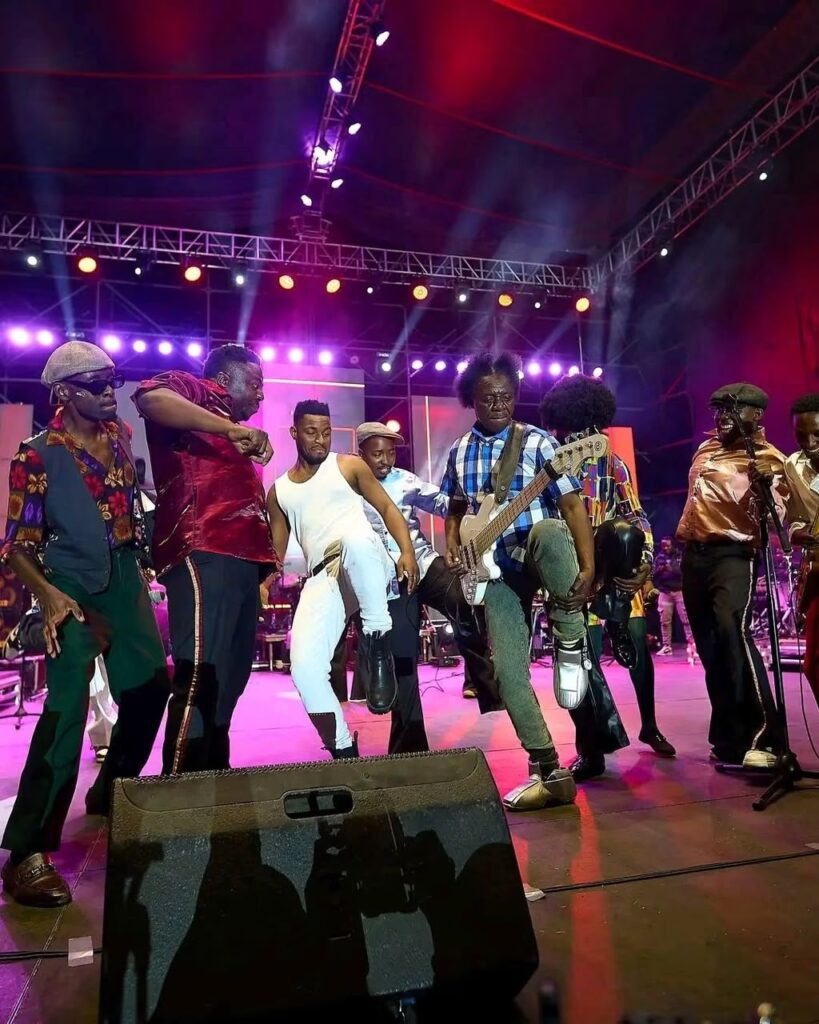
Alick Macheso on stage
Positioned at the absolute centre of the production, InTotal Band proved to be much more than an ordinary supporting act or house band.
Led by director Joseph Chinouriri, widely known as Jose Sax, the group has spent years building a reputation through meticulous interpretations and live cover renditions of classic Zimbabwean repertoire.
In doing so, they have carved out an unusual niche: serving as a vital bridge connecting older musical architects with younger, contemporary audiences who might otherwise consume these classics only through archival recordings.
The band’s structural identity has occasionally been misunderstood by the public. Clarifying the group’s leadership, veteran guitarist and producer Clive “Mono” Mukundu recently emphasised that he is not the owner of InTotal Band, but rather serves as its mentor-in-chief, while Chinouriri maintains full operational and artistic leadership as director. This mentorship structure has allowed the young outfit to combine youthful energy with seasoned professional discipline.
At Legends Night Africa 2.0, InTotal Band was deeply embedded in both the structural planning and live execution of the show.
Functioning as the primary backing engine and transitional force throughout the evening, the ensemble navigated complex shifts between sungura rhythms, Afro-jazz, pop, and traditional fusion.

InTotal Band
Their presence created a rare dynamic: a relatively young group of musicians becoming the operational vehicle through which an older generation of African legends was presented to a modern mass audience.
By re-imagining and curating classic catalogue material live on stage, the ensemble acted as living archivists of popular culture.
The credibility of the group reached an international threshold through its collaboration with Salif Keita.
The “Golden Voice of Africa,” returning to perform in Zimbabwe after an 11-year absence, publicly confirmed before the concert that he would be performing alongside InTotal Band.
Keita revealed that he had been following the young musicians’ work on social media prior to his arrival, noting their skill and adaptability.
For a young Zimbabwean outfit, anchoring the performance of an internationally revered artist of Keita’s standing highlighted their rapid rise from local venues to major continental collaborations.
However, the build-up to the event was not without public friction. The concert took place against the backdrop of an ongoing national debate regarding cover bands, intellectual property, and royalty structures.
In the weeks leading up to the show, InTotal Band’s prominence brought wider industry discussions to the fore, particularly following public commentary involving gospel singer Fungisai Zvakavapano-Mashavave and the Zimbabwe Music Rights Association (ZIMURA).
Clarifying the regulatory environment, ZIMURA noted that a US$150 cover-band license fee cited during online discussions referred specifically to a past event licensing arrangement and did not grant blanket authorisation for future commercial exploitation of artists’ copyrighted works.
The issue highlighted a fundamental industry tension: the delicate balance between younger artists paying homage to established repertoire and the legal rights of original copyright holders to receive fair remuneration when their compositions form the basis of commercial live shows.
Performing cover versions within legal frameworks is a standard global industry practice, and the discussion surrounding the concert reflected broader structural questions facing Zimbabwe’s creative sector rather than legal violations by the organisers.
Addressing the pre-concert discussion, Chinouriri acknowledged that the music industry frequently navigates debate around copyright and performance rights, but maintained that such industry discussions would not detract from the event’s primary purpose. He noted that the focus remained steadfast on celebrating African music, supporting the featured legends, and delivering a high-calibre experience for the fans.
The controversy ultimately provided a clearer lens through which to view InTotal Band’s position in the current cultural landscape.
As live music consumption shifts, younger instrumental ensembles are increasingly becoming the custodians of songs composed decades prior.
As the Legends Night brand expands its reach beyond Harare into regional markets, the role of live curation becomes critical in preventing classic Zimbabwean and regional catalogues from fading into obscurity among younger demographics and diaspora communities.
When the final notes echoed across Alexandra Sports Club and the stage lights dimmed, the broader significance of the evening remained clear.
InTotal Band demonstrated that a group starting in the cover circuit can evolve into a strategic cultural intermediary, using technical proficiency and disciplined mentorship to preserve, revitalise, and elevate an entire continent’s musical heritage.
#InTotalBand #LegendsNight2026 #SalifKeita #HarareLive #AfricanMusicHeritage
About Author

