

By Admore Mbonda in Kariba
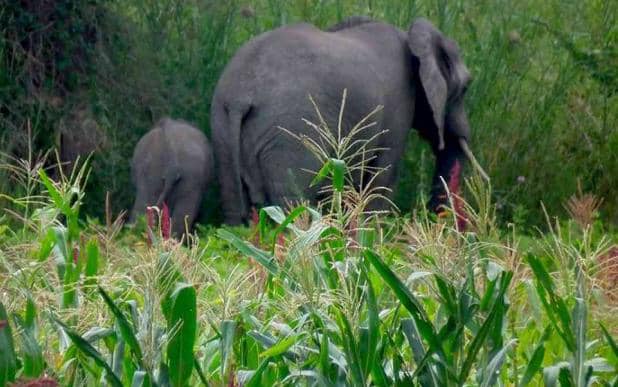
The ongoing human-wildlife conflict has intensified in Negande, Kariba, where a herd of elephants recently devastated local farmers’ maize fields, adding to the already severe challenges of a drought-stricken Zambezi Valley.
Chief Negande voiced the frustrations of his community, saying, “Those of us on the frontline of human-wildlife conflict are left counting the cost.”
The elephants trampled crops that were already struggling due to poor rainfall this season. With water resources dwindling and fruit trees failing, wildlife is increasingly encroaching on farmlands, threatening food security and livelihoods.
“The situation is dire; every lost harvest risks survival for our communities,” the chief added.
He pointed out that climate change is amplifying the drought and pushing wildlife into human settlements, leading to crop destruction and increasing the potential for human injuries and fatalities from wildlife encounters.
In response to the growing crisis, Chief Negande has called for immediate action to address the escalating conflict.
“We need effective solutions to reduce these incidents. Our people cannot afford to lose more lives or livelihoods,” he stressed.
As the community faces the combined impact of climate change and wildlife incursions, the urgency for sustainable strategies to manage human-wildlife interactions has never been clearer.
Local authorities and conservationists are urged to work closely with the affected communities to develop solutions that protect both agricultural interests and wildlife, fostering coexistence in this vulnerable ecosystem.
About Author

