By Jonathan Mbiriyamveka
From his home thousands of miles away from the land he once serenaded with songs of liberation and hope, the Lion of Zimbabwe has broken his silence.
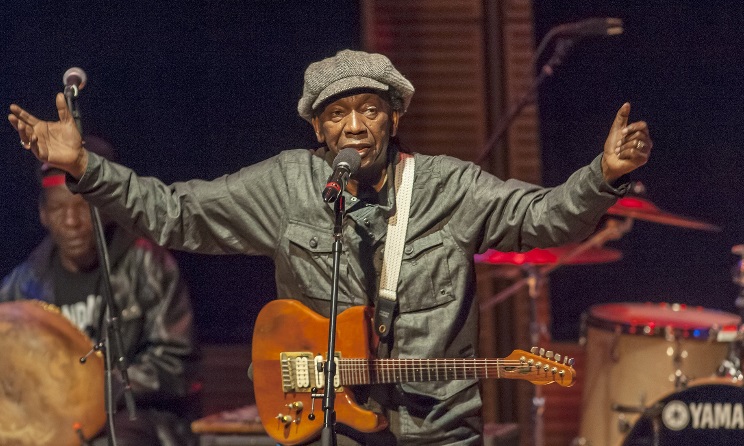
Dr Thomas Mapfumo, the legendary Chimurenga musician known to millions as Mukanya, has issued an emotional message of condolence following the Lake Kariba boat tragedy that has claimed at least 44 lives and left a nation in mourning.
“Makadiniko vagari vemuZimbabwe,” he began in a statement released this week. “When I heard the news of the Mbuyanehanda vessel capsizing on Lake Kariba, I could not sleep. 119 souls on that boat. 119 of our people.
“Our mothers, our fathers, our sisters, our brothers. Some of them were children — innocent souls whose only crime was wanting to get from one place to another.”
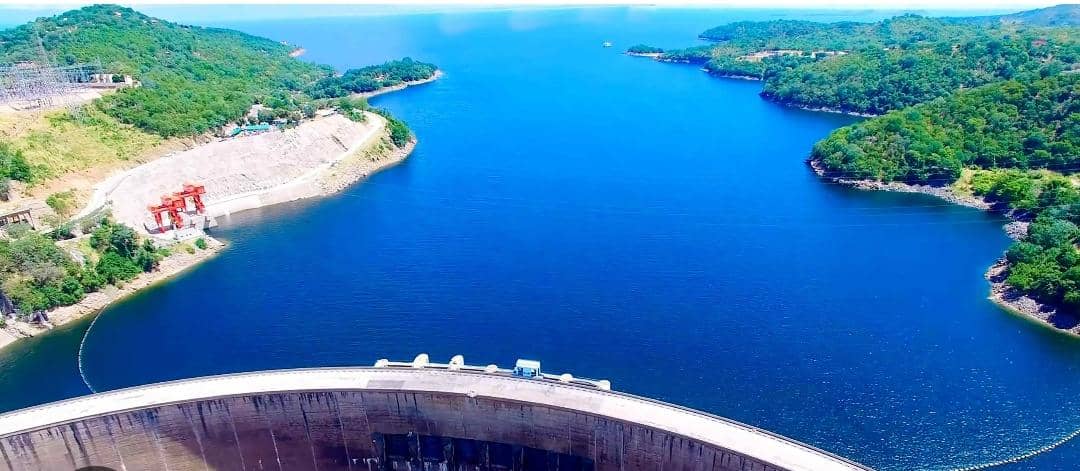
The vessel, operated by the Rural Infrastructure Development Agency (RIDA), capsized on 11 August while travelling from Kariba to Chalala.
Reports indicate it was carrying 114 adult passengers, five crew members, and an unconfirmed number of children — far exceeding its stated capacity of 90.
As of the latest update, 77 people have been rescued, while the search continues for the missing.
President Emmerson Mnangagwa has since declared the tragedy a National Disaster, acknowledging “serious deficiencies” in the country’s maritime capabilities.
‘This Is Not About Politics’
In a message that deliberately set aside his long-standing political differences with the government, Mukanya extended his condolences directly to President Mnangagwa and the nation.
“I also want to send my message to His Excellency President Emmerson Mnangagwa and the Government of Zimbabwe,” he said. “We may have our political differences, and everyone knows I have never been shy to speak my mind. But this is not about politics. This is about humanity.”
It was a notable shift for the musician who has lived in exile in the United States for two decades, and who was once imprisoned by the Rhodesian government for songs that openly called for the overthrow of the regime.
Mapfumo has been an outspoken critic of successive governments, but the Kariba tragedy, he made clear, transcends political divides.
Saluting the Rescuers
Known for his advocacy for the voiceless, Mapfumo also turned his attention to the rescue teams working in difficult conditions on the lake.
“To the rescue teams — the Zimbabwe Republic Police Sub-Aqua Unit, the Zimbabwe National Army Boat Squadron, and all those who are out there on that lake searching for our people — I salute you,” he said. “You are working in difficult conditions, and you are doing it because that is what Zimbabweans do. We look after each other.”
He also thanked the Matusadonha Conservation Trust for deploying a helicopter to support aerial search and rescue operations.
But the Lion of Zimbabwe did not shy away from uncomfortable questions.
“We must ask ourselves how this happened,” he said. “119 people on one vessel? On a lake like Kariba? These questions must be answered.
“Not today, perhaps. Not while the bodies are still being pulled from the water. But eventually, we must ask. And we must get answers.”
His call echoes growing public demands for accountability, with local Member of Parliament Mutsa Murombedzi also raising “very hard questions that require honest answers”.
Others, like public speaker Joshua Maponga, have framed the tragedy as “a spiritual and governance failure rooted in the country’s detachment from ancestral systems”.
A Message to Survivors
To those who survived, Mapfumo offered words of compassion.
“I cannot imagine what you have gone through. The cold water, the fear, the loss. I pray for your healing. I pray for your strength,” he said.
And to the families of the missing, he held out hope. “To those who are still missing — we are still praying for you. We are still hoping.”
The man whose voice accompanied Zimbabwe’s liberation struggle and whose music continued to challenge power long after independence made a sobering declaration.
“Today, I do not sing. Today, I mourn. Today, I send my love to the families, to the nation, to every Zimbabwean who is crying for this loss,” he said.
For Mapfumo, music has always been a vehicle for political and social commentary, earning him comparisons to Bob Marley.
But the Kariba tragedy, he suggested, demanded a different response — one of silence and shared grief.
As search operations continue and families await news of their loved ones, Mapfumo’s message serves as a reminder of the enduring bond between a musician and his homeland, even from exile.
“I am sitting here in exile, thousands of miles away, but Zimbabwe is bleeding, and I feel every drop,” he said. “Zimbabwe is in my blood. It is in my songs. It is in my soul.”
Concluding his message, he urged the nation to unity: “To all Zimbabweans — let us be strong. Let us be united. Let us stand with the families in this time of grief.”
As the nation grapples with its worst maritime disaster in recent memory, the Lion of Zimbabwe has added his voice to the chorus of mourners — proving that even from afar, some bonds cannot be broken.
About Author