

By Admore Mbonda In Kariba
Nyabira– As the world grapples with the severe effects of climate change including droughts, cyclones, and rising global temperatures—clean and sustainable energy sources have emerged as crucial solutions.
The recent commissioning of the 25 MW Centragrid Solar Power Plant in Nyabira marks a significant step towards this goal, with plans to expand its capacity to 100 MW in the near future.
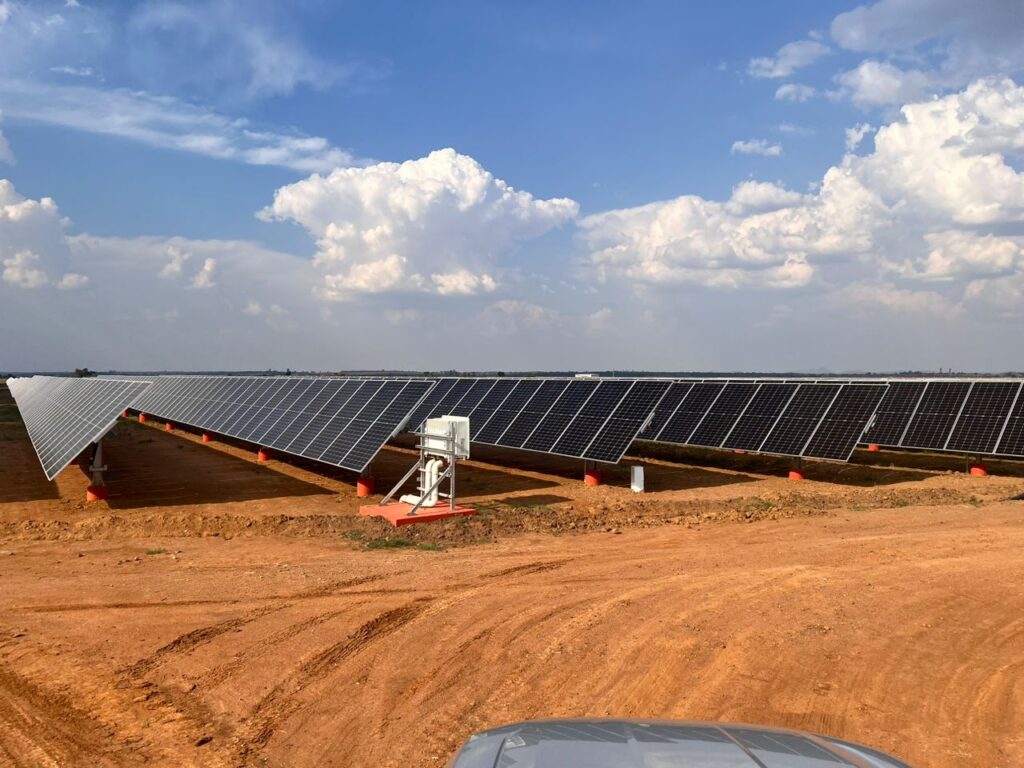
In Zimbabwe, the transition from traditional thermal energy to solar power is gaining momentum.
The Centragrid Solar Power Plant, which began operations last month, is designed to contribute 25 MW to the national grid. Spanning 45 hectares, the plant employs advanced solar panel technology that allows the panels to track the sun’s movement, optimizing energy production throughout the day.
The Plant Manager,Engineer Tariro Mukoma emphasized the project’s importance: “As an Independent Power Producer (IPP), Centragrid is making a significant contribution to the electricity demand in Zimbabwe while also creating employment opportunities in the region. This is a pivotal development for our energy sector.”
The Zimbabwean government has recognized the significance of this project, urging private investors to explore opportunities in the green energy sector.Minister of State for Mashonaland West, Marian Chombo stated, “Centragrid’s expansion to 100 MW will not only enhance our energy capacity but also stimulate economic growth, as energy is a key driver of development.”
However, the country still faces a substantial energy shortfall. Zimbabwe requires approximately 2,500 MW of electricity daily but currently generates only about 800 MW.
This deficit is largely due to low production levels at the Kariba Hydro Power Station and the inactivity of several smaller thermal stations, such as Munyati and Harare. The resulting load shedding has led to frustration among businesses and consumers alike.
In light of these challenges, the expansion of the Centragrid Solar Power Plant represents a beacon of hope.
With its potential to significantly increase electricity generation, it could help alleviate the ongoing power crisis and pave the way for a more sustainable energy future in Zimbabwe.
As the nation continues to focus on renewable energy initiatives, the success of projects like Centragrid could set a precedent for similar ventures across the region, fostering a cleaner and more resilient energy landscape for years to come.

About Author

