

BY DR TONY M MONDA
In China, where betting records more than 3000 years old have been found, the first known bet dates from 2300 BC. Gambling houses were widespread in the first millennium BCE, and betting was common.
Playing cards first appeared in China in the 9 th Century CE, thanks to the invention of paper. But in Hindu literature is where we find the first written rules on gambling.
Lotto games and Dominoes appeared in China as early as the 10th century.
Poker, a popular card game associated with gambling, derives from the Persian (now Iran), game As-Nas, dating back to the 17th Century.
Clearly, in all cultures, from east to west and north to south, there has been a long and strong tradition of gambling and betting activities.
In Egypt, there are visual references of the pharaohs and their courts playing ‘Senet’, a favorite pastime.
The image of Sennedyem TT1 playing ‘Senet’ with his wife, depicted on the wall of his tomb is the oldest known image of the affable side of man. Here, the ‘Senet’ was a game similar to Domino, which also appears on the wall in the burial pyramid of Queen Nefertiti, wife of Ramses III. In fact, many sub-Saharan archaeo-historians attribute an African provenance to the modern Dominoes
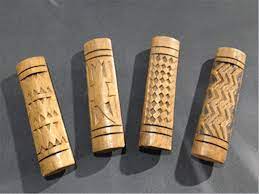
African archaeologists have often remarked on the similarity between dominoes and Gambling Hakata – the Shona Korekore divining rods found in the ancient city of Zimbabwe and which are still used today by traditional shamans, diviners and healers. They are usually made of hardwood, ivory, bones or shells, and used to foretell the future and guide people in their daily life – similar to Tarot reading.
Gaming is not new to indigenous Zimbabwean people either. Gaming and betting were a tradition in ancient Zimbabwe. Both archaeology and cultural material attest to this fact. Indeed orature has it that games were royal activities played by the elite; sentinels were also known to play games and betting to pass the time whilst on guard duty.
Tsoro is a pre-historic game invented by Iron Age hunter/gatherers. Traces of the game can still be found indented on some rocky granite outcrops along the Great Dyke and near some sites of ancient ruins in Khami, Njerere, Nalitale, Diana’s Vow, Mutoko ruins, and an ancient site known as Nhare reDare, as well as sites in Matobos and Hwange. This illustrates that games were a past time in existence perhaps even earlier than the construction of Great Zimbabwe in 11 th century.
Card games and their rules became more widespread with the invention of printing around 1440.
Besides playing with dices and cards, many other gaming options are available to the enthusiast.
However, like any behavior involving variation in brain chemistry, compulsive gambling can become an addiction with all the negative consequences in a person’s life. Gamblers often play again to try to win back money they have lost, and some gamble to relieve feelings of helplessness and anxiety.
Betting on team sports, once regarded as a luxury industry exclusive to royalty, noblemen and gentry has become an important service industry accessible to all classes in many countries today, including Zimbabwe where it has become one of the most popular forms of gambling prevalent among young people mainly due to the high rate of unemployment.
In Zimbabwe where betting and gambling have been legalized since 2000, gambling has become the new form of informal employment. Anyone walking down the streets of Harare’s CBD will notice a proliferation of sports betting malls, gambling sports bars, lotto and scratch card windows, on-line betting cafes, full of hopeful punters trying to make ends meet. The most popular sportsbook among the Zimbabwean punter is ZimBet with betting shops throughout the country.
In addition to organized sports betting, both legal and illegal, there are many side-betting games played by casual groups of spectators. One of the most widespread forms of gambling involves betting on greyhound or horse racing – considered the ‘Sport of Kings’. Horse racing is one of the oldest forms of gambling in Zimbabwe, introduced with the arrival of the Pioneer Column in 1890, and remained a very popular sport amongst the elite white community.
Today, Zimbabwe is one of the few African countries to have race-tracks. Moreover, horse racing is one of the few forms of gambling that is legal throughout most of the world.
What is interesting about horse racing in Zimbabwe today is that it attracts all social classes, from the rich to the poor. Because of its popularity different horse racing tournaments are organized, such as the favourites Castle Tankard Race, July Handicap and the OK Grand Challenge which are family sporting events.
Every day the gambling and betting industry continues to grow worldwide, with large amounts of money increasingly moving around the world. While almost any game can be played for money, and any game typically played for money can also be played for fun.
Casinos are another popular form of gambling that offer a great selection of Classic table games such as roulette, poker and blackjack, as well as video games and slot machine games.
The first known casino was il Ridotto in Venice, Italy, which started operating in 1638. In Zimbabwe there are more than 20 casinos located throughout the main holiday resorts and major cities.
Harare, the capital, is home to 5 casinos. The Regency Casino located at the Rainbow Towers Hotel in Harare, is the biggest and most popular casino in Zimbabwe. Here, players can choose from any of the 160 slot machines and 12 tables for various games.
Many betting systems have been created in an attempt to "beat the house" but no system can make a mathematically unprofitable bet in terms of expected value profitable over time. From Hakata to electronic betting, has gambling become part of our indigenous psyche?
Dr. Tony Monda holds a PhD. In Art Theory and Philosophy and a DBA in Post-Colonial Heritage Studies. E-mail: tonym.MONDA@gmail.com
About Author

