By Jonathan Mbiriyamveka
They came to Nyanga with dreams of winning.
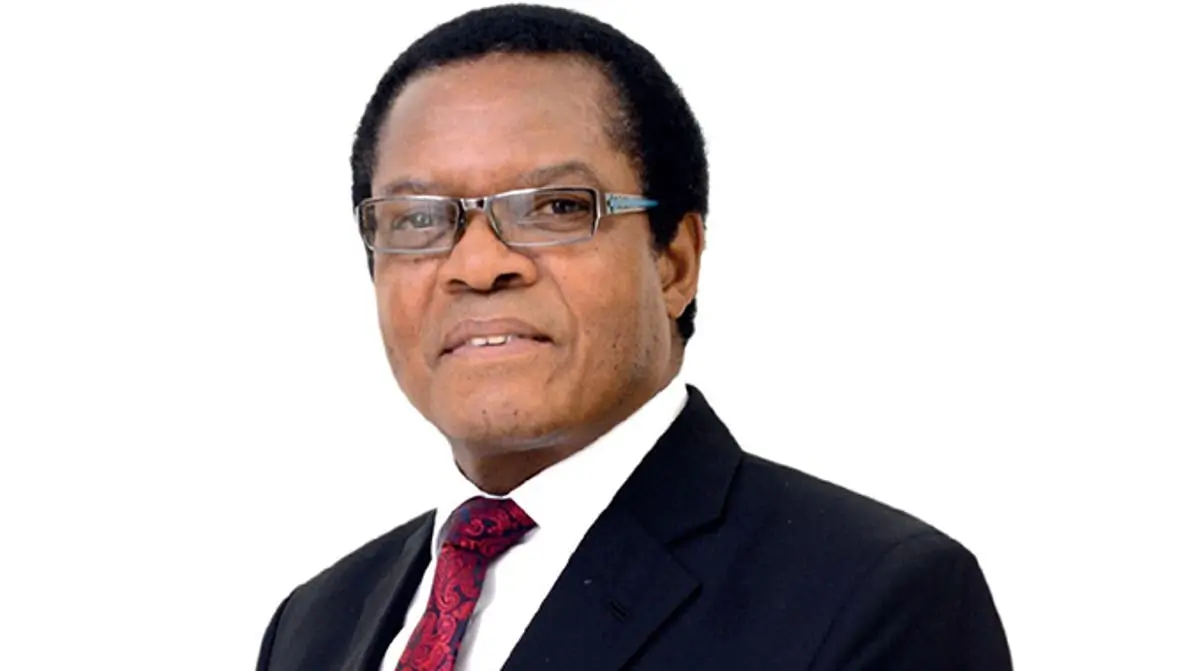
But POTRAZ Director General Dr. Gift Machengete had a message for those who would walk away empty-handed from the AI for Impact Challenge Awards Ceremony: history remembers not the elections you lose, but what you eventually become.
In a closing address that drew on one of history’s most remarkable stories of perseverance, the POTRAZ chief took the assembled innovators — winners and non-winners alike — on a journey through the life of Abraham Lincoln.
“I am reminded of a man who, in 1831, saw his business fail,” Dr. Machengete recounted. “In 1832, he lost his first bid for public office. In 1835, tragedy struck when the woman he loved passed away. In 1836, overwhelmed by grief, he suffered a nervous breakdown.”
The litany of setbacks continued: in 1843, Lincoln failed to secure his party’s nomination for Congress. In 1855, he lost the election for the United States Senate. In 1856, he failed to win his party’s nomination for Vice President. In 1858, he lost the Senate race once again.
“Many people would have given up,” Dr. Machengete observed. But Lincoln didn’t. In 1860, he was elected the 16th President of the United States of America.
The Lincoln story was not an aside — it was the core of Dr. Machengete’s message to the 60 innovators who had gathered in Nyanga for the intensive AI bootcamp.
The AI for Impact Challenge had received 738 proposals from across Zimbabwe, with only 60 selected for the programme.
Of those, only a fraction would receive awards and move on to the next phase of commercialization.
“A special word goes to those whose names may not be called this afternoon,” Dr. Machengete said. “Remember innovation is not measured by one competition or one award.
“It is measured by the courage to keep solving problems, even when success does not come immediately.”
The message echoed a broader philosophy that has animated Zimbabwe’s AI strategy from the start.
The strategy, launched by President Mnangagwa in March 2026, is anchored in the philosophy of “Nyika inovakwa nevene vayo” — a nation is built by its own citizens.
The government has made clear that Zimbabwe intends not merely to consume global AI technologies, but to become an active creator of context-driven, home-grown solutions.
The AI for Impact Challenge is part of that vision. The 60 innovators who attended the Nyanga bootcamp represented the cream of a growing AI community in Zimbabwe.
Recent surveys show that 31 percent of internet users are now using AI tools, with Meta AI the most popular platform (53.7%), followed by ChatGPT (29.1%).
Education and learning accounted for 91.5 percent of AI use, making it the leading application of the technology among Zimbabweans.
But Dr. Machengete’s message was about more than the winners. It was about sustaining the innovation ecosystem itself.
Innovation, he reminded the gathering, is not measured by a single competition or a single award.
It is measured by the courage to keep solving problems, even when success does not come immediately.
“History does not remember Abraham Lincoln for the elections he lost, the business that failed or the hardships he endured,” Dr. Machengete concluded. “History remembers him for what he eventually became.”
The message resonated beyond the award ceremony. The AI for Impact Challenge is designed to create a pipeline of practical solutions capable of progressing towards deployment and real-world impact.
The most promising projects will now progress to the next phase of mentorship, testing and commercialisation, with access to up to US$80,000 in grant funding.
But the Director General’s words acknowledged a deeper truth: not every innovator will win. Not every project will secure funding. But every innovator who persists is contributing to Zimbabwe’s long-term digital future.
“History will remember not the awards we gave today,” Dr. Machengete said, “but what we — all of us — build together in the years ahead.”
For the innovators who walked away without an award, the message was clear: the failure was not the end. It was, as Lincoln himself might have said, just another step on a longer journey.
About Author