By Jonathan Mbiriyamveka
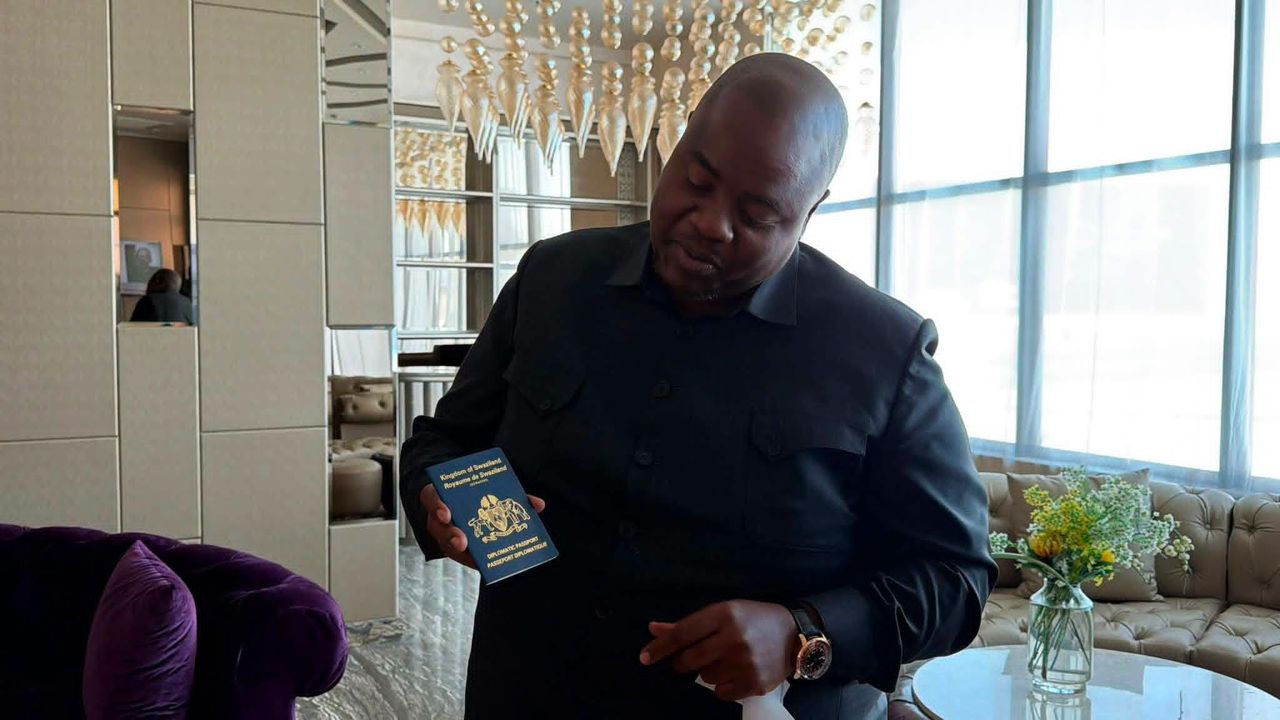
In a country where economic volatility has eroded savings and frayed public confidence, few figures divide opinion as sharply as Wicknell Chivayo.
To some, he is a symbol of audacious generosity—a businessman who redistributes wealth quickly and publicly.
To others, he represents the blurred lines between commerce, politics and spectacle.
But this week, the self-styled Sir Wicknell may have just rewritten his own narrative.
By securing legendary Chimurenga musician Thomas “Mukanya” Mapfumo for a record-breaking US$1 million performance deal, Chivayo has positioned himself not as a political benefactor, but as a cultural nation-builder—a man willing to pay the ultimate price to honour a living legend .
From Controversy to Cultural Patron
Chivayo’s journey to this moment has been anything but smooth. Born in 1982 in the mining town of Bindura, he left formal education early, entering small-scale trading before moving into construction and later energy.
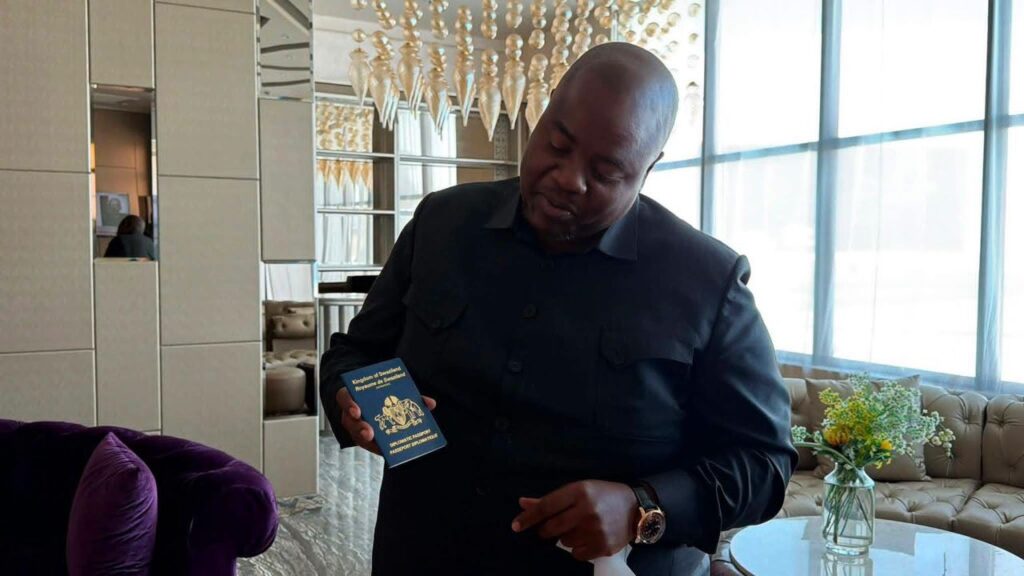
His rise to national prominence came through high-profile contracts with the state-owned Zimbabwe Power Company—projects that brought both commercial attention and legal controversy .
Allegations of corruption have followed elements of his business career, accusations he has denied, arguing that his trajectory reflects entrepreneurial risk-taking rather than impropriety .
In 2004, he served time at Chikurubi Maximum Security Prison for fraud. More recently, he faced scrutiny from the Zimbabwe Anti-Corruption Commission over his unexplained wealth, prompting an irate response in which he declared: “I have not committed any crime. I know in your eyes, everyone with wealth is a thief” .
Yet despite—or perhaps because of—this contested backdrop, Chivayo’s philanthropic phase has accelerated dramatically . Over the past few years, his donations have become a recurring feature of Zimbabwe’s social landscape.
Luxury vehicles handed over to musicians. Bundles of US dollars presented to churches. Scholarships dropped on unsuspecting beneficiaries on a whim .
Now, with the Mapfumo deal, he has moved from philanthropy to legacy-building.
A Record-Breaking Gesture
The numbers are staggering: US$500,000 per show, making Mapfumo the highest-paid singer in Zimbabwe’s history . But for Chivayo, this was never just about money.
“Spreading LOVE will always WIN over negativity, HATRED and the endless SENSELESS conspiracy theories that seek to divide rather than unite us,” Chivayo announced on Facebook .
“I am PLEASED to announce that I will WHOLEHEARTEDLY honour my commitment by paying a record-breaking US$1 MILLION for these two shows.”
The businessman was explicit about his motivations: “This is my small way of thanking you for your IMMENSE contribution to Zimbabwe’s music and arts industry over the years, and, more importantly, for the INSPIRATION your music provided during the LIBERATION struggle that brought about our historic and precious INDEPENDENCE” .
He added: “Your music has EDUCATED, inspired, UNITED and comforted generations of Zimbabweans, and your legacy will continue to live on for many years to come” .
A Different Kind of Invitation
Notably, Chivayo’s offer came with no political strings attached—a sharp contrast to the 2025 offer Mapfumo refused, which reportedly came with a condition to apologise to President Mnangagwa . This time, the invitation was pure celebration.
Chivayo also extended a personal welcome: “As soon as our house KUMUSHA, ku GANDAMI is complete towards the end of November or by MID DECEMBER, we shall also have the greatest honour of welcoming you to KUGARA HUDA ESTATE ku GANDAMI ku WILTSHIRE for our housewarming celebrations. It will be a truly SPECIAL occasion to host a living legend whose music has become part of Zimbabwe’s history and identity” .
For a man who spent years in exile, such gestures carry weight. Mapfumo is not just being paid—he is being welcomed. Not just as a performer, but as a father figure, an elder, a keeper of the nation’s soul .
The Redemption Narrative
Chivayo’s ability to maintain working relationships across political transitions has been one of the more intriguing dimensions of his public life.
He was photographed alongside former president Robert Mugabe during the latter’s long tenure, and has since cultivated visible ties with President Emmerson Mnangagwa .
He has also been photographed with several African heads of state, including leaders from Malawi, Kenya, Uganda, and Tanzania .
Supporters interpret this as evidence of adaptability and a focus on business rather than ideology. Critics suggest it reflects the structural closeness of commerce and state power in Zimbabwe .
But the Mapfumo deal may represent something different: a shift from political patronage to cultural stewardship.
By honouring a musician who has spent decades critiquing power—including the very establishment Chivayo is associated with—the businessman is signalling a willingness to transcend politics in favour of legacy .
A Figure of Contradictions
Chivayo embodies paradox. He displays luxury cars online while quietly paying hospital bills for cancer patients. He is praised as a benefactor of churches and artists while facing scrutiny over alleged corruption .
“What is beyond dispute is that Chivayo is unmoved by what people say about him and his wealth,” one profile noted . His model of giving is personal, rapid, and highly visible—funds frequently delivered directly to recipients, often in cash .
In Harare’s Mbare suburb, he delivered US$200,000 and a vehicle to a struggling church congregation. In Chimanimani, following severe flooding, he pledged US$1 million in relief assistance.
Beyond headline-grabbing moments, he has financed boreholes in drought-prone rural districts, funded classroom blocks, and supported women-led cooperatives with seed capital .
To supporters, the speed of intervention is the point. To critics, the absence of institutional oversight is the concern .
What This Means for Zimbabwe
Chivayo’s gesture has done what years of political debate could not: bring Mukanya back to Zimbabwean soil.
It sends a powerful message—that the private sector can play a role in honouring cultural icons in ways that the state may not.
Whether history ultimately casts Chivayo as a transformational philanthropist, a populist showman, or a hybrid of both remains uncertain . But for now, tangible outcomes are visible.
A legend is returning home. A nation is celebrating. And a businessman who once divided opinion has, for a moment, united a country in anticipation.
As Chivayo himself put it: “I am not rich because I have money. I am rich because I give”.
This week, that giving has rewritten his story.
About Author