

By Jonathan Mbiriyamveka
MAPHISA — On a dusty Friday morning in Matobo District, something remarkable happened. The kind of thing that, for years, felt like a distant dream for the children of Mahetshe Secondary School.
President Mnangagwa officially commissioned a modern science laboratory and upgraded classrooms at the school — a moment that pupils, parents, teachers, and community leaders say will change lives for generations.
For too long, bright young minds in this remote corner of Zimbabwe were held back not by a lack of talent, but by a lack of tools.

No internet. No laptops. No laboratory. Science subjects felt like a secret the rest of the world was allowed to know — but not them.
That story is now being rewritten.
Through the President’s Legacy Projects, Mahetshe Secondary is set to become one of the district’s top schools for sciences — a place where future innovators, doctors, and chemical engineers can take their first real steps, rooted in the country’s Heritage-based education.
The occasion was even more special: it unfolded during Zimbabwe’s 46th Independence Celebrations Children’s Party at the school. Laughter and song filled the air, but so did a quieter emotion — hope.
‘Seeing is believing’
Deputy Minister of Primary and Secondary Education, Honourable Angeline Gata, stood before the crowd, her voice thick with pride.
“There was really quite low uptake of science subjects and A Level schools,” she admitted. “But in this era — as we promote Vision 2030, human capacity development, STEM — this is a welcome development.”
She gestured toward the new buildings, her eyes sweeping across what used to be barren ground.
“Those who know this place… we only had two blocks. Now look — over ten new blocks. This is leaving no place and no one behind.”
For the children listening, the message was simple: you matter. Your dreams matter.
“This will give birth to more scientists, more students wanting to take up science subjects,” Gata added. “You really can’t learn what you don’t know — because seeing is believing.”
She described the laboratory as a “tangible miracle” — one made possible not just by government, but by partners and well-wishers who refuse to let any child be forgotten.
‘If you can’t imagine it, you can’t be it’
Nearby, Sicelo Dube — known widely as the “Stem Lady” — smiled as children peeked through the lab windows. As director of Elevate Trust, she has made it her life’s work to ensure no student is left behind in STEM education.
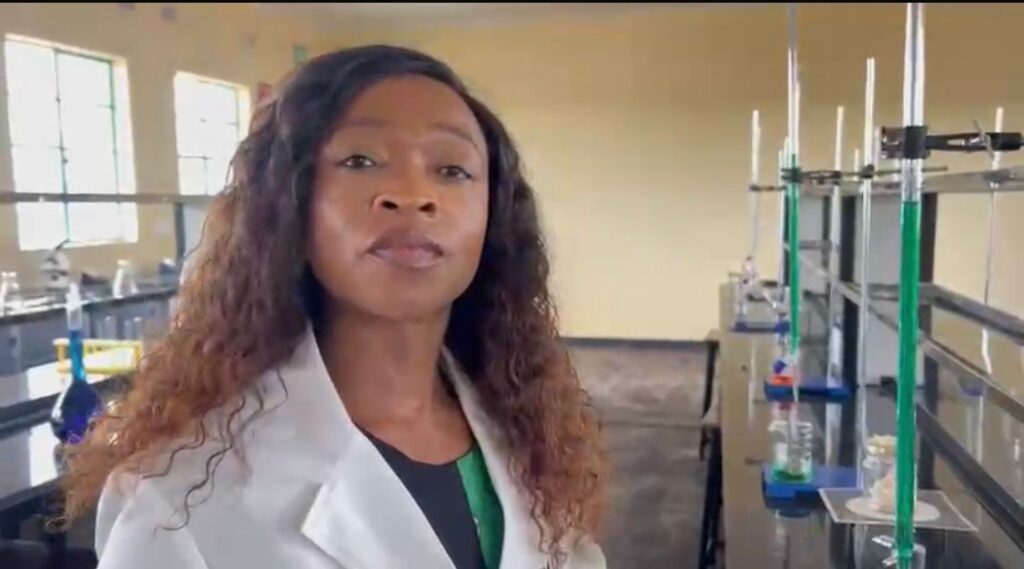
STEM Lady
Her organization’s project, STEM Kumusha Emakhaya (STEM back to the rural homes), helped turn this day from a prayer into reality.
“This school was just a school with three blocks — no laboratory,” Dube said softly. “What happened today is testament to dreams coming true, to prayers being answered.”
She paused, watching a group of girls press their faces to the glass.
“Science subjects will go emakhaya,” she said. “Every child will have a fair chance. There will be doctors from here. Chemical engineers from here. Because now they can experiment.”
Then came words that seemed to hang in the air long after she spoke:
“If you can’t imagine it, you can’t be it. Now — we have chemistry majors in this school.”
For the children of Mahetshe, imagination finally has a place to live.
About Author

