By Jonathan Mbiriyamveka
HARARE – The liberation struggle that birthed modern Zimbabwe is being reborn in Africa’s Sahel region, with a new generation of leaders facing the same accusations, the same sanctions, and the same attempts at isolation as their predecessors, Pan-African activist Cde Nathalie Yamb declared on Friday.
Delivering the inaugural INSTAK @ 10 Public Lecture at the Heritage Village in Liberation City, Yamb drew a direct line from Africa’s founding liberation icons to the military leaders currently governing Burkina Faso, Niger and Mali—and warned that the continent cannot afford to stand by while they fight alone.
“These are the Robert Mugabe’s, the Julius Nyerere’s, the Kenneth Kaunda’s, the Samora Machel’s of our generation,” Yamb told a packed audience of diplomats, academics, and Pan-Africanists.

From left: Cde Nathalie Yamb, Baffour Ankomah, Ambassador Arikana Chihombori and Ambassador Kwame Muzawazi
“They are making the same historic break with the old order. They are facing the same accusations. They are facing the same sanctions. They are facing the same attempts of isolation.”
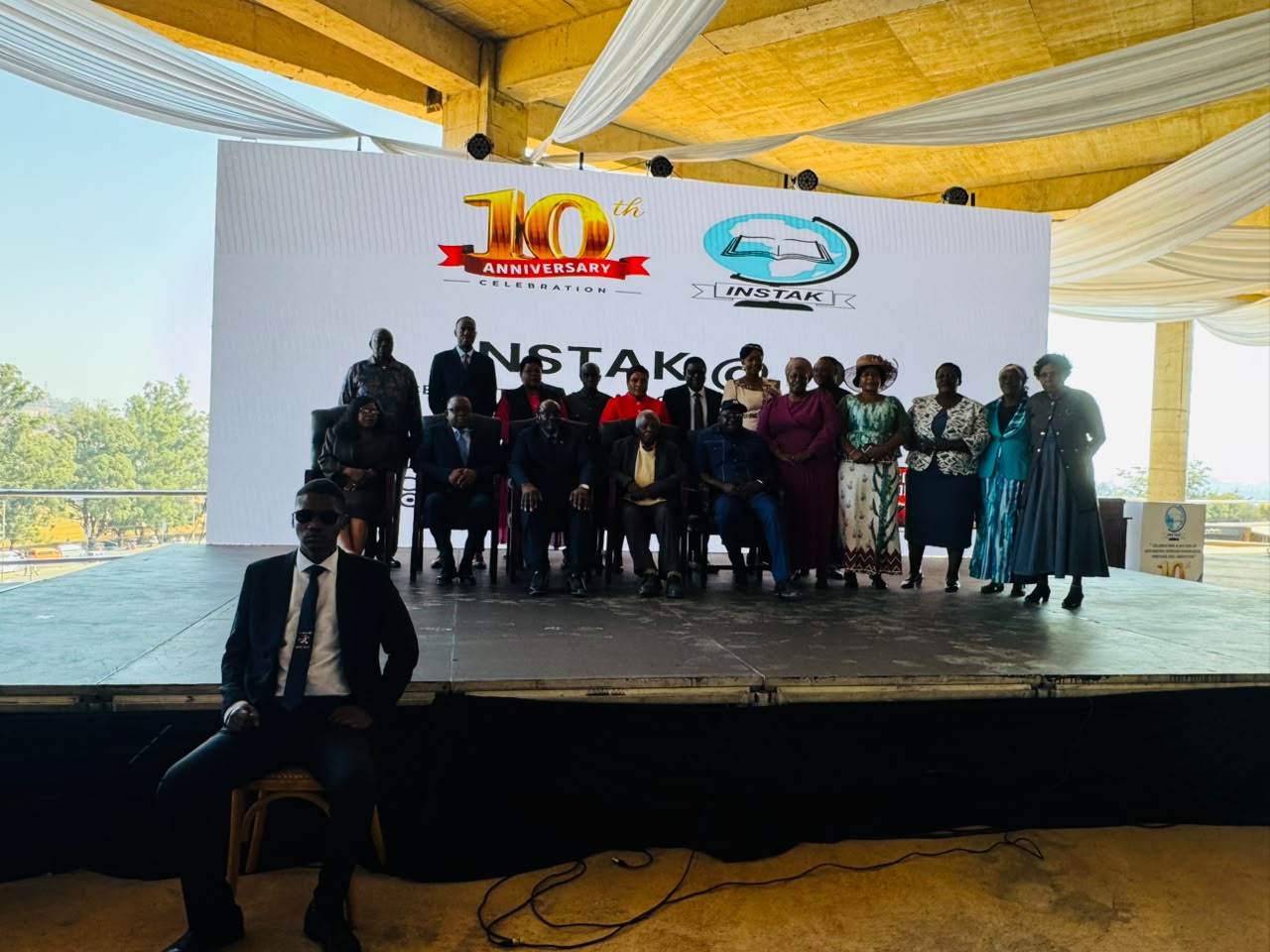
The lecture, part of the Institute of African Knowledge’s (INSTAK) 10th anniversary celebrations, was headlined by Yamb, a diplomat and activist who serves as Special Advisor to Niger’s transitional President.
Her address cut to the heart of Africa’s contemporary geopolitical crisis, framing the Sahel’s rupture with France as the latest chapter in a five-century struggle against colonial domination.
Yamb named Captain Ibrahim Traoré of Burkina Faso, General Abdourahamane Tiani of Niger, and General Assimi Goïta of Mali as the standard-bearers of this new wave—leaders who have suspended elections, broken military agreements with France, and pursued closer ties with Russia.
“And they embody the same refusal to keep peace,” Yamb said, using the phrase as a deliberate inversion of Pax Africana—the peace that Africa has been told to accept on Western terms.
The activist catalogued the mechanisms of neo-colonial control that the Sahel leaders are challenging: currency dominance, military bases, contracting monopolies, educational curricula written in Paris, and the political engineering of African governments. She argued that colonialism had never truly ended—it had merely “changed its form.”
But Yamb also issued a stark warning to the rest of Africa. Three landlocked, sanctioned states, she said, cannot hold the line alone against Western governments, the IMF, the World Bank, the UN system, global finance, dominant media and digital platforms.
“We don’t,” she said simply—a call to solidarity that hung heavy in the room.
The response from the rest of the continent, she argued, has been uneven. While Burkina Faso, Niger, and Mali have formed the Alliance of Sahel States and withdrawn from ECOWAS, other African nations have been slow to offer practical solidarity.
“What I want to tell you today is this: their story didn’t end with them. It is continuing right before our very own eyes, carried by new names,” Yamb said, referencing the legacies of Lumumba and Sankara.
Her personal story underscores the costs of such advocacy. Yamb was arrested, detained, and deported from Côte d’Ivoire after a speech in Sochi—expelled, she said, on the instruction of French President Emmanuel Macron. She is now sanctioned by the European Union, with bank accounts frozen and movement restricted.
Yet she continues her activism undeterred, serving on the steering committee of Burkina Faso’s revived Institute of Black Peoples—Thomas Sankara’s project from the 1980s, abandoned after his assassination and brought back to life this year.
Yamb closed with a vision of Pan-Africanism that is no longer a slogan, but a structure.
“Pan-Africanism is not an end in itself,” she said. “Its purpose is dignity, it’s development, and it’s ensuring that every African child inherits a continent that belongs first and foremost to Africans and that first and foremost enriches Africans.”
About Author