By Jonathan Mbiriyamveka
HARARE – Africa has militarised its physical borders, but its intellectual frontiers remain wide open—and that is a crisis requiring immediate action, INSTAK Chief Executive Officer Ambassador Kwame Muzawazi declared on Friday.
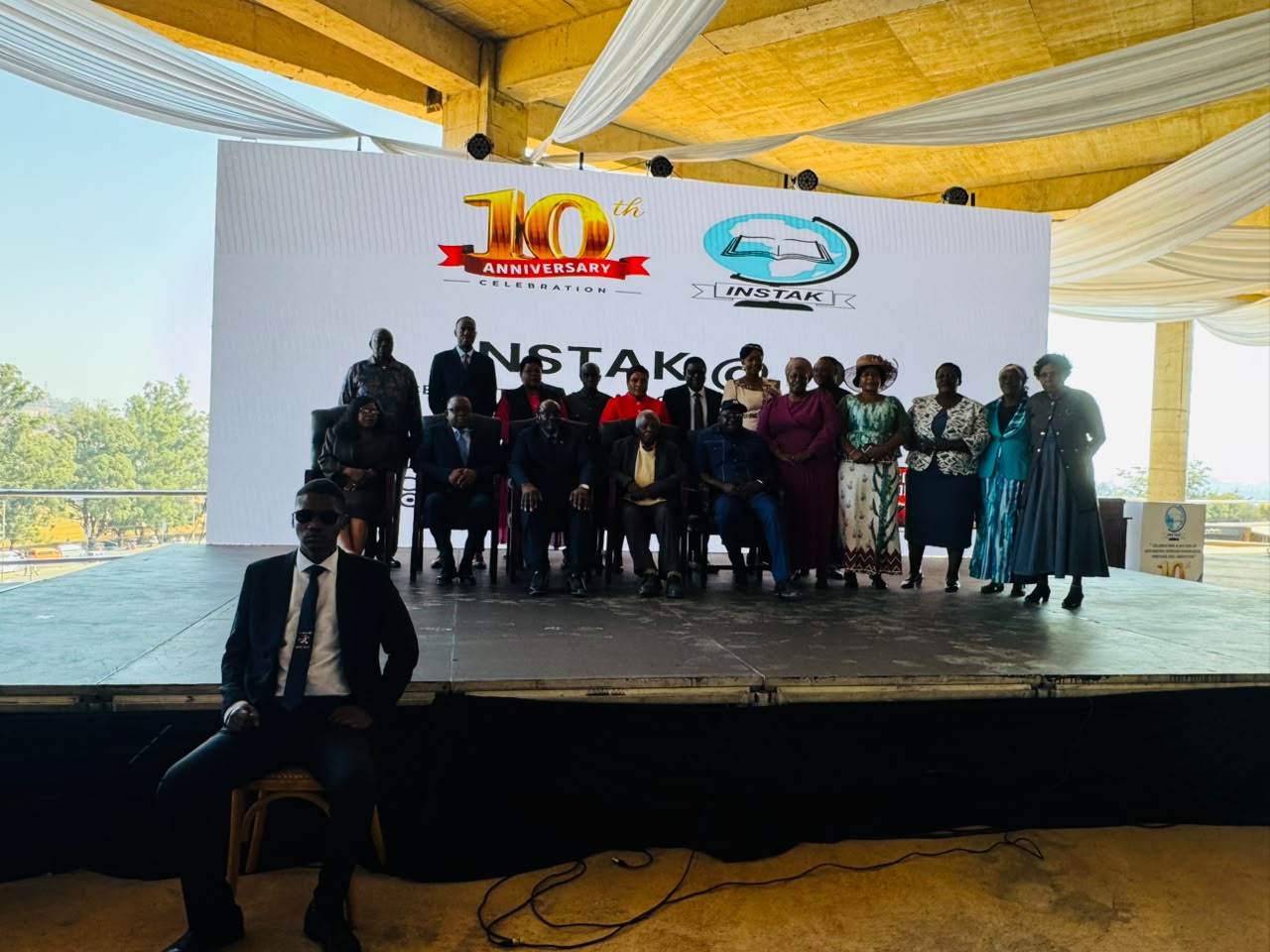
Delivering a hard-hitting address at the inaugural INSTAK @ 10 Public Lecture at Heritage Village in Liberation City, Amb Muzawazi challenged African ministers of education to act without waiting for donor reports or further studies, arguing that the continent’s educational borders are unguarded and colonial content continues to flood in.
“Nothing stops the wrong content walking straight in, satellite television included,” Amb Muzawazi said, contrasting Africa’s strict physical border controls with its porous intellectual boundaries.

Amb Kwame Muzawazi
“The remedy requires no donor report and no further study: ministers of education can change the curriculum, and could take the decision at the next AU summit.”
The INSTAK CEO’s argument was grounded in a simple but powerful proposition: Africa has invested heavily in securing its territorial borders—with soldiers, checkpoints, and surveillance—but has neglected the educational border through which ideas, values, and worldviews flow freely, often from the former colonial powers.
His critique drew on the concept of “QQED”—Qualitative and Quantitative Educational Deprivation—developed by Professor Yehudi Webster, which describes how African education systems have expanded access while diluting quality, producing graduates who are educated but not equipped.
“Whilst we now have huge numbers of people going to school, in the quantitative sense, they are getting very little qualitative education,” Amb Muzawazi said.
“We now have educational inflation, because we have got more people getting out of these schools and nothing to do, because we have been taught the wrong things.”
The intellectual sovereignty argument is central to Amb Muzawazi’s broader vision for INSTAK and the Museum of African Liberation, which he has described as a “memory project” and a “conscience project” for the nation and the continent.
He has consistently argued that African institutions must do more than curate artefacts—they must curate conscience.
The challenge he laid before Africa’s ministers was concrete: they have the authority to change what children learn, and they can exercise that authority at the next African Union summit.
“Nothing stops the wrong content walking straight in,” he repeated—a warning that Africa’s educational border is the last undefended frontier in the struggle for total liberation.
About Author