

CATHERINE MUROMBEDZI
CORRESPONDENT
In a milestone achievement for the nation’s economy, the Zimbabwe National Statistics Agency (ZIMSTAT) announced on Monday that annual inflation has plummeted into the single digits, marking the first time the country has seen such levels since the late 1990s.
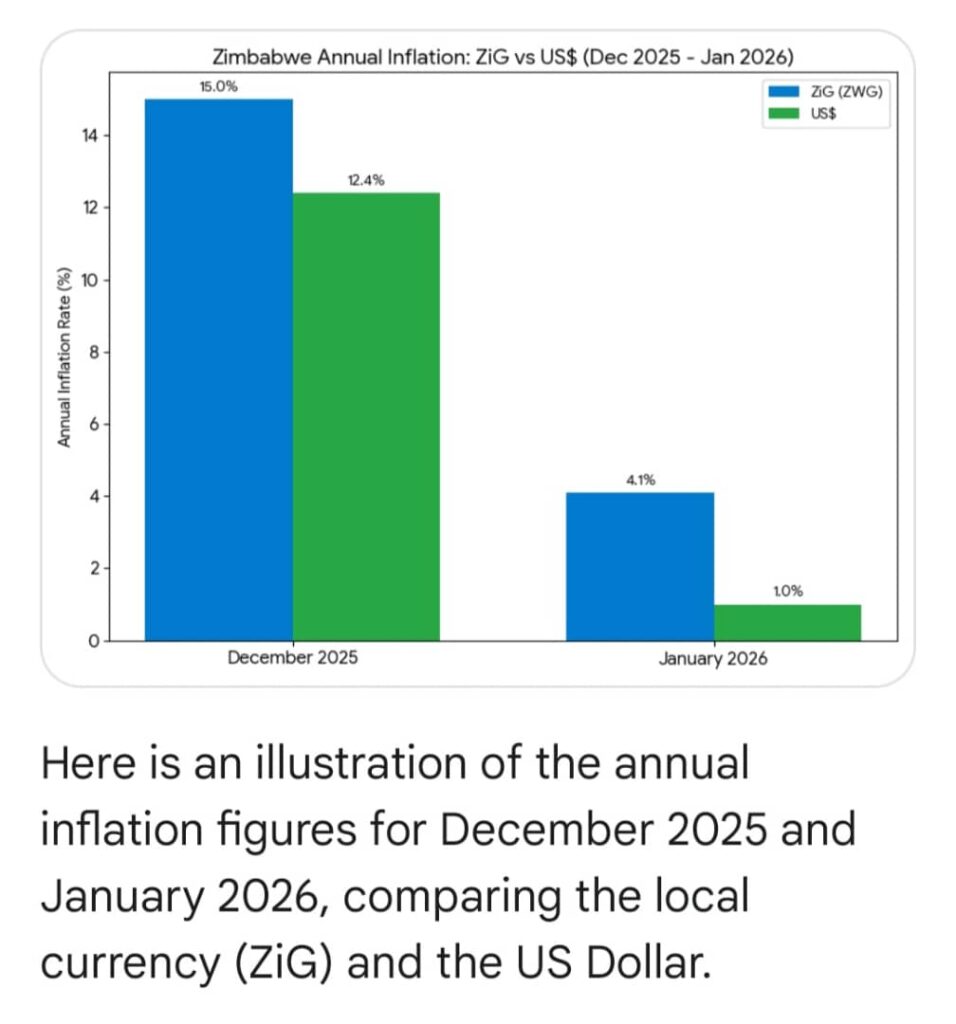
According to the latest data released during a public Monday webinar, the year-on-year inflation rate for January 2026 fell to 4.1%.
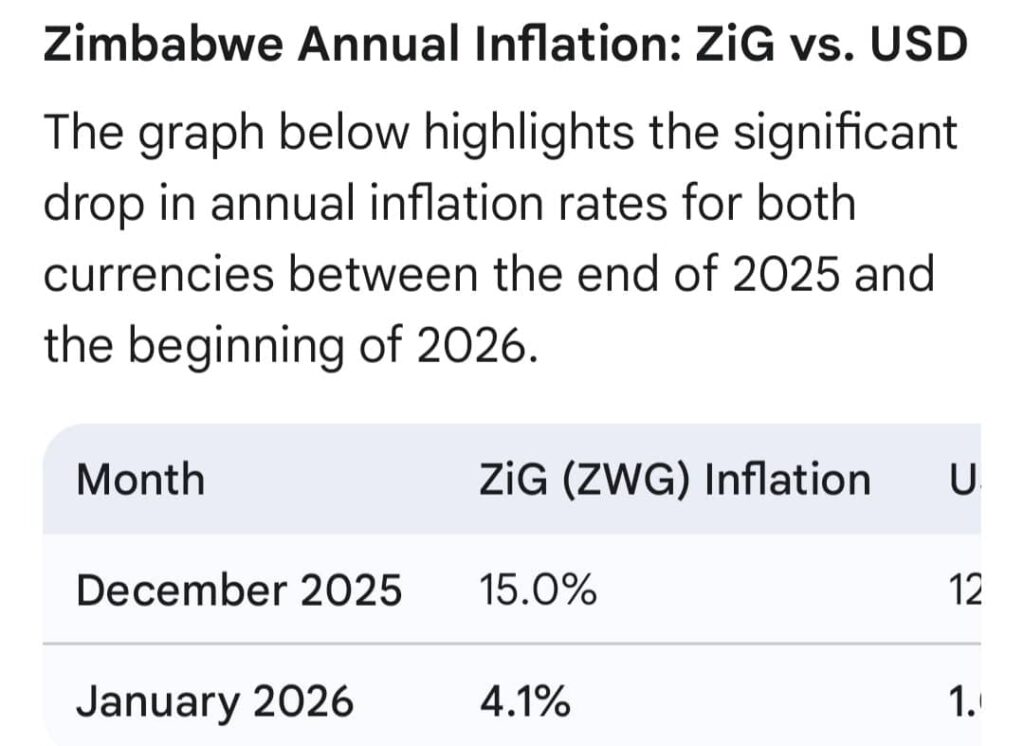
This represents a dramatic decline from the 15% recorded in December 2025, a shift that economists are calling a historic stabilisation of the local currency, the Zimbabwe Gold, (ZiG).
Perhaps most striking was the month-on-month data. ZIMSTAT reported that inflation for January 2026 was 0.0%, down from 0.2% in December.
This effectively means that, on average, the price of goods and services remained unchanged throughout the first month of the year.
The USD-denominated market showed similar signs of cooling. Annual inflation in USD terms dropped to just 1%, down significantly from the 12.4% seen at the end of 2025.
While the slowdown in price hikes is a relief for many, ZIMSTAT also provided a sobering look at the minimum cost of survival in the current economy. The agency updated its Poverty Datum Lines to reflect January prices:
The Food Poverty Line (FPL): An individual now requires ZWG 895.15 per month just to meet their basic nutritional needs of minimum calorie intake.
The Total Consumption Poverty Line (TCPL), to be considered “not poor,” an individual needs ZiG 1,307.01 per month. This figure covers both food and essential non-food items like housing, transport, and clothing.
Now a look at the economic outlook
”This means that prices increased by an average rate of 4.1 percent from January 2025 to January 2026,” ZIMSTAT stated, highlighting the stark contrast to the triple-digit figures that have plagued the nation in recent years.
Finance officials noted that this achievement is a critical benchmark in the government’s plan to stabilise the gold-backed ZiG as the primary medium of exchange.
The massive “shedding” of percentage points—over 10% in a single month—suggests that the aggressive monetary policies and fiscal coordination of the past year are finally taking root.
● *Feedback: cathymwauyakufa@gmail.com
About Author

