

BY MICHELINA ANDREUCCI
As the rainbows of African sounds have fused to create Amapiano music, so it is a reflection of the country’s all-embracing diversity. The South African music of Amapiano brings this diversity of culture under one colourful umbrella.
Critical discourses on female voices in Amapiano have been sparse. On the same note, where some critics have questioned and assumed gender polarity, Amapiano proves it’s all-embracing force through its wide chorus of diverse female voices.
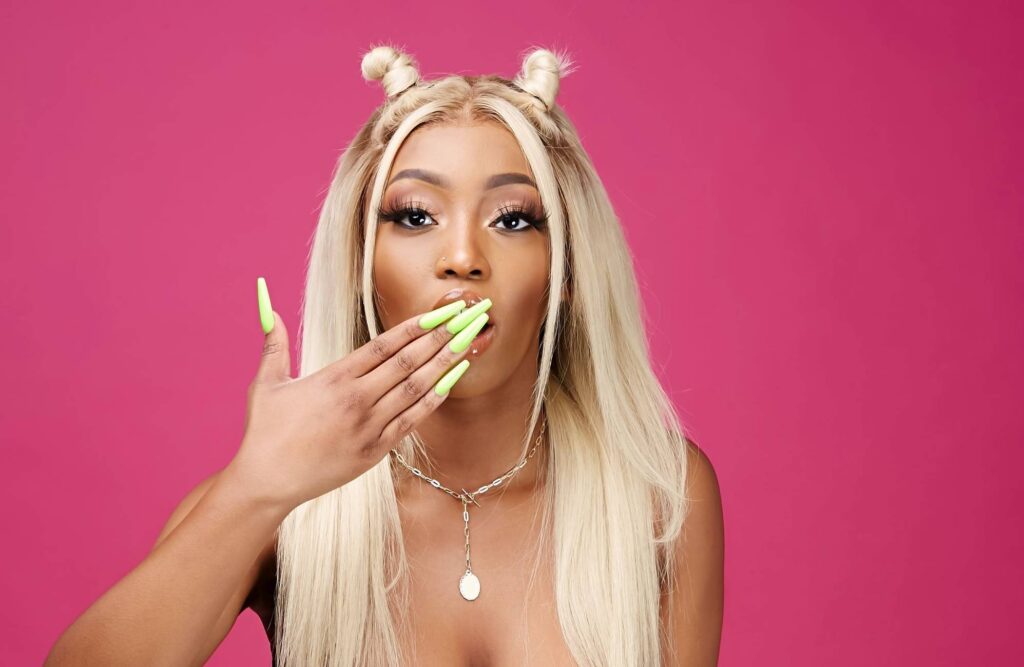
There is no better unifying contemporary voice like Amapiano. Of the many sub-genres of Southern African music that have by-and-large been dominated by male musicians, Amapiano has opened a unique new vista for female participation in this genre.
A study and narrative of Amapiano cannot be complete without the signature voices of the women who at their best endow Amapiano with a refinement of smooth falsettos and soothing sopranos that lend harmony and ornament to the otherwise strident music of Amapiano.
A sad failure on our part as cultural researchers would be the omission of female Amapiano voices in contemporary discourse. They are a musical delight who add a penetrating influence of expressive truths, social criticism and beauty to the genre.
Amapiano music is synonymous with modern-day South African dances and electronic music scene.
The infectious Afro Beat grooves of Amapiano have their roots in South Africa’s townships such as Soweto, Orlando, Alexandra, Langa in Cape Town, etc., which are also home to the genre’s predecessors, namely Amapantsula, Marabi, iKwaito, Gqom, and sub-genres of S’gija, iBacardi Private School and iQuantum sounds.

Melody, is never strangled, or drowned under heavy percussion beats; but is layered on smoothly and blends effortlessly like a good South African wine. Beneath the bombastic and sometimes aggressive demeanour of Amapiano music lies the subdued wisdom and female key to this percussive and ideophonic sound of Africa. As a result women singers are often engaged in collaborations with their male counterparts. Amapiano is one of the musical genres that reflect the shared stage of African created music.
Beyond the veneer of the infectious sound of Amapiano several female artists who lead their own groups have emerged to share this stage. The women’s approach to music production is technically direct, industrious, creative and more full-bodied in emotional expression than the men. Most women sing with vocal brilliance, control and technique whilst the men mostly rap in repetitive, monosyllabic, monotone drones.
Deftly and deceptively, most female versions of Amapiano are based on the traditional call-and-response format of African orature and music which has the inherent African values and inclusive community adherence of Ubuntu.
Arts and Heritage expert, Dr. Tony Michel Monda describes the genre as “… one of the fastest growing genres, Amapiano is also progressive, with many women Amapiano artists and DJs utilizing the genre to share their unique sound… Women in Amapiano have propelled the genre forward in ways that only women could — with innovation, creativity, counsel and authenticity…”
Some of the top women Amapiano artistes to defy stereotypes and break barriers to showcase their talents include: DJ Uncle, Uncle Waffles, DBN Gogo, Boohle, Babalwa M, Pabi Cooper, Kamo Mphela, Lady Du, Lady Amar, Mpho Sebina, Msaki, Niniola, Sbu, ShaSha, even Zahara, and lately, Tyla. By putting a Pop spin on the Deep House sounds of Amapiano on her debut single ‘Getting Late’, Tylawho was then 19-years-old, is taking the genre internationally.
Unlike the strident street sound of “IYO,” the most popular regional collaboration of AmaPiano, are the voices of the fairer sex that present an equally powerful sound. But while the women’s lyrical content in AmaPiano music is about love, family and community-building, the men in their characteristically repetitive, garrulous manner brag/sing about revelling and drinking and impressing women with ill-earned money – two totally divergent observations of the Amapiano genre.
For instance the song ‘Woza’, is a unique Amapiano signature classic known for its well composed overtures. It is holistically delivered and recorded by a collaboration of powerful female voices that plumb the depth of our musical experience. It builds up like a kettle boiling or a storm brewing in the heat and bursting from the clouds.
The smooth flowing, subdued tone of ‘Woza’ is typical of most female Amapiano artists – mellow and explosive!
Sbu and Boohle (Bhoo), who collaborated on a seminal Amapiano hit ‘Woza’ both have operatic vocal qualities that add a richness and mellowness to the otherwise strident aggressive sound, typical of the genre. The sound of their voices is melodiously therapeutic.
Spotify, an online streaming platform, says streaming has helped elevating the voices of female Amapiano artistes across the globe, with women musicians increasingly taking up space in Amapiano music through the power of streaming.
According to Phiona Okumu, Spotify’s Head of Music in Sub-Saharan Africa: “From singers and songwriters, to disc jockeys and producers, we are really seeing how this genre [of music] and its fans have embraced this female talent … Since we first started to see this exciting new genre take shape, one of the things we are most excited about is how women are coming up in the genre . . .”
“Amapiano music has over two billion streams on our platform, and our Amapiano Grooves playlist, which accounts for over a billion of these, features a strong mix of some of the most talented women in the genre right now,” said Okumu.
Spotify has also championed Amapiano artistes through programmes such as ‘EQUAL’, ‘Fresh Finds’ and ‘RADAR’. In 2021, DBN Gogo was Spotify’s first South African EQUAL Ambassador, while the young rising star, Tyla, is the most recent.
Owing to collaborations between male AmaPiano artistes which feature versatile female artistes, more collaborations between male Amapiano artistes and women artistes whose music are not typically part of the genre, are currently driving new musical innovations in the genre.
According to Dr. Tony Monda: “Collaborations between the various African AmaPiano artistes have expanded the genre’s Pan-African identity and popularity”. As such, artistes like Ami Faku, who calls her genre of music “Modern Afro Soul”, Msaki, who is known for her Folk sound, and Nigeria’s Tiwa Savage, all feature AmaPiano sounds on their tracks.
An eclectic mix of Deep House, Jazz, Afro Beat, Hip Hop, and Soul music, Amapiano is firmly rooted in African rhythms and sounds of the past, while steadily pushing toward the future of digital Pop music.
The genre has migrated from the seclusion of backroom studios to clubs around South Africa and the world. Beyond a mere mixture of genres, Amapiano is a feeling. The sound represents not only the heart and soul of South African townships but has extended South Africa’s music footprint into the modern era and the world. With it Amapiano women singers are also going global.
Dr Michelina Andreucci is a social commentator, analyst and an arts and design education consultant.
About Author

