

By Jonathan Mbiriyamveka
HARARE – Zimbabwe is staking its claim as the intellectual heartbeat of Africa, with Vice President Colonel (Rtd) Dr Kembo Mohadi declaring that the nation possesses both the “vision and capacity” to build institutions of genuine continental significance.
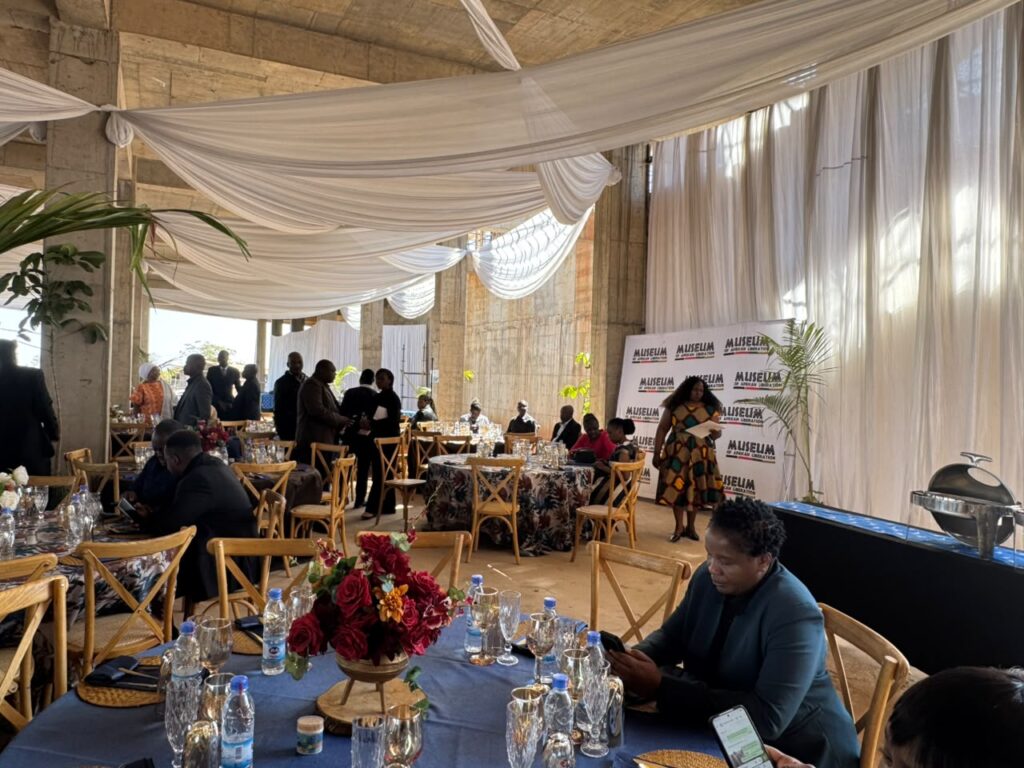
Delivering the keynote address at the Institute of African Knowledge’s (INSTAK) 10th anniversary celebrations at Liberation City on Thursday, the Vice President painted a picture of a nation undergoing a profound transformation—one where heritage and knowledge are no longer sentimental afterthoughts but strategic pillars of economic development.
“Ten years may appear a relatively short period in the life of an institution,” Dr Mohadi told an audience that included ministers, diplomats, and academics.
“Yet, what INSTAK has accomplished in those ten years demonstrates that when vision is guided by purpose, supported by strong leadership and anchored in national priorities, a decade can become a defining chapter in the history of a nation and, indeed, a continent.”
The remarks signal a deliberate shift in how Zimbabwe wants to be perceived on the global stage. Long associated with economic hardships and political volatility, the country is now aggressively rebranding itself as a centre for African scholarship, heritage preservation, and Pan-African cooperation.
At the heart of this ambition is Liberation City, the sprawling heritage precinct that has grown from a bold idea into a tangible reality over the past decade.
The Vice President described it as “an expression of African civilisation”—a place where research, culture, tourism, hospitality, education and commerce converge to tell a compelling story about the continent’s past and future.
The project has already attracted significant international interest, with the Vice President revealing that at least twenty-two African Heads of State have been engaged by Zimbabwe’s Special Envoy on the Museum of African Liberation, Ambassador Simbarashe Mumbengegwi.
“That the Museum of African Liberation should find its home here is fitting,” Dr Mohadi said, referencing Zimbabwe’s distinguished place in the continent’s liberation history.
“This demonstrates that Zimbabwe possesses both the vision and the capacity to create institutions of genuine continental significance.”
INSTAK was formally established in 2016, but the Vice President traced its intellectual roots much further back—to Africa’s five-century struggle against slavery, colonialism and neo-colonialism.
He argued that while political independence had been won “through blood, sweat and tears,” the struggle for intellectual sovereignty remained unfinished.
“This explains why the Government of Zimbabwe, under the astute leadership of His Excellency the President, Dr Emmerson Dambudzo Mnangagwa, regards the advancement of knowledge, culture and heritage as strategic pillars of national development,” he said.
The Vice President’s address tied INSTAK’s work directly to the Second Republic’s Vision 2030 agenda, which he described as being about “economic modernisation and industrial transformation.”
“Such development must be underpinned by a citizenry that understands who they are, where they have come from and where they are going,” he said.
The Government’s support for INSTAK, Dr Mohadi noted, represented an innovative public-private partnership model that extends “well beyond roads, bridges and energy infrastructures.”
He praised the collaboration as an example of what becomes possible when Government, private institutions, academia and development partners work together in pursuit of a common national vision.
The celebration also served as a moment to honour the leadership behind INSTAK’s rise. The Vice President paid tribute to Board Chairperson Professor Simbi Veke Mubako, a veteran nationalist and one of Zimbabwe’s most accomplished legal scholars, describing him as having provided the strategic guidance necessary for the institution’s continued growth.
He also recognised Chief Executive Officer Ambassador Kwame Muzawazi, whose “tireless efforts have grown the institution from its inception into one of Africa’s leading knowledge, policy and heritage organisations.”
Looking ahead, Dr Mohadi challenged INSTAK to build on its first decade of laying strong foundations. The next ten years, he said, must be about “consolidation, expansion and deepening impact.”
“The first decade of the Institute of African Knowledge has been about laying strong foundations,” he said.
“It has demonstrated that African knowledge can inspire African solutions; that heritage can become a driver of development; and that history, when properly preserved and interpreted, can become a powerful instrument for education, tourism, diplomacy and economic transformation.”
The Vice President closed with a call to collective purpose, reminding his audience that “the task before us is larger than any one institution.”
“It is the task of nurturing generations of Africans who take pride in their identity, draw strength from their shared history and contribute confidently to the advancement of humanity,” he said.
“That is the Africa envisioned by the founding fathers of our continent. It is the Africa towards which Zimbabwe continues to contribute under the leadership of His Excellency President Dr Emmerson Dambudzo Mnangagwa.
“And it is the Africa that institutions such as the Institute of African Knowledge are helping to build every day.”
As Zimbabwe steps up its bid to host the 2027 African Union Mid-Year Coordination Summit, Liberation City is expected to play a strategic role in showcasing the country’s heritage, hospitality and investment opportunities.
For now, the message from the Vice President was clear: Zimbabwe is no longer just a participant in Africa’s story—it is determined to become one of its leading authors.
About Author

