By Jonathan Mbiriyamveka
When a man with 314,000 followers calls your music “an entirely new level,” the world tends to listen.
That is precisely the moment now unfolding for Zimbabwe’s multi-award-winning worship singer, Minister Everton Mlalazi, after US-based content creator and Gospel Artist Entertainment founder Aldren McCullar publicly endorsed him on Instagram and Facebook.
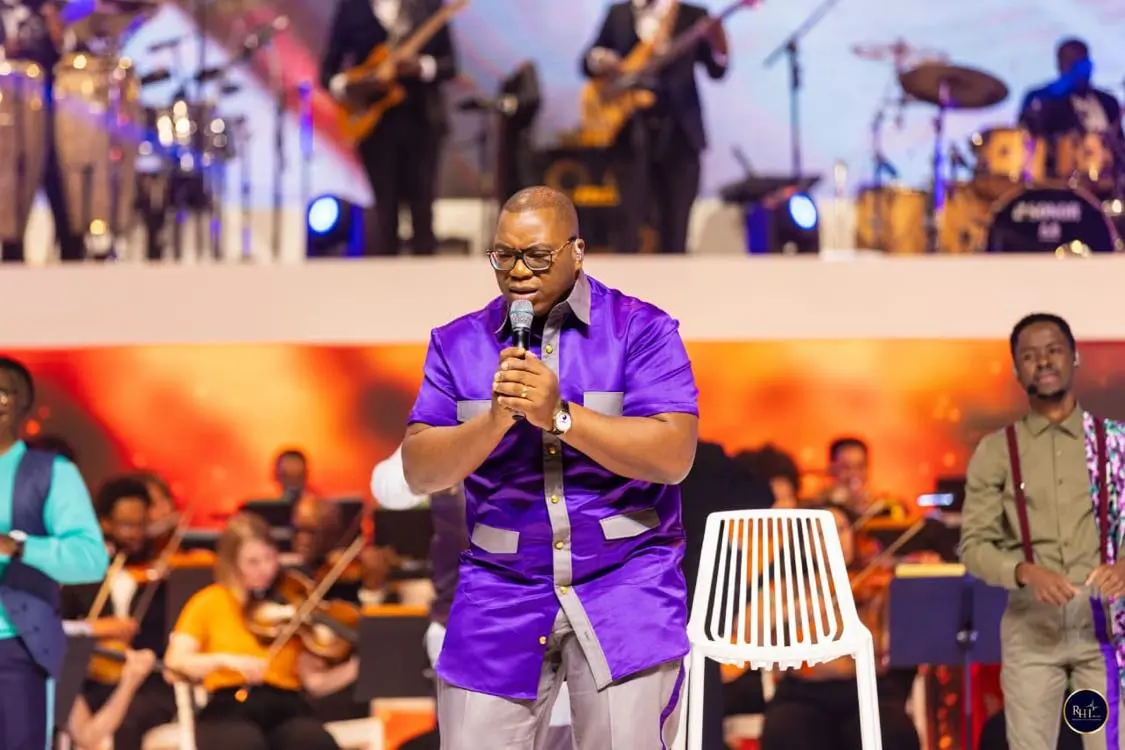
In a video posted to his official pages, McCullar—who commands over 314,000 followers across his platforms—hailed Mlalazi’s extraordinary talent and his signature 100-piece orchestra, describing the Zimbabwean’s music as taking gospel to “an entirely new level.”
But the endorsement carried more than praise.
McCullar also revealed that Mlalazi is set to collaborate with several American gospel artists, a move he described as “a powerful fusion of African and American cultures through gospel music.”
“This is more than music—it’s a meaningful cultural and spiritual connection that transcends borders,” McCullar wrote.
He then posted Everton Mlalazi’s live performances at Sun City Carnival, Celestial Chorus Soiree3 and then in Bulawayo at the recently held Ekhaya Worship Festival.
Born in Dallas, Texas, McCullar wears many hats: actor, business owner, show host, and influencer.
His platform, Gospel Artist Entertainment, founded in November 2014, has become a notable voice in gospel music circles. So when he speaks, a substantial audience pays attention.
For Mlalazi, a minister who has already conquered Zimbabwe’s gospel scene with multiple awards and collaborations with Ladysmith Black Mambazo, Oncemore Six and Sharon Cherayi to mention a few, this recognition is not merely a pat on the back. It is a potential launchpad.
In an industry where African gospel artists often struggle to break into Western markets, McCullar’s endorsement carries specific weight.
He is not a casual listener—he is a curator and promoter of gospel talent. His willingness to not only spotlight Mlalazi but also pledge support for his vision suggests genuine industry interest rather than fleeting social media hype.
The planned collaborations with American gospel artists could prove transformative. A successful fusion of Zimbabwean orchestral worship with American gospel sensibilities would place Mlalazi in a rare category: an African artist who is not merely exported but genuinely cross-cultural.
McCullar’s closing words—“We would be honored to be part of your journey”—indicate that this may be the beginning of a working relationship, not just a one-off shoutout.
For Zimbabwean gospel music, long beloved at home but often overlooked beyond its borders, this moment signals something larger: the world may finally be ready to listen.
And Everton Mlalazi, with his 100-piece orchestra and a voice already proven on local stages, appears poised to lead that charge.
About Author