

By Sirak Gebrehiwot
Harare – The United Nations Progamme Management Team (PMT) in Zimbabwe held a day and half strategic planning retreat from 18 to 19 February 2025 in Harare.
The retreat brought together Heads of UN Agencies and Senior UN Programmes Officials from all UN agencies based in Zimbabwe, signatories of the 2022-2026 Zimbabwe UN Sustainable Development Cooperation Framework (ZUNSDCF), as well as senior representatives from Government, European Union, and the World Bank.
The retreat successfully reviewed the progress made in 2024 and laid out the strategic direction for 2025, highlighting core areas such as the coordinated implementation of the Cooperation Framework, partnership strengthening, and technical support for Zimbabwe’s final year implementation of the National Development Strategy I (NDS-I 2021-2025) and the development of NDS-II (2026-2030).
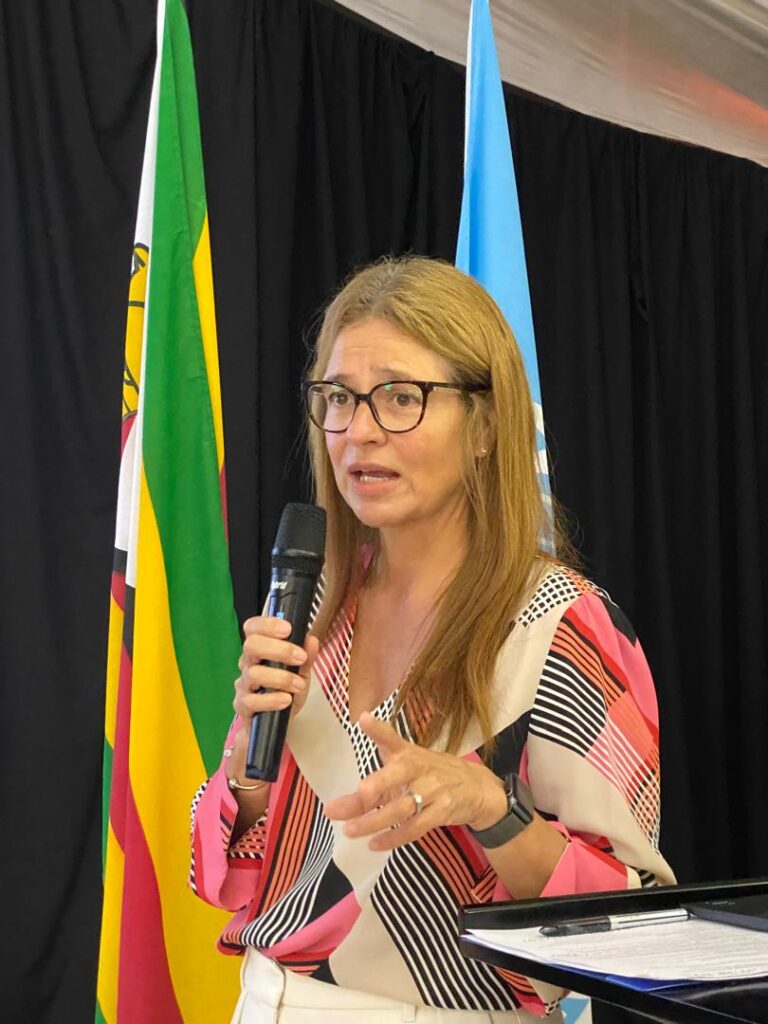
The day and half strategic planning led by Ms. Miranda Tabifor, Chairperson of the Programme Management Team (PMT) and UNFPA Representative began with Programme Leads and Heads responsible for reviewing and endorsing their respective agencies’ contributions to the 2024 Annual Work Plan.
Ms. Tabifor noted progress in the implementation of the ZUNSDCF. The Common Country Analysis (CCA) had been successfully finalized and backed by key stakeholders, while the realization of comprehensive policy briefs remained a challenge. Emphasizing the importance of alignment in funding strategies to the Cooperation Framawork, Ms. Miranda said, “UN Agencies have revised their projected multi-year funding frameworks. This needs to be incorporated at output level financial projection and endorsed by the UNCT for predictability, accountability, transparency and effectiveness.”
The incorporation of the Leave No One Behind agenda into operational reviews was successful, yet hurdles encountered in executing planned national monitoring activities. Institutionalizing Normative Frameworks, also displayed mixed progress.
Initiatives on human rights and youth inclusion were gaining traction, but holistic completion was still a work in progress. Other notable advancements included the successful Cooperation Framework Mid-Term Review and a consolidated UN input to the 2025 National Budget.
The year saw the completion of the 2023 UN Annual Results Report with an emphasis on joint programmes, with 11 active projects totaling USD 169 million representing over 50% of the total delivery through joint programmes surpassing the global benchmark of 30%.
Ms. Tabifor spotlighted the collaborative efforts expected to enrich the 2025 work plan. “We engaged with representatives of the Ministry of Public Services Labour and Social Welfare, Ministry of Skills Audit and Development, and private sector such as the Prospect Lithium Zimbabwe, among others, to bring about partnerships and synergy,” she noted.
In a comprehensive keynote address, Mr. Edward Kallon, UN Resident and Humanitarian Coordinator, highlighted the significant achievements and ongoing efforts of the United Nations in supporting Zimbabwe’s development priorities through the ZUNSDCF. Mr. Kallon lauded the accomplishments achieved in 2024 under the PMT, which aligns closely with the National Development Strategy I (NDSI) 2021-2025.
With the UN system mobilizing USD 1.5 billion, accounting for 60% of the total Official Development Assistance (ODA) received, significant inroads were made towards the USD 2.8 billion requested for the Cooperation Framework.
Zimbabwe’s engagement in the 3rd Voluntary National Review (VNR) was supported by the UN, identifying key issues for accelerating progress on SDGs, and facilitating the reactivation of the Data for Development and Innovation Working Group.
Additionally, six local governments undertook Local Voluntary Reviews (LVRs) with assistance from the UNCT, showcasing robust involvement in regional capacity-building initiatives focused on localizing the SDGs.
The Cooperation Framework’s Mid-Term Review pinpointed six critical transitions as key investment pathways to accelerate progress toward the SDGs. These include Food System Transformation, Transforming Education, Energy Access and Affordability, Digital Connectivity, Jobs and Social Protection and initiatives addressing Climate Change, Biodiversity, and Pollution. These focus areas are set to guide the forthcoming National Development Strategy (2026-2030).
Addressing ongoing challenges, Mr. Kallon underlined hurdles such as the El Niño-induced drought, economic complexities like inflation and unemployment, and legislative concerns tied to the PVO Bill and Criminal Law Codification and Reform Amendment Act with potential implication on operational space of non-governmental organizations and freedom of expression. Furthermore, geopolitical tensions and conflicts significantly affect resource mobilization capabilities.
Looking ahead, Mr. Kallon outlined key priorities for 2025, including a comprehensive evaluation of the Cooperation Framework, accelerating SDG progress, and devising a multi-year resource mobilization strategy, which required robust dialogue led by national authorities for the establishment of a Local Funding Compact to ensure sustainable investment.
Enhancing development and aid coordination, improving data utilization, reporting, and crafting impactful messaging and advocacy remain at the forefront of UN commitment in 2025 and beyond. Additionally, integrating anticipatory action and the Humanitarian-Development-Peace Nexus stands as a critical objective to ensure holistic and sustainable development outcomes.
Meanwhile, Ms. Eneida Fernandes, the World Bank Country Manager and Co-Chair of the Zimbabwe Development Partners Forum, outlined the priorities for Zimbabwe’s engagement under the World Bank’s upcoming Country Engagement Note for the fiscal years 2025-2026. The future-oriented World Bank program in Zimbabwe revolves around two main pillars: Supporting Macroeconomic Stability and Inclusive Growth and Building Resilience. Each pillar sets specific goals and initiatives that resonate with the NDS-1 objectives, ensuring that Zimbabwe is on a path towards sustainable development and economic revitalization.
Ms. Fernandes emphasized the successful completion of past programmes such as the Health Programme and the Zimbabwe Idai Recovery Programme, the latter implemented by United Nations agencies. These efforts, valued at $78 million and $72 million respectively, demonstrate a commitment to bolstering Zimbabwe’s social sectors despite ongoing macroeconomic challenges.
The World Bank’s ongoing activities in Zimbabwe include targeted investments in energy, social protection, and private sector development, to be financed by the new Zimbabwe Socioeconomic Transformation Fund, which seeks to drive further development.
Reflecting on lessons learned, Ms. Fernandes stressed the necessity of demand-driven approaches, enhanced implementation capacity, and robust consultations with various stakeholders. “Exploring value chains in agriculture, tourism, and the mining of energy transition minerals can capitalize on Zimbabwe’s inherent strengths, despite its economic hurdles,” emphasized Ms. Fernandes.
She also discussed findings from extensive consultations that identified key priorities that align with the National Development trajectory, such as enhancing the social registry, promoting climate-smart agriculture, and improving energy access.
According to the 2023 World Bank Country Opinion Survey, public sector governance, economic growth, health, water and sanitation, and agriculture remain top priorities for stakeholders. The engagement framework prioritizes a focused approach aligned with governmental reforms, ensuring the World Bank can add value where it is most impactful.
“By concentrating on selected areas, we aim to deliver inclusive growth and enhance resilience, integral to Zimbabwe’s long-term prosperity,” said Ms. Fernandes.
She also highlighted the success of UN and WB collaboration in times of crisis but stressed that there is a need for similar engagement to happen at other times to allow for complementarity of action as well as optimization of efforts.
The EU Head of Development Cooperation, Mr. Franck Porte, highlighted ongoing collaborations with the United Nations.
He provided explanations on the EU overarching Global Gateway strategy that aims at supporting transformative investments notably in renewable energy, transport, digitization and health, and education through partnerships with the European Investment Bank (EIB), Development Bank and EU block development finance institutions.
In Zimbabwe, the EU work with the UN is concentrated on key areas such as resilience, gender equality, health resilience, and digitization. The joint efforts of the EU and UN focus on building structured awareness and enhancing knowledge sharing of their collaborative initiatives.
This includes joint programming and policy development, strengthening partnerships and visibility, as well as financing for development to foster sustainable growth and cooperation.
Sharing government perspective, Mr. Anderson Chiraya, Chief Director of the Office of the President and Cabinet, emphasized the robust partnerships between the government and the United Nations in advancing the SDGs.
Mr. Chiraya outlined the government’s priorities as they approach the final year of the National Development Strategy (NDS-I), and he provided insights into the ongoing development of NDS-II, which will cover the period from 2026 to 2030. He indicated that consultations with the UN and other development partners will be held soon.
On Zimbabwe’s economic, social, and political landscape, members of the UN Team of Policy Advisors Adolphus Chinomwe, Senior Programme Officer at the ILO, and Pepukai Chivore, Social Policy Advisor at UNICEF, provided a comprehensive update.
The briefing highlighted that the 2025 budget is set at ZiG276.4 billion, constituting 20.1% of GDP, with a significant allocation to the social sector. Nonetheless, public debt continues to pose challenges, with a total of US$21.1 billion as of September 2024. Zimbabwe is collaborating with the IMF on a Staff Monitored Program to tackle debt servicing obligations, which are expected to rise significantly in 2025.
The 2025 budget introduces several new tax measures and adjustments, including increased taxes on fast foods, betting, and alcohol, coupled with reductions on electrical vehicles and LPG. A key area that needs to be addressed is to ensure early and full disbursement of the budget to ensure effective execution by key Ministries.
Monetary policy measures include reviewing foreign currency retention for exporters, lifting trading limits on foreign exchange, and maintaining the central bank policy rate at 35%.
Among the key risks noted are political uncertainty, tight fiscal constraints, potential cuts to Official Development Assistance (ODA), and geopolitical tensions. Conversely, opportunities remain, such as leveraging Zimbabwe’s leadership in the SADC, focusing on policy stability, and enhancing humanitarian and development programmes.
On innovative strategies and policy briefs to pursue in 2025, Dr. Abdul Rahman Lamin, Head of UNESCO’s Social and Human Sciences, outlined several key initiatives aimed at enhancing digital transformation and ethical artificial intelligence (AI) practices across Southern Africa, with a particular focus on Zimbabwe.
Among the highlighted projects, UNESCO has launched a pilot for the AI Ethics Readiness Assessment Methodology (RAM). This initiative seeks to evaluate the readiness of countries in Southern Africa for AI development and application, considering critical factors such as legal and policy frameworks, social and cultural contexts, and economic and technical infrastructures.
A significant part of UNESCO’s approach involves facilitating knowledge exchange between AI experts, academics, and Member States, alongside supporting community-based early warning systems utilizing the Internet of Things (IoT).
Leading an in-depth analysis of the UN development system in Zimbabwe inline with the UN Reform and the Management and Accountability Framework, UNICEF Deputy Representative Zeinab Adam provided insights into the UNSDCF as an overarching strategic guide of the UN System in Zimbabwe. This comprehensive framework aims to align UN development programmes and policy expressions with national priorities, focusing on partnerships between the UN, the Zimbabwean government, donors/development partners, civil society, and the private sector to achieve the 17 SDGs by 2030. The Framework is organized around four strategic pillars: People, Planet, Prosperity, and Peace, each addressing critical areas such as inclusive development, environmental sustainability, economic growth, and effective governance.
Group discussions and interactive plenary sessions among participants highlighted both the strengths and challenges of the UN’s work in Zimbabwe, pointing to opportunities for improvement and innovation within the Cooperation Framework’s programme operations in 2025.
The retreat ended with Ms. Miranda Tabifor, Chair of the UN Programme Management Team, leading the team in identifying key areas of focus for 2025.
The discussions highlighted critical initiatives, including the coordinated implementation of the UN Cooperation Framework, strengthening partnerships, and providing technical support for the National Development Strategy (NDS-I) for 2021-2025, and the rollout of NDS-II for 2026-2030. The team also emphasized the importance of evidence-based delivery of the SDGs and the integration of international and regional norms into development programmes.
Sirak Gebrehiwot is UN Partnerships and Development Finance Advisor at the UN Resident Coordinator’s Office
About Author

