

By Violet Mashonga
CHINHOYI — The Minister of Local Government and Public Works, Hon. Daniel Garwe, has called on local authorities to strengthen their role in driving national development and aligning their efforts with Zimbabwe’s Vision 2030 agenda.
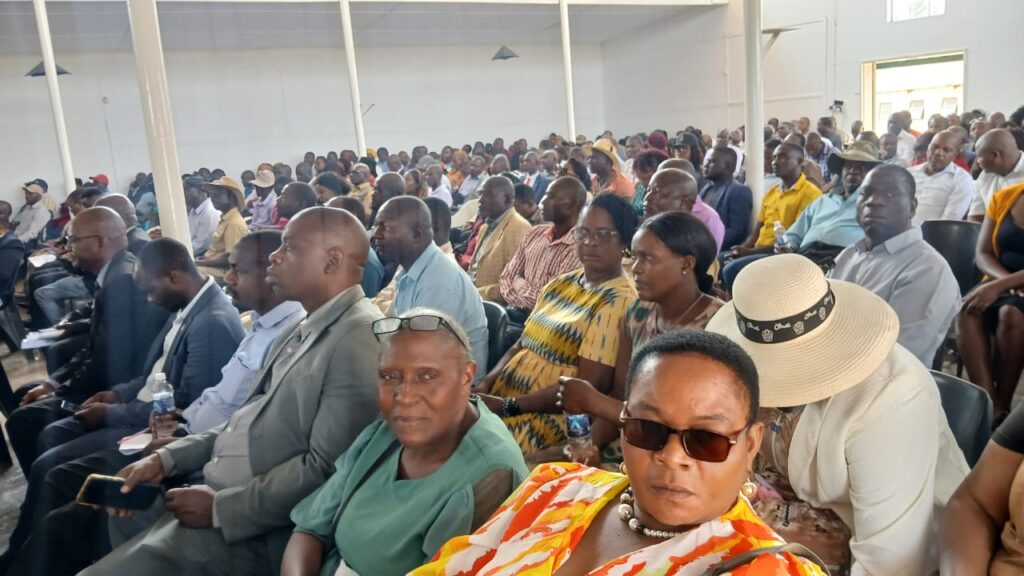
Speaking to local authorities from Mashonaland West Province during a stakeholders’ meeting held recently at the Chinhoyi Showgrounds, Minister Garwe underscored the importance of coordinated, strategic action in transforming Zimbabwe into an upper-middle-income economy by 2030.
“Local authorities are the engines of development at grassroots level,” said Minister Garwe. “Your ability to deliver services effectively and attract investment will determine how quickly we reach our national targets.”
He commended councils for the progress made in service delivery and implementation of the Call to Action, a government-led initiative to accelerate local-level development.
He also encouraged municipalities to explore Public-Private Partnerships (PPPs) to boost infrastructure development and investment.
Minister Garwe urged local authorities to address persistent urban challenges, particularly waste management, traffic congestion, and urban sprawl.
He emphasized that service delivery must remain a top priority, with local councils expected to demonstrate competence, innovation, and transparency.
He also stressed the need for sound fiscal management, urging councils to ensure their budgets reflect both local needs and national development priorities.
“Budgets should not be just numbers on paper. They must be strategic tools that drive real change in communities,” he said.
In a separate policy announcement, Minister Garwe revealed that the government has imposed an immediate ban on the importation and sale of second-hand clothing, as well as night vending in cities and towns across the country.
The move, he said, is part of a broader strategy to restore order, promote public health, and combat illegal activities in urban centers.
“We cannot allow our cities to become ungovernable. This ban is aimed at curbing public health risks, including disease outbreaks, and addressing the increase in illicit activities such as drug dealing,” said Garwe.
The government maintains that urban areas must reflect order, cleanliness, and functionality to support a high quality of life for residents and position Zimbabwe as an attractive destination for both tourism and investment.
However, the bans are likely to impact thousands of informal traders who rely on night vending and second-hand clothing sales for survival.
Minister Garwe acknowledged the delicate balancing act between regulating urban spaces and protecting vulnerable livelihoods, noting that measures will be taken to mitigate negative impacts.
“We understand the socioeconomic complexities involved. But order must prevail. We are working on alternatives to ensure that livelihoods are not destroyed but rechanneled into formal, sustainable avenues,” he said.
As Zimbabwe pushes forward with its Vision 2030 aspirations, the role of local government remains central. With renewed focus on fiscal discipline, service delivery, and urban management, the Ministry has positioned local authorities as key drivers in the national transformation agenda.
The challenge, however, lies in implementation—striking the balance between policy enforcement and inclusive development that leaves no one behind.
About Author

