

Staff Writer
Transport and Infrastructural Development Minister Felix Mhona says he was happy with the progress so far at Mbudzi Traffic Interchange.
The US$88 million Mbudzi Interchange is at the intersection of Simon Mazorodze Road, Chitungwiza Road and High Glen Road in Harare.

“I am happy that you have seen the infrastructure and we are progressing well, by July 31 this year we must have our interchange,” Minister Mhona said.
In dismissing false and malicious reports circulating on social media that the money for the project had been squandered.
“We don’t have the so-called Mbudzi Interchange Compensation Fund. We are mobilising, and we communicate with treasury if they are properties to be compensated. And as we speak out of the 52, 42 have been compensated partially and fully,” Minister Mhona said.

“So we are comfortably out of the woods, we are out of the ground now with most of the concrete structures. Overall for all the concrete works for the 15 bridges, our progress is standing at 77 percent for all the concrete structures.”
Funding for the project is being done through local financial institutions, while the contractor for the project is a joint venture of three local road construction companies: Tensor Systems, Fossil Contracting, and Masimba Construction, collectively coming under the banner of Tefoma Construction joint venture.
The minister also explained the whole processes that were conducted during compensation through the Ministry of Local Government which does the valuations.
Fossil Contracting head of operations Engineer Kudakwashe Maguta also said, “Mbudzi Interchange is a graded section interchange which comprises of 15 bridges.
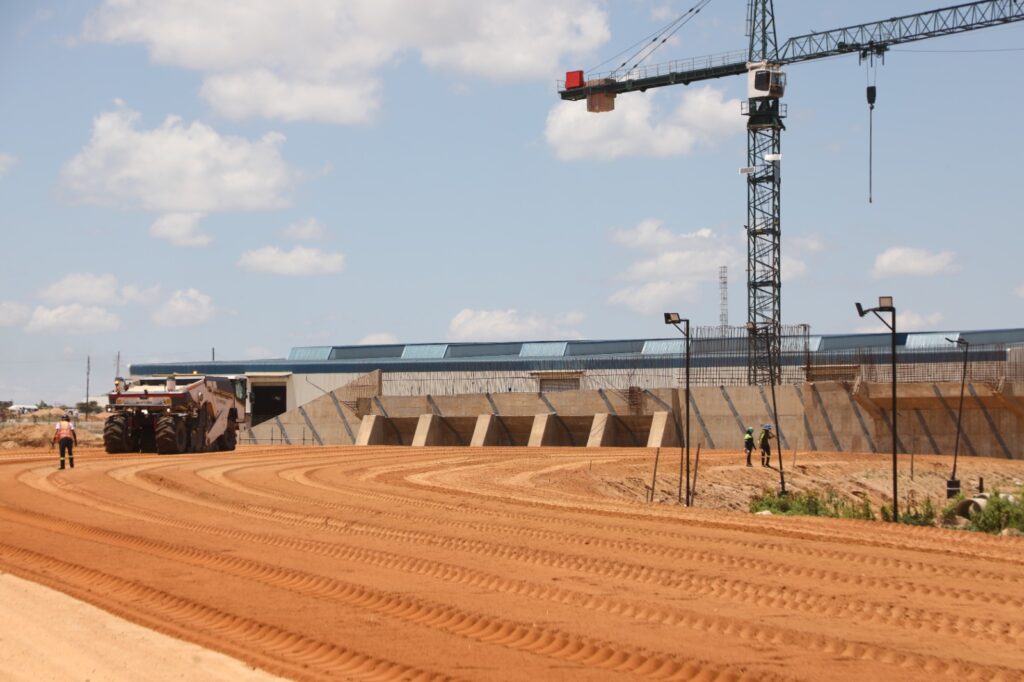
Of the 15 bridges, 13 are on the interchange and two bridges are off-site bridges in Amalinda Drive and Harare Drive. The bridges on the interchange, about six of the bridges are substantially complete, that is bridge number two, bridge number six, bridge number eight, bridge number 10, bridge number 11 and bridge number 12, and all the other bridges, are at an advanced stage. Some are at 40 percent but the majority of them are now above 60 percent.
The interchange will arguably be the biggest outside of South Africa.
About Author

