

Alpha First Generation of Zimbabwe’s stone sculptor Ephraim Chaurika
One obvious source and gap remaining in the field of art criticism, art history and art curatorship in Zimbabwe is the analysis of Zimbabwe contemporary sculpture in its wider context.
More often than not, the individual tropes, signatory styles, cultural conceptualisation, tribal history and backgrounds of modern artists in Zimbabwe, including linguistic interpretations and cultural visualisations of the identic and autodidactic indigenous First Generation of Zimbabwean sculptors is left wanting. This knowledge is privy to generational proxies who can verily acknowledge the First-Generation sculptors of Zimbabwe.
Many unique works of art from the alpha First Generation of Zimbabwe’s stone sculptors have not yet received the attention and criticism deserving of this national heritage.
An often-omitted pioneer sculptor from the genesis of Zimbabwean contemporary art is Ephraim Chaurika. Sifting through the serpentine quarries of Guruve one will come across the rarest types of serpentine stones that gave birth to Chaurika’s genius.
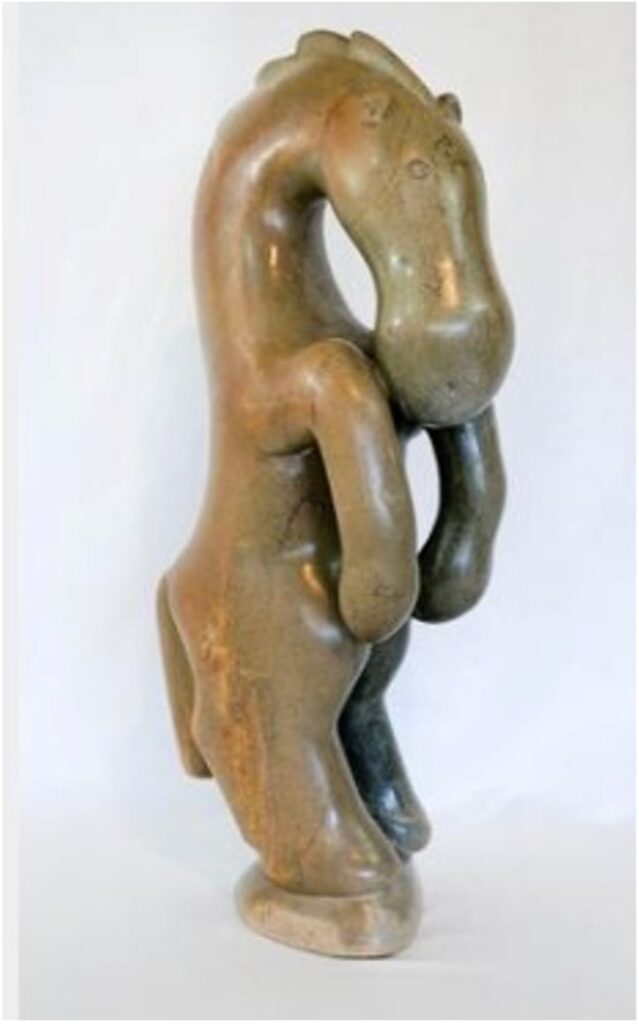
The veteran artist spoke to me in Guruve in 1997 with a calm assurance and historical knowledge about his equestrian inspiration. There were many writers and foreign visitors that encountered his art work, but who were unable to reconcile the nobility of an African equestrian heritage with modern euro-centric equestrian tradition.
Years spent in the south west of America gave me the experience of Native American equestrian culture and its trapments or ornamental harnesses. Horses and cattle ranged for generations and with it came experience and an equestrian cultural memory. The horse and man became one entity.
Similarly, southern Africa boasts of an unrecorded and unheralded traditional history of equestrian knowledge harking back to the 4 th century and coming to the fore via traders, missionaries, explorers and colonisers in the 17 th century long before the pioneer column, who encountered the Equus Cabbalas and the heavy stocked Equus Capensis; an animal attributed to kingship.
In the traditional Korekore dialect of Zimbabwe, a horse is known as ‘nyurisi’/’nurusi’ which makes reference to an African Shona equine culture. There are also various proverbs and saying that attribute to the horse warm-blooded temperatures that range from 38-38.2 degrees Celsius – tending to be higher in temperature in youth and lower in old age.
The Shona saying “Bhiza rino dzikama rakura” – a horse calms down and is broken in when it is older, attests to human behaviour implying that ‘maturity comes with age’. This illustrates that horses were part of African culture and orature.
Ephraim Chaurika in his wisdom understood the intangible culture, agro-economic significance and heraldic symbolism, qualities, characteristics and socio-religious implications of the African Shona equestrian culture.
In universal cultures and indigenous literary and artistic symbolism horses embody many noble characteristic; from royalty to power, authority, grace, speed, resistance, strength, bravery, agility and fortitude. Spiritually, horses have been linked to supernatural abilities, folk lore and superstitions in indigenous Korekore Shona culture. This implies that horses can sense and ward off evil, protect their owners from supernatural harm, and bestow their keepers with good fortune.
In Guruve, the Horseshoe Mountain range encircles the forested hamlet of Tengenenge, which for decades has been the home of many sculptors. The dominant Shona subgroup known as the
Korekore are recorded in history as the prototype Shona people from the 4th century, from whom most of the royal descendants from great Zimbabwe hail from.
These were clans of hunters, fishermen, craftsmen, miners, traders, healers, shamans and warriors who were known throughout the Great Zimbabwean Empire for their craftsmanship and industrial skills. Amongst them there were potters, ironsmiths, weaponry makers and skilled stone masons from whom Chaurika’s dynasty descends.
Based on traditional Shona orature of wild horses that roamed the old forests of Munhumutapas’ empire of the 12 th to 15 th centuries, Chaurika’s cultural memory is the source of his inspiration. In the Korekore language of Zimbabwe, his surname means “the one with the dancing mane”. Chaurika – the one whose hair dances in the wind is an obvious allusion to a horse’s mane or African dreadlocks as well as implying the act of winnowing small grains in the wind.
Alive and animated, Ephraim Chaurika’s horses are sculpted in regal postures that are unique in the history of Zimbabwean sculpture. Chaurika endows his equestrian sculpture with softness; a horse without musculature. These horses appear moulded, rather than carved and endowed with a turgid fleshy vitality.
According to arts writer Natasha Boyer, “Dealing with a common horse subject and content accessible to all cultures, senior artist Chaurika presents us with cuddly muzzles and soft musculature. His frolicking horses are distinguished from the artworks of his peers.
His signatory works have a natural authenticity – alive with meaning, animated with gesture, they are a repository of African equestrian knowledge. Chaurika’s horse statues have an innate mobility and a rhythm of form and structure”.
Dr. Tony M. Monda holds a PhD in Art History, Theory and Philosophy nand a DBA in Post-Colonial Heritage Studies. E-mailtonym.MONDA@gmail.com
About Author

