

By Jonathan Mbiriyamveka
VICTORIA FALLS – Africa has exactly three years to re-engineer its tourism sector from the ground up.
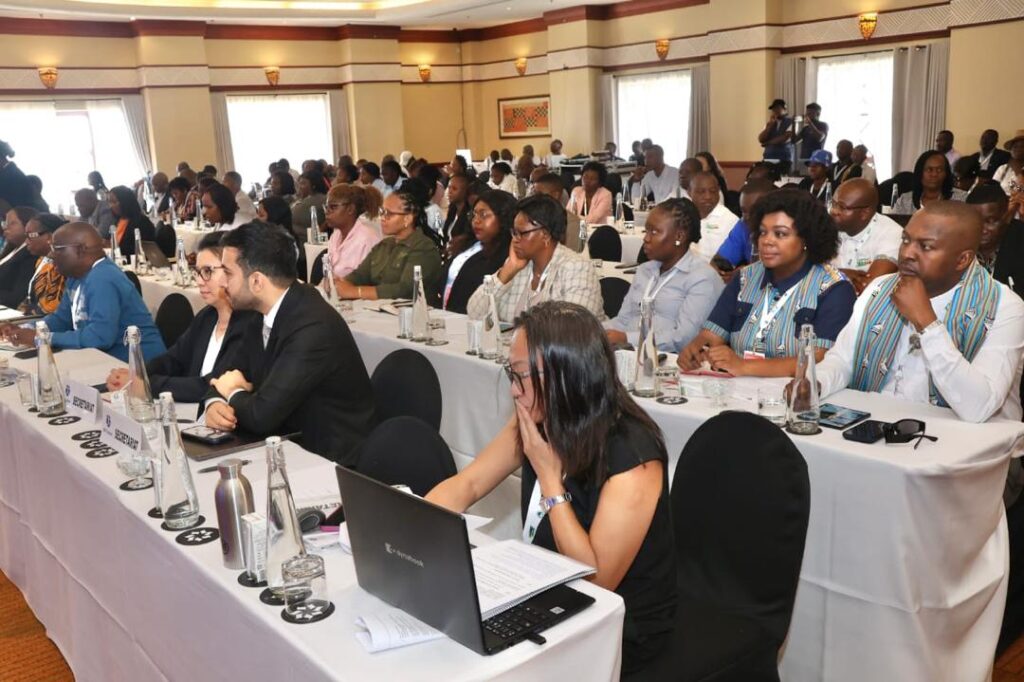
That was the unspoken deadline hanging over the 23rd UN Tourism Committee on Sustainable Tourism Meeting as it opened today in Victoria Falls.
With the UN having proclaimed 2024 as the decision year for the International Year of Sustainable and Resilient Tourism 2027, all tourism programmes and initiatives across the globe are now expected to align with sustainability and resilience targets by the time the calendar turns to 2027—a year Zimbabwe is set to help host.

The pressure is particularly acute for Africa, where tourism remains a vital economic lifeline but where infrastructure gaps, climate vulnerability, and uneven community benefits have long undermined the sector’s potential.
A logo, a timeline, and a test
The morning’s ceremonial unveiling of the official UN Tourism logo for 2027—first revealed to the world in Zimbabwe—provided the visual hook.
But beneath the pageantry, UN Tourism Secretary-General Her Excellency Shaikha Al Nuwais delivered a sobering message.
“The Committee’s mandate is instrumental in shaping a sustainable, resilient and future-ready tourism sector,” she said. But she warned that resilience cannot be an afterthought.
“Resilience is not what you build after the crisis. Resilience is what you have built before,” she told delegates.
For Victoria Falls—a UNESCO World Heritage site increasingly threatened by drought cycles affecting the waterfall’s flow—the message hit close to home.
The roadmap to 2027
Sources close to the meeting indicate that African member states will be asked to submit national alignment plans by mid-2025, with peer reviews beginning in 2026. Key focus areas are expected to include:
- Climate-proofing major tourism assets, from beaches to wildlife reserves.
- Local ownership thresholds for tour operations and hospitality services.
- Circular economy models for waste, water, and energy in tourism zones.
- Community benefit agreements that go beyond token employment to include equity stakes.
Zimbabwe’s Minister of Tourism and Hospitality Industry, Hon Barbara Rwodzi, acknowledged the scale of the task while expressing confidence.
“His Excellency President Mnangagwa has bestowed upon us an honour, but also a deadline,” she said. “By 2027, Zimbabwe will not only host the world—we will show the world what sustainable tourism looks like.”
She also thanked the Tourism Patron, Her Excellency the First Lady Dr. Auxillia Mnangagwa, for her work in empowering local communities to safeguard national heritage—a model she said could be scaled across the continent.
The cost of inaction
Delegates privately acknowledge that failure to meet the 2027 targets carries reputational and economic risks. International travellers and investors are increasingly scrutinizing sustainability credentials. Destinations that cannot demonstrate measurable progress by 2027 risk being sidelined.
“Three years is a short runway,” said one senior African tourism official who spoke on condition of anonymity. “But short runways force you to take off quickly—or not at all.”
As the meeting moves into technical sessions, the question hovering over Victoria Falls is no longer whether Africa wants sustainable tourism. It is whether Africa can build it in time.
The logo has been unveiled. The countdown has begun.
About Author

