

BY DR TONY M MONDA
In a career spanning 15 years, Zanele-Anne Mutema’s art work has transformed from subjective idiosyncratic art to conceptual sculpture and now to interactive immersive art, which involves audience participation and explores other human senses of perception.
A decade ago, Zanele was the subject of much analysis and appreciation in my Art Zone columns in the Herald newspaper in 2013.
Already then, her art was unique, distinct and memorable; imbued with multiple layers of meanings and associative tropes.
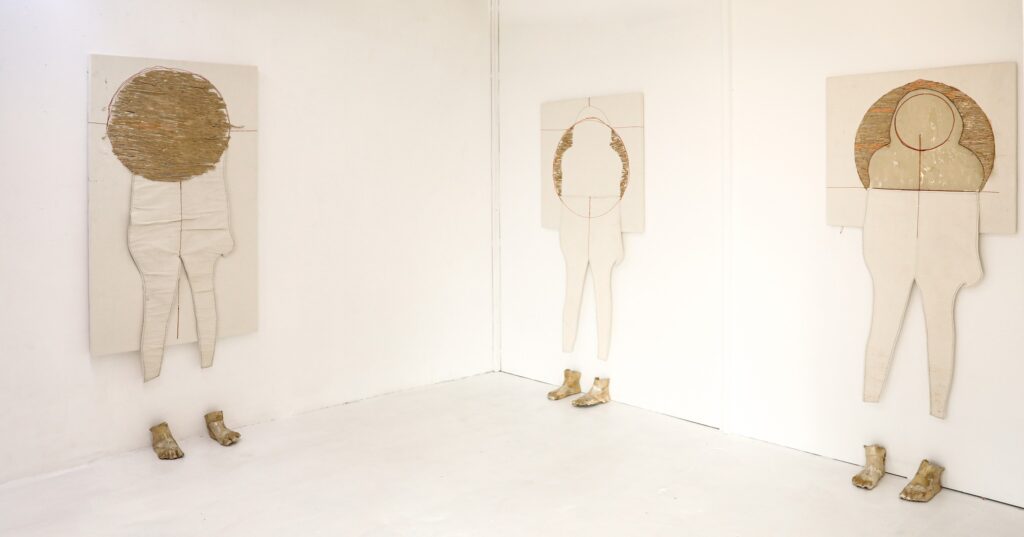
A distinctly unique quality of Mutema’s work is that her sculptural images appear as if effortlessly constructed; conceptual in nature and technically well-resolved.
Zanele’s art works often make use of simple everyday cast away domestic objects which are re-contextualized and endowed with a new bio-associative meaning, which are personal and intimate yet artistically accessible.
Although it has been ingrained in our mental association to associate the ‘African woman artist’ with the minor arts of domestic utility crafts, batiks, pottery, basketry and beadwork, this concept is as bigoted a notion as the idea of the African women being intellectually inferior. Throughout Africa many contemporary female visual artists have had to overcome the obstacles of a male-dominated visual art discipline to become recognized artists in their own right.
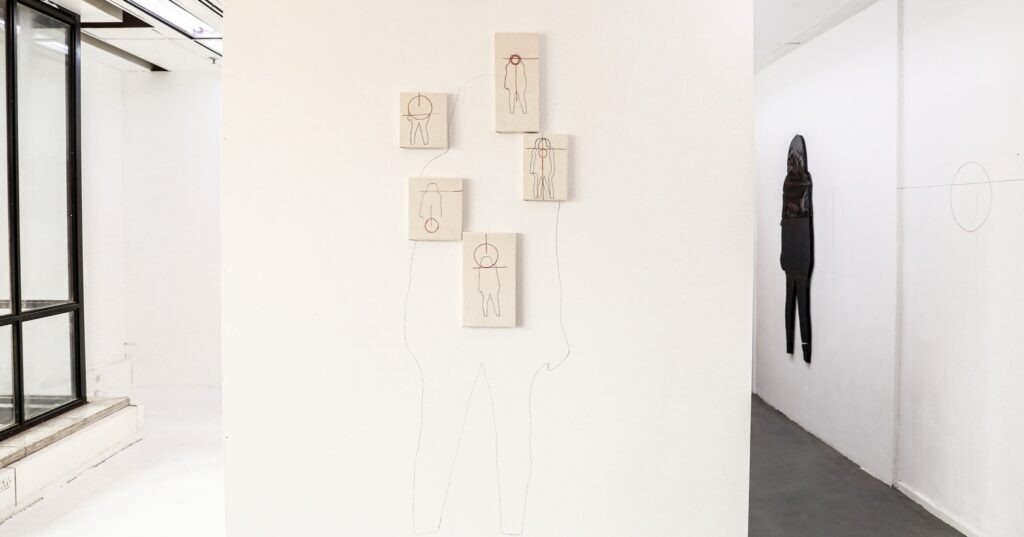
The intricate detail and hidden meanings in her work is an excellent example of how the feminist voice previously muted, has released intellectually stimulating discussions of our African society.
Following Zimbabwe’s independence in 1980, the indigenous artist needed new impulses for artistic self-expression and these were manifested in the art created by a new class of post- independent African women artists.
Today, women artists of various indigenous ethnicities in Zimbabwe are responsible for great works of art in a variety of media, including painting, printmaking, sculpture, photography, film installation art, and now immersive art.
It is on this premise that one looks at the work of a progressive woman artist, printmaker, photographer, sculptor and videographer, Zanele-Ann Mutema, whose achievements in her career have gone largely unnoticed despite her outstanding proficiency.
As a natural progression from her earlier work, she still explores and Exploits tactile elements of her up-cycled objects ingeniously capturing time, memory and contemporaneity in her works which all have an ageless quality.
Her Immersive art explorations and experiences are driven by technology, engage multiple senses and transport the audience into a living artwork where they become an active participant. It surrounds them with larger-than-life visuals, captivating sounds, and sometimes even interactive elements, transporting the audience to a different world.
However, immersive art is non consumerist, in fact, it is purely within the realm of intangible heritage.
Not to go untold, many indigenous cultures in Africa, create environments that were temporarily housed the participants of various cultural rites, not unlike environmental immersion art experiments of today. Much of the material culture used was associated with certain socio-religious rites and cultural activities.
Historically in both Western and African cultures women’s contribution to the arts have been omitted in many studies of traditional and contemporary art. By staking their claim within contemporary post-colonial traditions of Zimbabwe, women artists such as Matema, perpetuate the important centrality of women’s roles in determining and redefining African culture.
Zanele-Anne was born on 2nd November, 1988, in Harare, where she attended Queen Elizabeth Girls High School.
She graduated from National Gallery Visual Art Studio in 2010, while concurrently studying cinematography at the Zimbabwe Institute of Photography and Cinematography in 2009, Mutema spent a number of years trying to find a bridge between contemporary visual art and her interest in Zimbabwe’s traditional material culture.
Mutema’s work first came to light in 2008, when she held her first exhibition at Mona's Gallery in south Africa and at Allied Arts Exhibitions, in Harare. Her work has been featured in numerous exhibitions at the National Gallery of Zimbabwe, Gallery Delta and First Floor Gallery, Harare, where received numerous awards for her creative prowess, these include:.
First Prize: Mixed Media National Gallery Zimbabwe (2010),
Special Mention: Gallery Delta – Walls (2009),
Most Promising Artist: National Gallery Zimbabwe (2009),
Honorary Award: Allied Arts – National Gallery Zimbabwe (2008),
and the Overall Award at Gallery Delta for the Enriching Women Exhibition in (2008).
As a result of her achievements, Mutema has been selected for participation in international festivals.
Today her interactive immersive art has been installed and appreciated in leading art galleries around the world, including the Toronto Biennale, the Joburg Art Fair, the Harare International Festival of the Arts (HIFA), No Limits exhibition, in Harare, Zimbabwe (2014), and the RAVY Festival, at Galerie d’Art Contemporaine, in Cameroon ( 2014).
Mutema’s work features prominently in international art circles and is visible on numerous prominent global art websites. It celebrates contemporary female accomplishments and the power of the crafted object as a culturally valuable asset.
Dr. Tony Monda holds a PhD. in Art Theory and Philosophy and a DBA in Post-Colonial Heritage Studies. E-mail: tonym.MONDA@gmail.com
About Author

