

By Jonathan Mbiriyamveka
HARARE — Zimbabwean musicians are earning a paltry fraction of what their regional counterparts take home, with the country’s sole collective management organization distributing a mere $475,650 USD last year compared to South Africa’s $24.5 million and Nigeria’s $12 million, ZIMURA Chairman Alexio Gwenzi has revealed.
Addressing the inaugural ZIMURA Top 100 Intellectual Property Owners and Royalty Earners Stakeholder Engagement Forum at Rainbow Towers on Thursday, Gwenzi painted a grim picture of an industry hemorrhaging revenue due to regulatory missteps, tariff undercutting, and a crippling debt crisis.
“Currently, Zimbabwe is lagging. We must benchmark ourselves against regional leaders like Nigeria and South Africa.
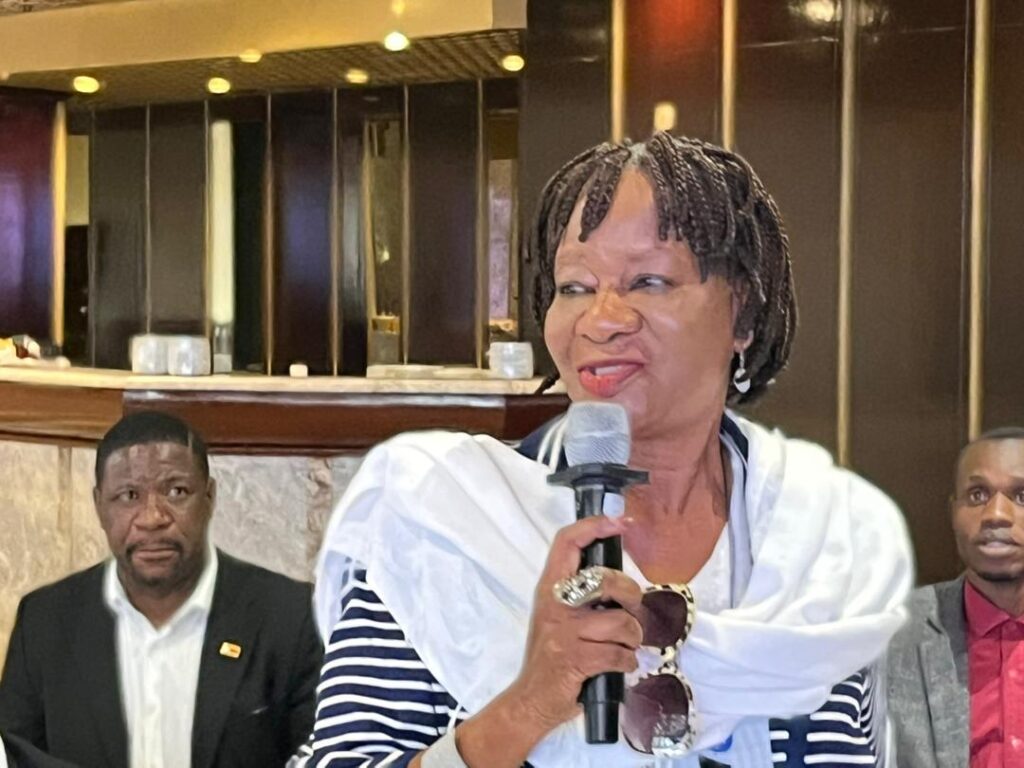
Dr Oliver Mtukudzi’s widower Daisy
“Last year Nigeria distributed approximately $12 million USD and South Africa, as the continental leader, distributed about $24.5 million USD. And guess what Zimbabwe distributed? a mere $475,650 USD. It’s a crisis,” Gwenzi declared.
The Chairman attributed the dismal figures to a series of systemic failures, beginning with government’s decision to register a second CMO despite serious objections from industry stakeholders.
“Globally, the best practice is a ‘one-stop-shop’—one CMO per type of right. In South Africa, SAMRO handles performing rights, while CAPASSO handles digital rights. Having two CMOs chasing the same rights leads to ‘tariff undercutting,’” Gwenzi explained.
He illustrated the damage with a striking example involving a well-known fast-food chain.
“We might invoice a client for $100,000, only for the other CMO to walk in and say, ‘We’ll do it for $50,000.’ The client will obviously pay the lower fee, but they are still playing your music, the ZIMURA repertoire.
“Take the recent incident with a well-known fast-food chain. Our inspectors proved they were playing ExQ, Jah Prayzah, Sulu, Nutty O, Janet Manyowa, Michael Mahendere, Enzo Ishall, Tammy Moyo and others. Yet, they paid the other CMO $46,000 instead of our $86,719 invoice. That is $40,000 of your money disappearing. Multiply that across the country, and you see why your royalty checks aren’t where they should be.”
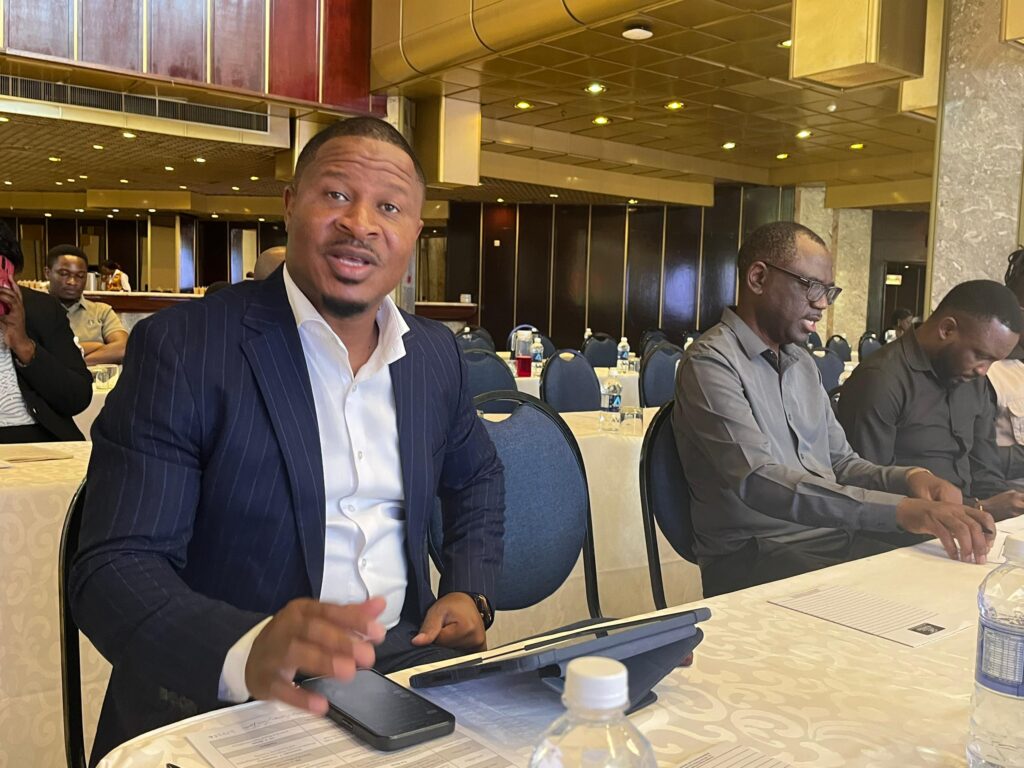
Minister Michael Mahendere
Beyond the challenge of a rival CMO, Gwenzi disclosed that ZIMURA is currently owed over $1 million USD by broadcasters, hotels, malls, and other music users across the country.
“We are working day and night to recover these debts,” he said.
The Chairman also took aim at lopsided contracts, particularly with the Zimbabwe Broadcasting Corporation (ZBC), revealing that the current agreement delivers a fraction of what is deserved.
“Many of you cheered when ZBC began collecting car radio licenses, assuming ZIMURA would get a windfall. Unfortunately, our current contract only gives us 3% of advertising revenue and we all know advertising isn’t what it used to be. We are telling ZBC: ‘Our music is your core content; we deserve a share of your total revenue,’” Gwenzi said.
He further revealed that a Ministry directive had halted collections from cover bands, despite what he described as the clear moral and legal obligation for such bands to pay for the use of composers’ works.
“While we are happy to review how much we charge, there is no moral justification for cover bands to profit from your compositions without paying ZIMURA.
“We are pleading with the Ministry of Justice, Legal and Parliamentary Affairs to help unfreeze this unjust directive which affects Music Composers in Zimbabwe,” he said.
The staggering gap between Zimbabwe’s royalty distributions and those of regional peers underscores the urgent need for policy intervention, industry consolidation, and aggressive debt recovery if local musicians are to earn a sustainable living from their craft.
About Author


