By Admore Mbonda in Kariba
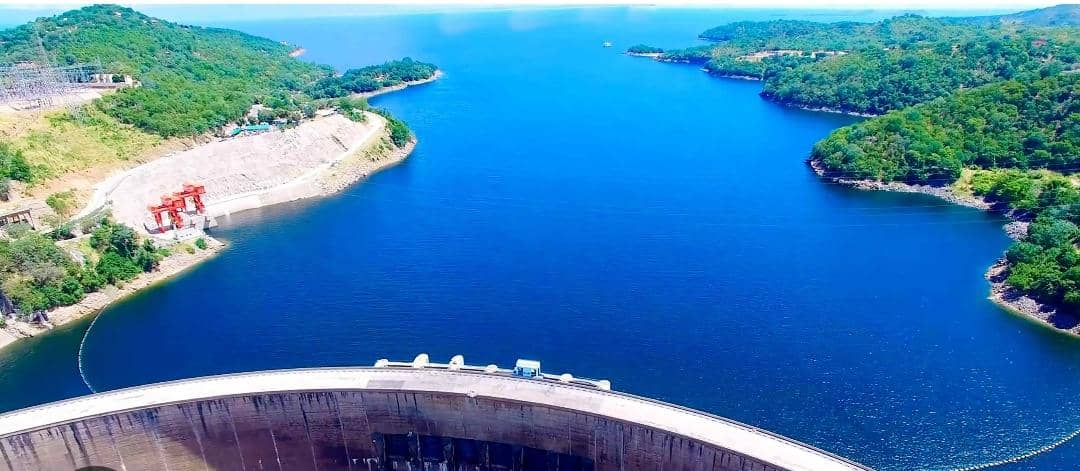
Lake Kariba has recently observed a marginal yet encouraging rise in water levels, raising hopes for improved hydropower production in the coming months.
The Zambezi River Authority (ZRA) shared this update recently, attributing the rise to consistent rainfall in the lake’s vicinity and immediate catchment area.
As per the latest report, Lake Kariba’s water level now measures at 477.04 metres, an increase from 476.37 metres recorded during the same timeframe last year.
While this increment offers a glimmer of hope, ZRA officials caution that overall conditions remain precarious, with expectations of stability rather than significant recovery as the rainy season progresses.
In terms of usable water, the live storage volume has surged to 6.88 billion cubic metres (BCM) from 3.91 BCM last year. Nevertheless, this figure still lags considerably behind the 29.76 BCM available in 2019, a year labelled by the ZRA as a “good year.”
Current data indicates that usable live storage for power generation has also increased, now standing at 10.63 percent, a notable rise from 6.04 percent last year.
This contrasts sharply with the 45.93 percent storage available for hydropower generation in 2019, highlighting the long-term repercussions of recurring droughts and erratic rainfall patterns the Zambezi basin continues to face.
Despite the upward trend, ZRA has reiterated that Lake Kariba remains in a delicate operational range. Designed to function optimally between 475.50 metres and 488.50 metres, the reservoir must maintain a 0.70-metre freeboard to safely support hydropower operations in both Zimbabwe and Zambia.
While ZRA acknowledges the recent inflows as a positive development, stakeholders are reminded to approach water utilization with caution, as current conditions do not yet warrant significant adjustments to power generation policies.
As Africa’s largest artificial reservoir by volume, Lake Kariba plays a vital role in providing electricity to both Zimbabwe and Zambia.
However, the sustained low water levels in recent years have curtailed generation capacity, leading to widespread power shortages across the region.
The ZRA has committed to monitoring hydrological conditions closely and will furnish regular updates throughout the ongoing rainy season, keeping the public informed of any developments affecting water levels and power generation.
About Author