

Staff Writer
Midlands Minister of State for Provincial Affairs and Devolution, Hon. Owen Ncube, has underscored the importance of leveraging heritage-based factors of production to advance the economic growth of both Zimbabwe and China.
He made the remarks while addressing delegates at the China International Import Expo Belt and Road Forum on Mutual Cooperation between participating countries and local governments held in Shanghai.
Minister Ncube highlighted the need to fully tap into the comprehensive strategic partnership of cooperation pursued by His Excellency President Dr. Emmerson Dambudzo Mnangagwa and His Excellency President Xi Jinping of the People’s Republic of China.
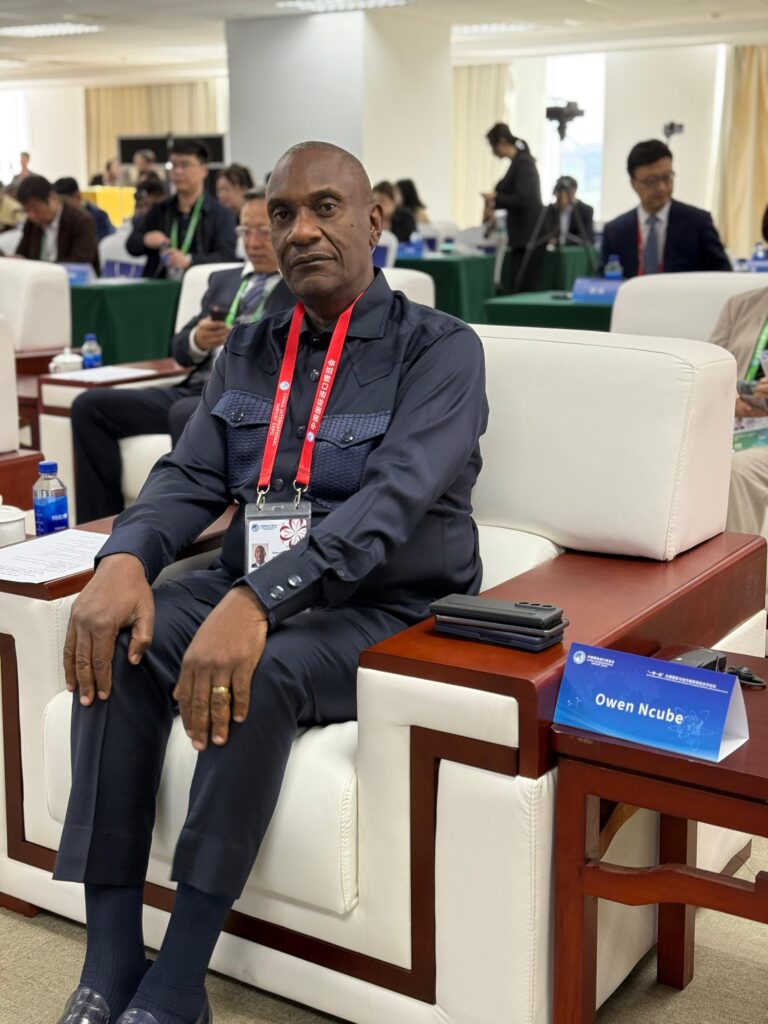
Hon. Owen Ncube
Having also attended the 7th edition of the event in 2024, Minister Ncube expressed his appreciation to the China Association for International Economic Cooperation for extending another invitation to participate in this year’s inclusive Belt and Road Forum, which continues to serve as a platform for mutually beneficial engagement among member states.
“We seek to promote high-quality development of the Belt and Road Initiative under the current global circumstances, strengthen our economies, improve community livelihoods, and further consolidate the longstanding bilateral relations between the Republic of Zimbabwe and the People’s Republic of China—relations which date back to Zimbabwe’s liberation struggle,” he said.
The keynote address was delivered by Mr. Long Yongtu, Former Vice Minister of the Ministry of Foreign Economic Relations and Trade and Chief Negotiator of China’s accession to the World Trade Organization.
Minister Ncube emphasized that the objectives of the conference align with Zimbabwe’s aspiration to achieve an upper middle-income economy by 2030, guided by the effective utilization of heritage-based factors of production and strengthened multilateral cooperation for shared development opportunities.
He noted that since Zimbabwe’s accession to the Belt and Road Initiative (BRI) in September 2018—following the establishment of the Second Republic under the visionary leadership of President Mnangagwa—the nation has demonstrated unwavering commitment to globalization, multilateralism, and regional integration through SADC, COMESA, and South–South Cooperation for sustainable development.
The BRI, he added, has revitalized and modernized the ancient Silk Road by promoting people-to-people exchanges, trade, and cooperation based on equality, mutual benefit, mutual respect, and peaceful coexistence—principles that underpin modern international relations.
Minister Ncube also acknowledged China’s remarkable economic transformation, noting that Zimbabwe has drawn valuable lessons from it. Since the advent of the Second Republic in November 2017, bold and strategic policy reforms have been adopted to entrench economic and commercial diplomacy, open the economy to both domestic and foreign investment, and promote private sector-led innovation, modernization, and industrialization.
He reaffirmed Government’s commitment to a “friend to all and enemy to none” foreign policy, which complements China’s approach of advancing a new phase of high-level openness and expanding global market access.
“Despite challenges posed by illegal sanctions, the COVID-19 pandemic, and recurrent droughts, Zimbabwe—working closely with the private sector—has successfully implemented several flagship infrastructure projects under the Belt and Road Initiative, including roads, bridges, dams, ports of entry, power generation, and other key facilities,” said Minister Ncube.
He further revealed that plans are underway to upgrade and modernize the national railway system, following a high-level meeting between Presidents Mnangagwa and Xi Jinping.
The Dinson Iron and Steel Plant in the Midlands Province, a subsidiary of Tsingshan Holdings, stands out as one of the most significant outcomes of Zimbabwe–China cooperation.
Once fully operational, it is poised to become one of the largest steel manufacturing facilities in Southern Africa.
The first phase—already complete—has an annual production capacity of 600,000 metric tonnes of steel and employs over 2,000 local workers.
At the national level, Zimbabwe has also benefited from other major BRI-linked infrastructure projects, including the Robert Gabriel Mugabe International Airport, the New Parliament Building, and the Hwange Units 7 and 8 Thermal Power Stations, among others.
Minister Ncube further outlined the Midlands Province’s comparative advantages for investment, tourism, and trade, which include:
Tourism: Zimbabwe has been recognised by Forbes magazine as the world’s top travel destination for 2025.
Strategic central location: The province links Southern Africa to international markets through South African and Mozambican ports.
Favourable climate and diverse ecology: Supporting a wide range of agricultural activities, including high-quality tobacco and cotton production, as well as premium beef exports.
Rich mineral endowment: Including gold, diamonds, platinum, lithium, iron ore, ferrochrome, nickel, cobalt, silver, silica, and coal, with additional gas deposits discovered in Muzarabani.
High solar radiation index: Offering vast potential for renewable energy investments.
Devolution of power: Empowering provincial and local authorities to enhance service delivery, promote ease of doing business, and drive local economic growth.
Other distinguished speakers at the Shanghai event included Mr. Song Yaoming, Former Director-level Commercial Counsellor of the Asia Department at the Ministry of Commerce; H.E. Tefera Derbew, Ambassador of Ethiopia to China; Mr. Elnur Aliyev, First Deputy Minister at Azerbaijan’s Ministry of Economy; Mr. Pamoda Gooneratne, Consul General of the Democratic Socialist Republic of Sri Lanka in Shanghai; and Mr. Safasharif Akhaliq, Chief Executive Officer of Export Bahrain.
About Author

