By Jonathan Mbiriyamveka
HARARE — Delta Corporation Limited today officially handed over a tailoring project valued at USD10,000 to Child Care Centre at the centre in Harare South reinforcing the company’s commitment to skills development, economic inclusion and sustainable community empowerment.
The project provides beneficiaries with practical tailoring skills and opportunities to progress from classroom learning into attachment, employment and entrepreneurship.
Early outcomes from the initiative include two graduates who have secured employment, one trainee currently on attachment, one trainee continuing with classroom instruction and a caregiver supporting the beneficiaries’ development. The intake has 15 students and a total of 60 will be trained this year.
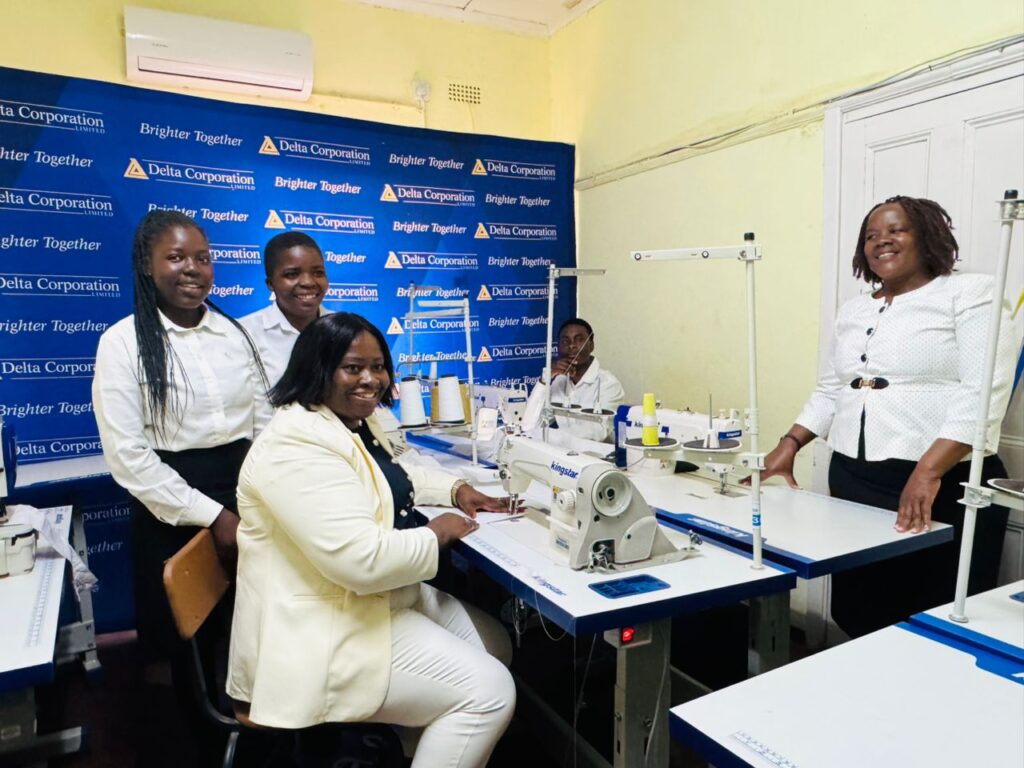
Delta Corporation General Manager – Corporate Affairs, Patricia Murambinda tries out one of the the new heavy duty tailoring machines
Speaking during the handover ceremony, Delta Corporation General Manager – Corporate Affairs, Patricia Murambinda, said the initiative should be understood as more than the provision of equipment or vocational training.
“Today, we are not simply handing over a tailoring project. We are handing over possibility — the possibility to learn, to work, to earn, to create and, ultimately, to stand independently,” Murambinda said.
She noted that sustainable community investment must move beyond meeting immediate needs to building capabilities that enable people to shape their own futures.
“A tailoring project sits at the meeting point of education, employment, entrepreneurship and social inclusion. It transforms beneficiaries from recipients of assistance into skilled creators of value,” she said.
The project is expected to equip participants with competencies in garment design, measurement, cutting, sewing, finishing, quality control and customer service. These skills can support the production of clothing, school uniforms, protective garments and household textile products while creating pathways to income generation.
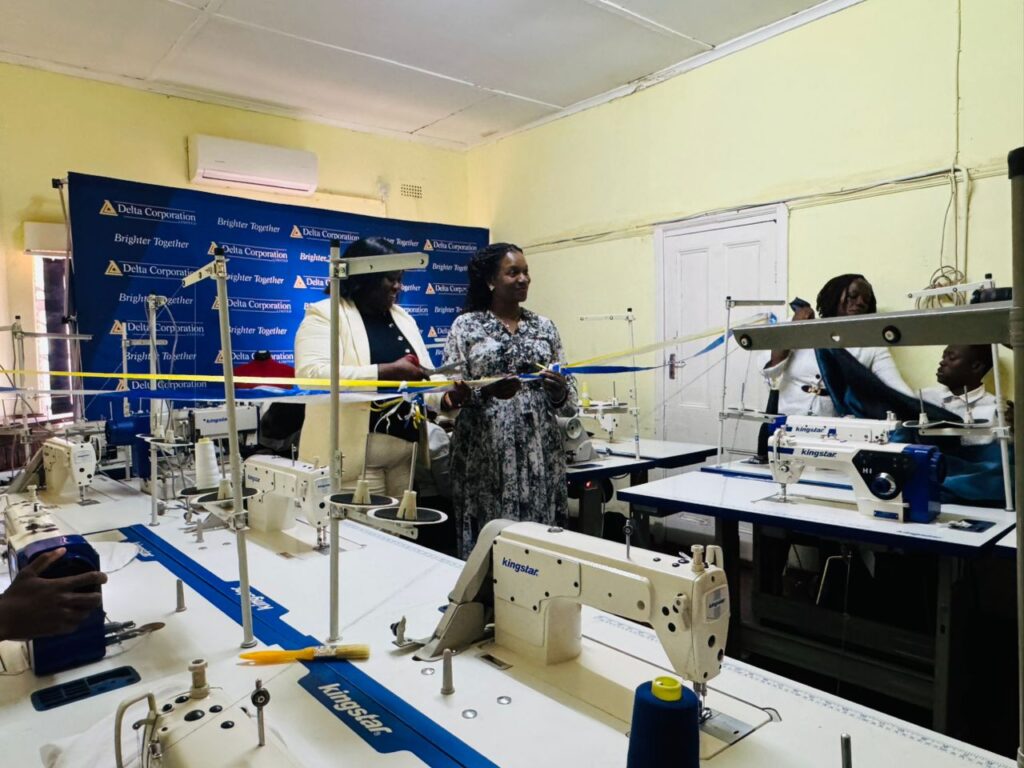
Delta Corporation General Manager – Corporate Affairs, Patricia Murambinda cuts the ribbon to officially handover the new machines alngoside Chiedz Executive director Mrs Sphiwe Chakawa
Murambinda challenged the project leadership and beneficiaries to maintain high standards of equipment stewardship, product quality, continuous learning, market development and accountability.
“The success of this project will not ultimately be measured by the handover ceremony, but by what we see six months, one year and three years from now.
“We should see more people trained, stronger technical competence, consistent product quality, growing market access and improved economic outcomes for participants,” she said.
Delta Corporation encouraged the project team to develop relationships with schools, companies, institutions, community groups and individual customers to establish a sustainable market for its products.
The company also called for reliable records covering training, production, orders, income, operating costs, equipment maintenance and beneficiary outcomes. Such information will enable the project and its partners to measure progress, identify challenges and strengthen future decision-making.
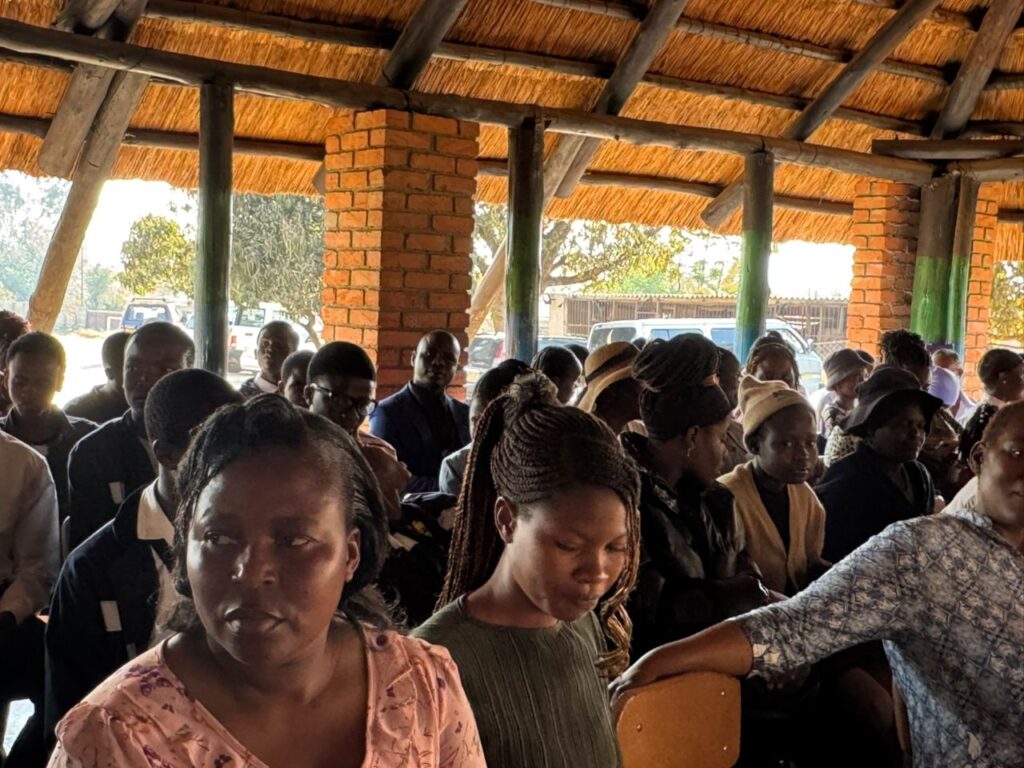
Part of Chiedza community
Murambinda congratulated the two employed graduates and encouraged them to serve as ambassadors for the programme through their professionalism, reliability and commitment to quality. She also recognised the trainee on attachment, the trainees continuing in class, trainers, caregivers, families and institutional leadership for their contribution.
“The greatest return on this investment will be realised when today’s beneficiaries become tomorrow’s trainers, employers, mentors and partners.
“We encourage every beneficiary to receive this opportunity with gratitude, but not to allow it to end with them,” she said.
Delta Corporation believes that successful businesses and thriving communities are interdependent. The company’s community investments seek to respond to genuine needs, build lasting human capability and create benefits that can be multiplied across families and communities.
Officially handing over the project, Murambinda expressed Delta Corporation’s expectation that the resources would be properly governed, carefully maintained and used to expand opportunities for training, employment and enterprise.

Delta Corporation General Manager – Corporate Affairs, Patricia Murambinda addresses the gathering
“Let this project be measured not only by what has been placed in the room, but by what will come out of it: skilled hands, excellent products, confident people, sustainable livelihoods and new opportunities for others,” she concluded.
Chiedza Childcare Centre executive director Mrs Spiwe Chakawa thanked Delta Corporation for donating US$10000.
“Through this support, we have procured seven heavy-duty sewing machines, one buttonhole machine, one overlocking machine and one body mannequin, and enrolled 20 young people in tailoring training.
“This builds on Delta’s initial grant to our tailoring programme in 2025, which enabled us to purchase machines.
“ Today is especially significant because this is the fourth Delta grant supporting youth skills development at Chiedza, collectively enabling 91 young people to access skills training.
“We are grateful for this continued investment because we are beginning to see real results,” she said.

Memolandry Munyanyi (19), a former student now employed by Msasa Clothing Factory at Msasa Garison Logistics
Chiedza Childcare CEntre, was established in 2001 working with vulnerable children and young people for over 25 years.
The focus is on helping them access education, protection, health and nutrition, family support and pathways to sustainable livelihoods.
Skills development is an important part of the work because young people not only to learn, but also to have opportunities to earn and become economically independent.
Since the launch of the tailoring programme in 2025, 65 young people have accessed training, of which 20 are currently in training, 16 are on attachment, and 29 have completed.
Of those trained, at least 14 young women are already using their skills to earn between US$80 and US$150 a month.
About Author