

BY BRENNA MATENDERE/ SHAMAINE CHIRIMUJIRI
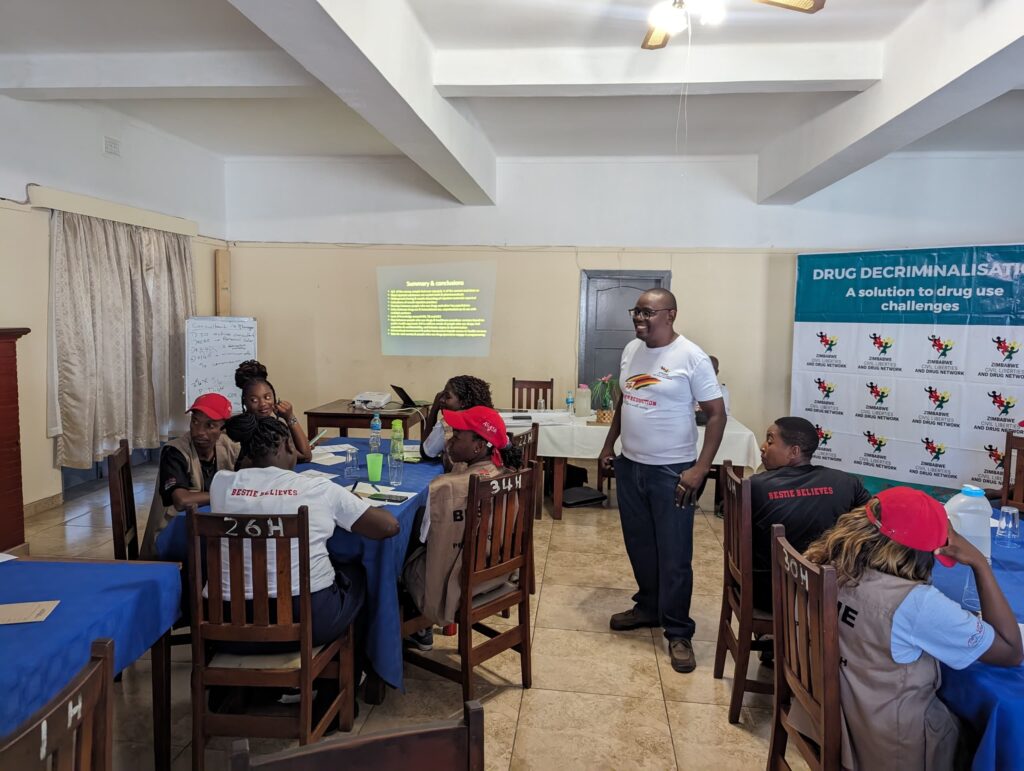
Following decades of putting down drug use through criminal charges, Zimbabwe Civil Liberties and Drug Network (ZCLDN) believes time has come for Zimbabwe to take a new approach in de-escalating illicit drug use through decriminalization.
The current drug laws which criminalize drug use are mostly the Dangerous Drugs Act Chapter 15:02 and The Criminal Code Chapter 9:23 Section 156 – 159.
The Dangerous Drugs Act which commenced on 15 April 1956, puts criminal restrictions on the importation, exportation, production, possession, sale, distribution and use of dangerous drugs.
Simplifying decriminalization, legalization, regulation
Decriminalization is the process through which the legislature removes criminal sanctions against an act, omission, article, or behavior which is considered a crime. In some legal systems criminal penalties are replaced by civil sanctions, while in other systems no penalties are applied at all.
More importantly, decriminalization in Zimbabwe will mean drug use would remain illegal, but the legal system would not prosecute a person for the act through harsh sentences like jail time but will recommend civil penalties. This is done to rehabilitate the would-be offender.
On the other hand, the term legalization refers to the removal of all drug-related offences from criminal law, such as use, possession, cultivation, production, and trading. Whilst regulation is typically established to manage where and how the legal drug can be produced, sold, and consumed. Criminal or civil penalties may apply if production, sale or consumption occur outside of regulations. An example of a legalised drug is alcohol. In Zimbabwe, alcohol is a regulated drug.
Whilst there is mistaken view that drug decriminalization is legalization in Zimbabwe, it is good to demystify that myth. Decriminalization approach calls for the provision of health services to people who use and inject drugs in their diversity.
This approach of decriminalization therefore is opposed to legalization where governments use criminal justice systems to respond to drug use in society that often have roots in poverty, trauma among other forms of discrimination and inequality.
Advantages of decriminalization over criminalization
There are scores of advantages of decriminalization over criminalization.
In Zimbabwe, it has come to pass that drug laws stand out for their strict enforcement, imposition of harsh punishment, disproportionate sentences, stigmatizing and discriminatory impacts which when combined, sum up as major disadvantages of criminalization.
In cases where there are convictions of drug users, it marks an end to their hopes of opportunities as they will have incurred a criminal record. A criminalized person who uses drugs, has little chances of being employed in Zimbabwe due to profiling.
Criminalisation has also resulted in demand for illegal drugs. Over the years, we have seen an increase in new psycho – active substances in Zimbabwe despite the tough criminal laws.
Criminalization is ineffective, damaging and costly. Criminalizing people who use drugs has resulted in disproportionate investments in law enforcement and criminal justice at the expense of health and harm reduction services and social support.
The International Drug Policy Consortium opines that the criminalization of people who use drugs is often driven by the goal of a ‘society free of drugs’, and has been central to the policies and rhetoric of the “war on drugs”. Yet governments that have adopted punitive drug policies and campaigns have failed to eradicate drug use and dependence, and such policies have had disastrous consequences.
“The results are seen in overcrowded prisons; the continued existence of detention centers
(including those in the guise of ‘drug rehabilitation’); the exacerbation of poverty for affected
communities; inadequate and underfunded health and social support services as resources flow to punishment and policing; stigma, marginalization and demonization of people who use drugs, which poses obstacles to accessing the support and services they might need, including healthcare, education, housing and employment,” says the organization. High density suburbs’ like Mbare, Dzivarasekwa, Highfield, Caledonia and Mufakose comes to mind when criminalization is affected to its residents. With decriminalization, the supply chain of illicit drugs is cut when the intended customers are finally put under treatment.
Negative health outcomes of criminalization People who inject drugs are 29 times more likely to get HIV/Aids than stimulant users. Jail is hell for them while those living with HIV who inject drugs are more likely to develop HCV when incarcerated.
Again, those with drug use challenges are 6 times more likely to develop TB in Prison.
There is also increased incidence of preventable adverse health consequences, including overdose deaths and high prevalence of HIV, viral hepatitis and tuberculosis.
The implementation of decriminalization and harm reduction strategies, such as needle exchange programs and methadone treatment, can reduce the spread of diseases and support individuals in overcoming addiction.
Success stories in decriminalization
This approach has shown success in countries like Portugal and Switzerland hence the need for
Zimbabwe to follow suit. Recently at the just ended 67 th Commission on Narcotic drugs the USA proposed a resolution calling for the inclusion and recognition of harm reduction services to help people who use and inject drugs. Criminalisation was an archaic strategy which has failed to curtail drug use. This has been witnessed by the emergency of new drugs on the market.
Decriminalization has the potential to reduce the spread of diseases, support individuals in overcoming addiction, and address the root causes of drug use.
A 2015 study found that since Portugal approved the new national strategy in 1999 that led to decriminalization, the per capita social cost of drug use decreased by 18%.
According to UNAIDS, the United Nations Programme on HIV and AIDS in countries that have decriminalized drugs and also put in harm reduction measures, the rate of the pandemic among people who use drugs dropped significantly.
It is against this background that Zimbabwe Civil liberties and Drug Network believes a health- focused approach (decriminalisation) is the best way to address drug and substance use.
According to Wilson Box, the ZCLDN projects director was recently quoted saying: “ZCLDN believes that decriminalization works because once people affected drug use know they won’t face penalization or criminalization, they’ll feel comfortable seeking help. With no criminalization, but rather public health interventions, we’ll see many people coming forward for assistance, which can effectively address drug use challenges. Currently, our laws criminalize
individuals who use and inject drugs, sending them to jail. Decriminalization offers an alternative, encouraging those who use and inject drugs to openly seek treatment services without fear of persecution and prosecution.”
For Zimbabwe to beat up the challenge of illicit drugs, there is need to consider decriminalizing illicit drugs to pave way for a public health approach if we are to preserve the current and next generation.
About Author

