

HEALTH CORRESPONDENT
Locals are investing in the medical sector at home. Individuals and consortiums are constructing state-of-the-art hospitals, complementing government and mission hospitals.
This private-public partnership ( PPP) is revolutionising health outcomes with procedures that used to be done outside the country now available at home.
Some of these procedures include cardiology services, diagnostic testing, minimal invasive heart surgery using cardiac stenting and key hole procedures. In the orthopedic care, joint replacements, spine surgeries, and treatment for fractures are now offered with world class standards.
Whule locals know more of hospitals outside the borders because they advertise, they hardly know that the procedures the seek abroad are now available at home.
The local medical sector is not allowed to make the public aware. Local laboratories are now top notch and are able to give the tests previously sourced outside. Comprehensive dental procedures and care can be done locally too.
In the public facilities, free corrective surgeries for women suffering from obstetric fistula are available at hospitals like Mashoko Christian Hospital, Victoria Chitepo and Chinhoyi Provincial Hospital.
For those with medical insurance, treatment at home is now wide and is accessible.
Despite having excellent local hospitals and medical facilities, many medical insurance companies continue to favour foreign treatment options.
This trend not only drains the country’s foreign currency reserves but also undermines the confidence of patients in their own healthcare system.
In the heart of Zimbabwe’s healthcare landscape, a paradox unfolds. While some privately owned local hospitals and medical facilities are equipped with cutting-edge technology and staffed by highly skilled specialists, medical insurance companies often default to foreign referrals.
This raises questions about the motives behind such decisions. Facilities like The Avenues Clinic, Milton Park Medical Centre, and St Anne’s Hospital provide high-quality care, yet are often overlooked.
In the high density suburbs, for example in Mabvuku/Tafara, there is Pacific 24 Hour Hospital offering full medical services. These are only the few mentioned, many more local facilities have now opened.
Supporting local hospitals helps patients avoid the high costs of overseas treatment and retains foreign currency within Zimbabwe — benefiting both individuals and the wider economy.
According to Ministry of Health statistics, over US$400 million was spent outside Zimbabwe on healthcare in 2024 — double the amount recorded in 2022.
This is a staggering amount that could be invested in strengthening local healthcare infrastructure.
Unnecessary transfers, particularly for cardiac, maternity, orthopedic, and many specialised cases, place patients at risk.
A local doctor who advocates for treatment at home is Dr Vivek Solanki.
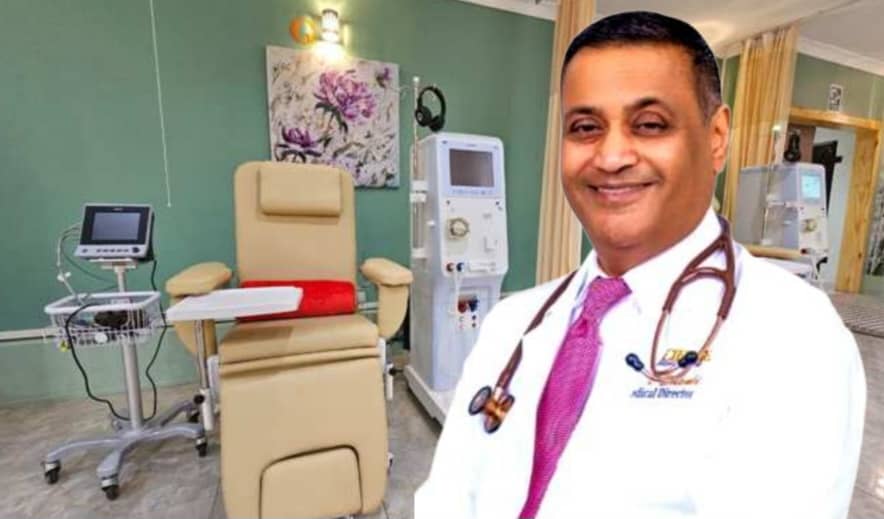
Collaboration is key for better health outcomes, Dr Vivek Solanki speaks on reverse brain gain tide, and the need for medical insurance to support local facilities.
He pointed out there have been instances when referred procedures are poorly handled outside with the patient later getting the corrective surgery at home.
He said this could be avoided if the local insurance supported private facilities at home more.
“Long flights can worsen medical conditions, cause discomfort, and elevate health risks for patients. Moreover, seeking treatment abroad can lead to complications that require further treatment upon return. More recently, we see people who went for dental implants to India and the ‘implants’ fell out soon after returning. One developed severe sepsis requiring surgery here in Harare. This unnecessary pain and expenditure can be avoided if local insurance supported such procedures to be done at home,” said Dr Solanki.
Some local doctors also overlook local expertise.
“It’s time for medical insurance companies and doctors to reassess their referral practices. By supporting local expertise and infrastructure, they can restore confidence in Zimbabwean healthcare, reduce outward medical tourism, and align with national goals,” he said.
President Emmerson Mnangagwa has actively promoted Zimbabwe as a destination for medical tourism. This highlights the contradiction when local insurers undermine these efforts.
Zimbabwe’s medical field witnessed a significant brain drain in the past, with many skilled healthcare professionals emigrating in search of better opportunities.
However, the tide is turning as these experts return home, bringing with them invaluable experience gained from working in world-class hospitals abroad.
This brain gain is a welcome development, as these returnees bring cutting-edge skills and knowledge to revitalise Zimbabwe’s healthcare system.
With their expertise, they are helping improve medical standards, train local staff, and contribute to the country’s development, marking a new era of growth and progress in the medical field.
Stakeholders in the health sector must act now to restore confidence, strengthen local institutions, and create a sustainable, thriving healthcare environment.
Recognising and investing in local excellence will lead to better resource utilisation, improved patient outcomes, and renewed trust in Zimbabwean healthcare.
As Dr Solanki said, “The grass may seem greener abroad, but local healthcare’s roots are growing stronger. Let’s nurture our own excellence, prune unnecessary referrals, and harvest a brighter future for Zimbabwean healthcare.”
The best care is often the one overlooked and is closest to home.
With the return of Diaspora doctors and specialists, the brain gain has brought global expertise into Zimbabwe’s healthcare sector.
Many have worked in leading hospitals across Russia, England, South Africa, Canada, India and Australia, enriching local medical practice and services.
When insurance companies and healthcare professionals consistently default to foreign referrals, it undermines confidence in local care and results in a significant outflow of foreign currency which could further upgrade local facilities.
It’s time to challenge the status quo and prioritise local healthcare. By doing so, we can break the cycle of medical tourism abroad and build a stronger, self-reliant healthcare system that benefits all Zimbabweans.
Zimbabwe can be a medical tourism destination for neighbouring countries seeking medical attention here.
The COVID-19 era should that we were a beckon, neighbouring countries flocked for vaccination which, for locals was free at public facilities and costing a token at private facilities.
Zimbabwe is poised for great, if only the medical insurance could help by pulling in the same direction.
About Author

