By Jonathan Mbiriyamveka
HARARE – When the Airbus A330-300 touched down at Robert Gabriel Mugabe International Airport on Monday, it carried more than 302 seats and 30 tonnes of cargo. It carried the weight of a nation’s economic aspirations.
The resumption of Air Zimbabwe‘s direct Harare-London route after 14 years is not merely about restoring a flight path.
It represents a strategic bet that aviation is the critical engine that will drive Zimbabwe’s tourism sector towards its ambitious targets, with direct air connectivity identified as the single most important enabler of tourist arrivals, trade, and investment.
“A modern, integrated, and efficient transport system is not a luxury; it is a necessity,” declared Transport and Infrastructural Development Minister Advocate Felix Mhona at the launch ceremony.
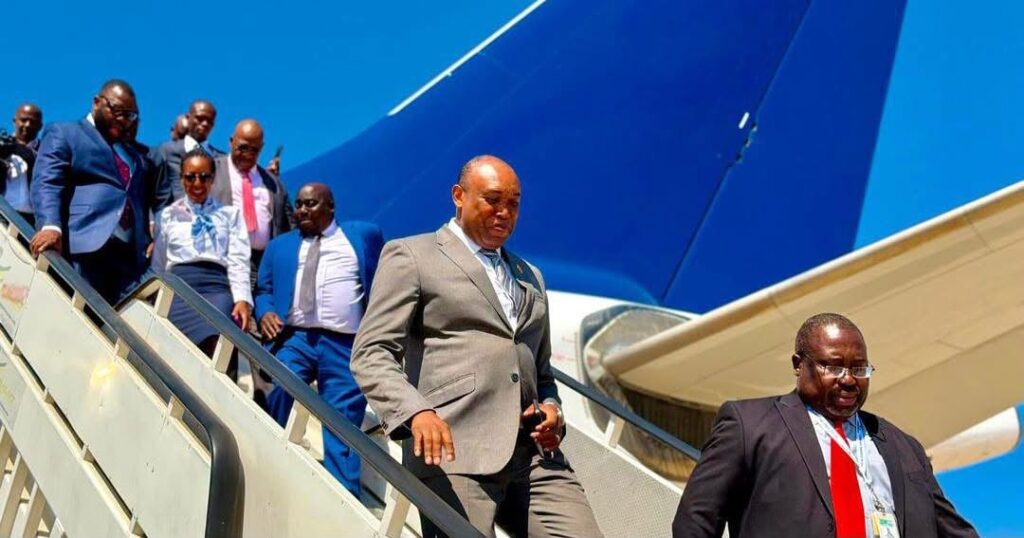
“It is the circulatory system through which investment flows, trade moves, tourists arrive, and our young people gain access to global opportunities. Air transport is the crown jewel of that system”.
Zimbabwe’s tourism sector has been on an upward trajectory, recording 1.45 million international arrivals in 2024 and generating US$1.16 billion in revenue.
The country has earned global recognition, with Forbes naming it the World’s Number One Must Visit Country in 2025, while Condé Nast Traveler featured Zimbabwe among the Best Places to Visit in 2026.
But industry experts recognise that global accolades alone are insufficient without the connectivity to deliver visitors to the destination.
The United Kingdom remains Zimbabwe’s second-largest international source market after the United States, making the restoration of this direct air link a strategic catalyst for sustained growth.
For Tourism and Hospitality Industry Minister Barbara Rwodzi, the route relaunch is about filling seats and growing market share.
“We have a lot of British people who want to come to Zimbabwe. They sit on number two in terms of our market sources after the US,” she said.
“Our marketing and promotion must increase more and visibility in these countries in the European market source”.

The early market response suggests the appetite is real. Within days of the route announcement, Air Zimbabwe recorded 1,479 confirmed passenger bookings and more than 30 tonnes of cargo – a demonstration of confidence that has exceeded expectations.
The London route relaunch is the culmination of years of strategic infrastructure investment that has transformed Zimbabwe’s aviation landscape.
The US$153 million upgrade of Robert Gabriel Mugabe International Airport has expanded annual passenger handling capacity from 2.5 million to six million, introducing a new VVIP Pavilion and refurbished domestic terminal.
These upgrades have created a ripple effect. Passenger traffic rose by 8.19% in the first three quarters of 2025, reflecting growing confidence in air travel.
New systems, including Air Traffic Control communication and Secondary Surveillance Radar installations, have strengthened Zimbabwe’s air navigation capabilities to international standards.
Beyond the capital, regional airports are also receiving attention. The rehabilitation of Grand Reef Airport in Mutare, unveiled during the Sanganai/Hlanganani World Tourism Expo in September 2025, has created fresh synergies between aviation and tourism, linking communities in Manicaland Province to the national tourism network.
The aviation resurgence extends beyond the national carrier. Private operators are expanding their footprint, recognising that efficient air connectivity is essential to unlocking Zimbabwe’s tourism potential.
Zimbabwe Air Safaris, a charter operator, has introduced the Pilatus PC-12 NGX aircraft, providing reliable access to remote airstrips while maintaining international standards of passenger comfort and safety. Chief pilot Anastasios Zaverdinos believes aviation has become an essential pillar of tourism development.
“By improving access to remote destinations, we contribute directly to tourism growth, investment opportunities and local economic development,” he said.
In Victoria Falls, the US$2.5 million Zambezi Helicopter Company Helipad has positioned the resort town as a hub for premium air services.
The facility, which includes three operational helipads, a lounge offering panoramic views of the Victoria Falls spray, and a 34,000-litre fuel storage facility, has doubled the company’s helicopter fleet from four to eight, representing a total investment of US$9 million.
Tourism Minister Rwodzi described the helipad as a statement of investor confidence. “This infrastructure speaks volumes about the confidence investors have in Zimbabwe.
“We want more partners to come in, especially here in Victoria Falls, and our goal is to make this city the next Cape Town by 2030,” she said.
Industry analysts note that improved aviation connectivity generates significant economic spillover effects. Greater mobility encourages tourists to visit multiple destinations, extending average lengths of stay and increasing expenditure across accommodation providers, safari operators, restaurants, and local enterprises.
The cargo market response to the London route relaunch is equally telling. More than 30 tonnes of cargo have already been confirmed, with horticultural produce, pharmaceuticals, and other high-value exports expected to reach international markets more efficiently.
This strengthens export competitiveness and contributes to increased foreign currency earnings.
As Transport Minister Mhona noted, for investors, entrepreneurs, and government officials, the route opens direct pathways to capital, partnerships, and international engagement. “For tourists, it places Zimbabwe – with our natural wonders, our wildlife, and our culture – within reach of one of the world’s most affluent markets,” he said.
The aviation resurgence is aligned with President Mnangagwa’s Vision 2030 of attaining an Upper Middle-Income Economy, with air transportation positioned as critical in connecting Brand Zimbabwe to regional and international markets.
Fastjet Zimbabwe’s introduction of an Airbus A320-200 in August 2026 to meet peak travel demand reflects growing confidence in the sector.
The airline’s country head, Donahue Cortes, described the move as an opportunity to evaluate the aircraft for potential permanent addition to the fleet from 2027, supporting “continued growth and strengthening connectivity between Zimbabwe and the region”.
As Zimbabwe competes with other African tourism destinations, strong aviation infrastructure is becoming an increasingly important differentiator.
The Harare-London route represents not just the return of a national carrier to a lucrative market but the latest chapter in a broader story of resurgence – one where aviation is the engine, and tourism is the vehicle driving Zimbabwe towards its economic ambitions.
For the 1,479 passengers who have already booked their seats, and the thousands more expected to follow, the message is clear: Zimbabwe is open for business, and the journey has just begun.
About Author