. . . 800 million Africans remain offline. A minister says that is ‘building a bigger gap, not a future’
By Jonathan Mbiriyamveka
VICTORIA FALLS — For centuries, the Mosi-oa-Tunya — “the smoke that thunders” — has roared at the border of Zambia and Zimbabwe. But on Monday, a different voice rose above the falls. It was a voice of frustration, of urgency, and of truth.
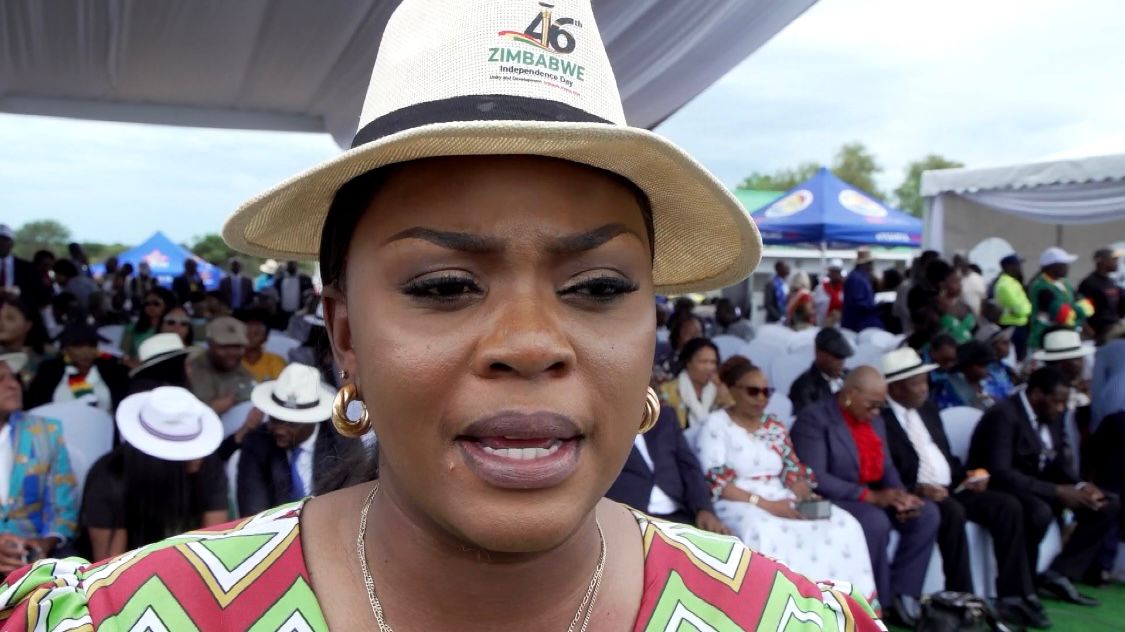
Honourable Dr Tatenda Anastacia Mavetera, Zimbabwe’s Minister of ICT, Postal and Courier Services, stood before delegates at the ITU Regional Development Forum for Africa 2026 and delivered a number that should trouble every African leader.
Over 800 million people across the continent remain offline.
“Let me begin with a truth that should trouble every one of us,” Dr Mavetera said during the official opening ceremony at the Cresta Sprayview Hotel in Victoria Falls. “Our youth population is the fastest-growing on earth, yet too many are locked out of the global digital economy.”
The Minister did not soften the blow. She invoked the late Kofi Annan, former United Nations Secretary-General, who once warned: “The digital divide is a mirror of the development divide. We cannot close one without closing the other.”
“He was right,” Mavetera said flatly. “If half of Africa cannot access a digital classroom, a telemedicine service, or a mobile market, we are not building a future — we are building a bigger gap.”
The stark statistic — 800 million offline — represents more than half of Africa’s population of approximately 1.4 billion people. It means that for every two Africans, one is entirely cut off from the basic tools that have become essential for education, healthcare, commerce, and civic participation in the 21st century.
Delegates from across the continent, seated in the hotel’s conference hall, nodded silently as the Minister spoke. Many represent countries where rural communities remain entirely unconnected, where schoolchildren walk kilometres to charge a mobile phone, and where farmers cannot access weather forecasts or market prices.
Dr Mavetera then turned to another African voice: Strive Masiyiwa, the Zimbabwe-born telecoms magnate and continental champion of connectivity.
“Connectivity is not a luxury,” the Minister quoted Masiyiwa. “It is a fundamental human right. Without it, you lock people out of education, healthcare, and economic opportunity.”
The Minister declared that this conviction “must be the drumbeat of this forum” — a two-day gathering of regional administrations, telecommunications operators, regulatory authorities, and digital ecosystem stakeholders from across Africa.
But Mavetera did not merely diagnose the problem. She challenged the assembled leaders to move from rhetoric to action.
“What does Africa need?” she asked. She then laid out five pillars: universal access to reach the last mile and the rural village; affordability so that data does not cost a day’s wage; digital skills to ensure a connected mind can create, not just consume; locally relevant content in African languages; and digital sovereignty so that Africa owns its data, its infrastructure, and its rules.
An Ethiopian proverb, she said, captures the moment perfectly: “When spider webs unite, they can tie up a lion.”
“The lion we face is digital exclusion,” Dr Mavetera said. “But if we unite our policies, our investment, and our infrastructure, we will tie that lion down.”
The Forum, which runs from Monday 25 May to Tuesday 26 May 2026, is officially convened by the Government of Zimbabwe in coordination with the Postal and Telecommunications Regulatory Authority of Zimbabwe (POTRAZ). Its theme is ‘Universal, meaningful and affordable connectivity for an inclusive and sustainable digital future’.
That theme, the Minister noted, is not accidental. It carries the exact same mandate as the Ninth ITU World Telecommunication Development Conference (WTDC-25), held in Baku, Azerbaijan, from 17 to 28 November 2025. The continuity, she explained, is a strategic necessity designed to bridge the gap between global declarations and regional realities.
As the first day of deliberations concluded, the number 800 million hung in the air like the mist from Victoria Falls itself — a constant, visible reminder of how far Africa still has to go.
But the Minister’s closing words offered not despair but a call to collective action.
“Tomorrow belongs to the people who prepare for it today,” she said, quoting a proverb that has guided generations. “We have no time to postpone.
“The young people of this continent are the inheritors of our decisions. Let them inherit a digital Africa that is universally connected, meaningfully engaged, and truly sovereign.”
Outside the conference hall, the smoke that thunders continued its ancient roar. The question now is whether Africa’s leaders will answer with a roar of their own — or remain silent while 800 million citizens are left behind.
About Author