

BY DR TONY MONDA
In 1975, at the height of Zimbabwe’s Liberation War, the war in Vietnam, one of the longest and bloodiest civil wars, finally ended.
After being exiled for fifteen years, the Ayatollah Khomeini returned to Iran in 1979, and deposed the Shah. With the world’s population estimated at 4 billion people, Louise Brown, born in 1978, became the first test tube baby.
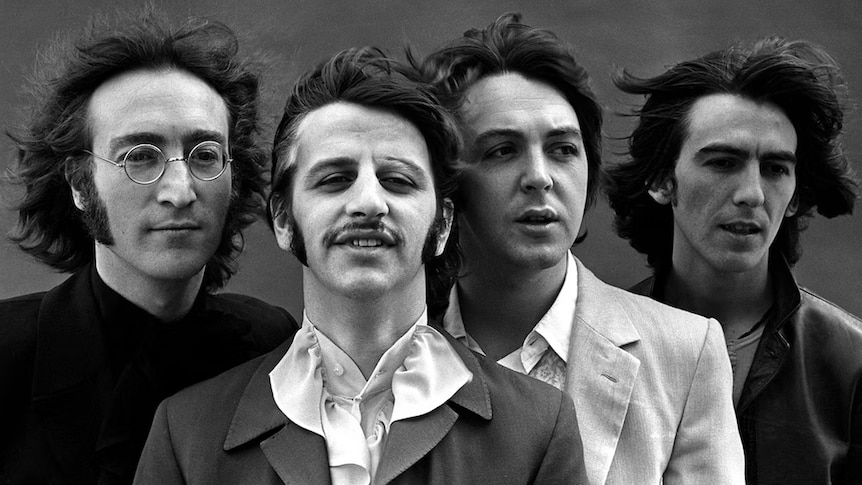
In music the popular band the Beatles announced their disbandment and the group ABBA was born, possibly the most successful music band of the next decade, was extremely popular on Rhodesian airwaves.
Progressive Rock created a new 1970’s generation of bands including Genesis, Yes, Emerson, Lake and Palmer and Pink Floyd. Other singers and bands started whilst others strengthened their fan base including The Rolling Stones, Led Zeppelin, AC/DC, Queen and Black Sabbath.
In the United States there was an artistic post-war revolution that changed the face of fashion. Peace symbols, flower power, floral shirts and long-haired hippies murmuring mantras to alternative religions, meditation and recreational drugs were de rigueur; California brimmed with them. Singing Good Vibrations, California Dreaming, A Whiter Shade of Pale, and Drift Away.
The sounds of Percy Sledge, Joe Cocker, Sam Cooke and Jimmy Hendrix, and locally Thomas Mapfumo’s “Butsu Mutandarika” and Oliver Mtukudzi’s “Nhamo Dzandimomotera” rang out of transistor radios and stereo players venting protests for the majority’s struggles against the Rhodesian regime.
In the 1970’s battlefields of fashion and the arts, there was revolution everywhere.
“Revolution” was the label given to flared jeans worn with hard wearing khaki or military inspired shirts and black or green berets during the War of liberation. Our leaders wore socialist safari suits, inspired and made popular by Chairman Mao Zedong of China; the accepted daily garb of millions of Chinese was worn by revolutionary leaders from Joseph Stalin in Russia to Cde. Fidel Castro of Cuba, to Julius Nyerere of Tanzania, Samora Michel of Mozambique and Zimbabwe’s Robert Mugabe.
Four Revolutionaries of the 1960s and 1970s sport military inspired safari suits.
The Seventies had a look and feel all of its own. Seventies clothes and fashions included many of the styles worn today in modified forms, but also some very short lived examples that when we look at them we wonder how and why we ever wore them.
There was a shift towards body-conscious clothing that had never existed before in the world of fashion. The male silhouette changed to flared-legged pants, tight shirts and platform soles. The staleness of seasons passed, and gave way to experimentation and a culture built on the excesses of consumerism.
Casual clothing became ostentatious and unsuitable for African guerrilla warfare.
The guerrillas opted for olive green and khaki military-inspired safari suits that epitomised what
it meant to be a socialist-Marxist revolutionary. Our leaders sported the practical and simple socialist inspired safari suit which had a minimal aesthetic, exuding discipline and simplicity at its core. It was a pure and practical outfit which made one accessible to the common man without pretension.
At the height of Independence when the sun broke through the dark clouds over Zimbabwe and the sons and daughters of the revolution embraced the new dawn of freedom, one could see the jubilant leaders and military commanders sporting their flared military safari suits with fists raised in jubilation.
It was an era of simplicity, sacrifice and consent; the military fashion of the struggle spoke clearly of one’s ethos, belonging and dedication to freedom. Freedom! Freedom!
Dr. Tony Monda holds a PhD. in Art Theory and Philosophy and a DBA in Post-Colonial Heritage Studies. E-mail: tonym.MONDA@gmail.com
About Author

