

Staff Writer
Tebekwe Mine in Shurugwi is basking in praise following commendations from the Joint Parliamentary Portfolio Committees on Mines, Mining Development, and the Thematic Committee on Gender and Development.
The committees lauded the mine for its substantial contributions to community development, particularly in empowering women through robust Corporate Social Responsibility (CSR) initiatives.
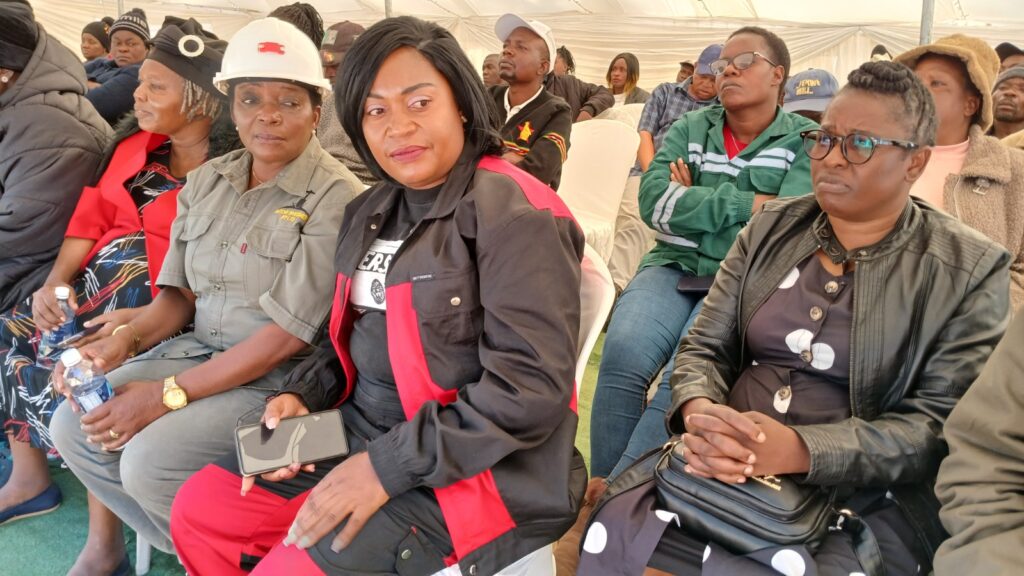
On Thursday, the joint committee conducted a public hearing at Tebekwe Mine to assess the inclusion of women, youth, and persons with disabilities in the mining value chain across the province. The delegation toured the facility and received briefings on the mine’s operations, challenges, and its role in supporting Zimbabwe’s national economy.
Aligned with President Mnangagwa’s vision of a $12 billion mining economy, Tebekwe Mine has become a key player in driving gold production. The mine currently delivers at least four kilograms of gold to Fidelity Printers each month, contributing significantly toward the nation’s 100-tonne annual gold production target.
Senator Anna Shiri, representing persons with disabilities in the Senate, led the Parliamentary delegation and expressed admiration for the mine’s operations and inclusive approach.
“I’m highly impressed by what I’ve seen at Tebekwe Mine. Our visit aimed to evaluate the involvement of women in mining, and it’s evident that real progress is being made,” said Senator Shiri.
She acknowledged persistent challenges, such as lack of machinery, but praised Tebekwe Mine for actively promoting the involvement of women and persons with disabilities in mining activities.
“Tebekwe Mine is a clear example that women can succeed in mining. Ambassador Professor Smelly Dube has demonstrated bold leadership. If more women had access to claims, we would see nationwide progress,” she said.
Policy and Legislative Focus
The committee’s objectives included identifying barriers preventing full participation by women, youth, and persons with disabilities in mining; assessing the effectiveness of current support programs and policies; and crafting actionable recommendations to ensure equitable opportunities in the sector.
Community Empowerment Initiatives
Tebekwe Mine’s benefactor, Ambassador Professor Smelly Dube, revealed that over 300 local residents—primarily youth and women—have been empowered to form mining syndicates within the mine. These individuals are supported with access to mining areas and often provided equipment at no cost.
“We encourage them to work for their livelihoods. Our goal is to uplift the community,” said Prof. Dube.
The mine is also undergoing significant upgrades, with plans to establish a new processing plant equipped with modern machinery to increase production.
However, Prof. Dube highlighted challenges the company faces, particularly recurring power outages and high electricity costs—sometimes exceeding $35,000 monthly. These unplanned outages have become a safety hazard for workers operating underground electrical machinery.
Community Engagement and Appreciation
Senator Shiri praised the mine’s comprehensive empowerment programs, which include economic support for local families and job creation. Midlands Province Mining Director Khumbulani Mlangeni added that the province currently hosts 9,900 mining claims, with 1,700 earmarked for women and 200 hectares per district reserved for youth-led mining initiatives.
Of the 298 mining claims ceded by ZIMASCO to the government in the province, 31 have been allocated to women, and four to persons with disabilities.
Tebekwe Mine has also built strong relationships with local traditional leaders and its workforce. In a gesture of appreciation, the mine recently hosted a festive event for employees and local chiefs—Banga, Ndanga, Mapanzure, and Nhema—providing gifts and recognizing outstanding service.
Chief Mapanzure praised Dr. Dube and her husband, Engineer Mncedisi Dube, for their generosity.
“We received complete suits, fuel, and food hampers—not just for ourselves, but also for our spouses. This is true community upliftment,” said Chief Mapanzure.
Employee Recognition
During the event, several employees were honored, including Mr. Tedius Mugambiwa for long service, Mr. Josiah Munamati for dedication and trustworthiness, Mr. Jonah Sibanda for long service, and Mr. Isaiah Kapedzi, who received the Captain of the Year 2024 award.
Tebekwe Mine employs 428 people and remains committed to supporting the local community through food hampers for the elderly, employment opportunities, and access to mining pits for women and youth.
“We have allocated 25 pits to community members, benefiting about 210 people. We also ensure their safety through IDs and security support to prevent harassment by artisanal miners,” said Dr. Dube.
Calls for Better Communication and Support
Despite these efforts, community members—particularly women and youth—voiced concerns about limited access to mining claims, equipment, and land.
Many expressed frustration over being excluded from opportunities and called for more inclusive practices.
“There’s a lack of communication. We only learned about the Ministry of Mines’ 20% loan allocation for women and youth during this meeting. How can we benefit if we’re not informed?” said one participant.
Participants urged parliamentarians to advocate for real support, emphasizing that women are ready to work for themselves—not just as employees of others.

About Author

