

By Jonathan Mbiriyamveka
MAPHISA – For years, the numbers were heartbreaking. Zero percent. That was the science pass rate in some parts of Matabeleland South.
Not because children weren’t trying. But because there were no labs, no equipment, no power, and often no teacher trained to make science real.
The rural-urban gap wasn’t a statistic. It was a daily struggle for pupils who walked kilometres before dawn, only to learn science from a dusty chalkboard.
But something is changing.
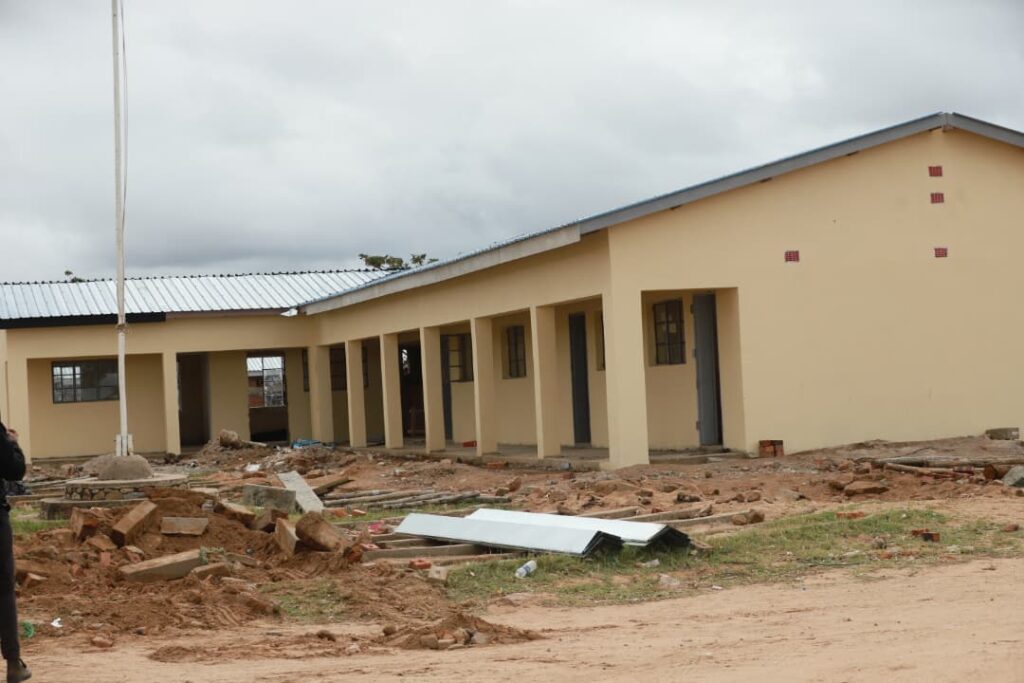
At Mahetshe Primary School, two new 5kVA solar systems now power a brand-new laboratory and ICT block. For the first time, pupils can touch a beaker, switch on a computer, and watch a chemical reaction happen right in front of them.
“This is where innovation begins,” said Moses Mhike, Permanent Secretary in the Ministry of Primary and Secondary Education. “Not at university. Right here, at primary level.”
Mhike didn’t hide the scale of the problem.
“One of the greatest challenges we face is the sheer distance pupils walk to school,” he said. Remote satellite schools, under-resourced and poorly led, have left children exhausted before lessons even start.
But he made a promise: “I can’t wait for Matabeleland North to host independence in 2028, because I already have a plan.”
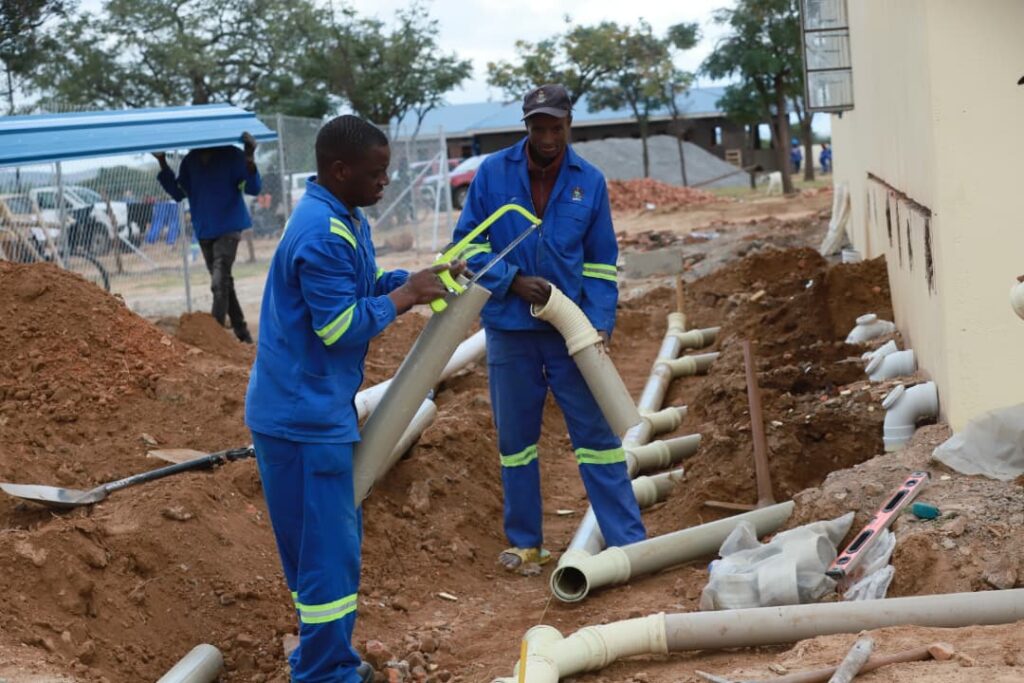
The Rural Infrastructure Development Agency (RIDA) is rolling out laboratories across every district: 9 in Beitbridge, 4 in Gwanda, 5 in Insiza, 7 in Umzingwane, 4 in Bulilima, 5 in Mangwe, and 6 in Matobo.
At Eche Primary School, RIDA has already delivered 12 new structures, including classrooms, an ICT block, and staff houses.
Mahetshe Primary head, Mrs Sibusiso Sibindi, beamed with pride. Her school now has 26 classrooms and new teachers’ quarters.
“We now have houses for our teachers,” she said. “That means the student-teacher ratio will improve. And with the new labs, effective learning is no longer a dream. I hope to see more pupils choosing science now.”
Mhike said the ministry aims to transform 1,000 schools across Zimbabwe, following the success of Nembudziya Government Secondary School last year.
“We continue to talk the same language,” he said. “Education 5.0 at primary. Education 5.0 at secondary. All we are talking about is innovation, innovation, innovation.”
For a child in Matabeleland South, science was once something other people learned. But with new labs, solar power, and a promise to leave no one behind, that story is finally being rewritten.
About Author

