By Jonathan Mbiriyamveka
By the time In The Presence Vol. 3: Great God arrives, Everton Mlalazi has long outgrown the framing of a conventional gospel recording artist.
Increasingly referred to as Minister Mlalazi, his latest body of work positions him not merely as a vocalist, but as a steward of worship—one deeply attentive to atmosphere, language, and spiritual intentionality.
Released on 2 January 2026, the 14-track album completes the third instalment of Mlalazi’s In The Presence series, a project conceived less as a commercial offering and more as a liturgical experience.
Rooted in African gospel expression yet conversant with contemporary worship sensibilities, Great God is meditative, restrained, and unhurried—inviting the listener into communion rather than performance.
The album’s arc is devotional in nature, opening with Muri Mutsvene, a reverent declaration of God’s holiness alongside Oncemore Six.

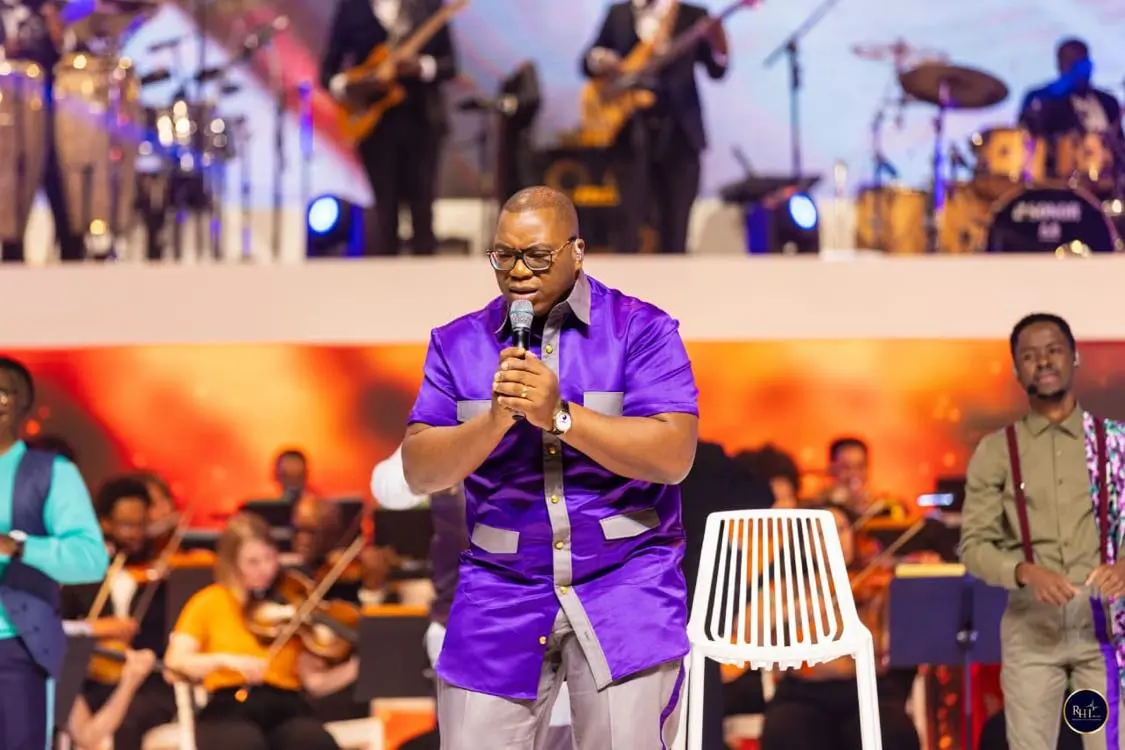
Owning the stage Minister Everton Mlalazi.
This sense of awe sets the tone for what follows, culminating early in the title track Great God, a collaborative high point featuring Nigerian gospel heavyweight Moses Bliss.
Rather than competing for vocal dominance, the pairing leans into collective exaltation, allowing space for the song’s central proclamation to breathe.
Mlalazi’s strength lies in his ability to balance intimacy with congregational accessibility.
Tracks such as Munondida Ndakadaro and Ndinoda Kuona function almost as whispered prayers, while Ngaavongwe and Makabongwe lift the album into moments of communal thanksgiving.
Even when tempo and instrumentation rise, the music resists spectacle, remaining grounded in reverence.
Language plays a crucial role throughout the album, with Shona and Ndebele compositions anchoring the work in lived spiritual experience.
Angeke Kulunge, released as the project’s lead single in November 2025 and praised by South African DJ Tira, exemplifies this grounding—offering reassurance through faith rather than theatrical flourish.
Similarly, Zuva Rangu, featuring Takesure Zama, frames God as both light and guide, carried by gentle melodic progression.
One of the album’s most affecting moments comes with Baba Ndiri Mana Wenyu, performed with the Harare MUMC Choir Vabvuwi.
The choral arrangement introduces a communal gravity, echoing ecclesiastical traditions while reaffirming themes of belonging and spiritual lineage.
Closing tracks such as Gwayana and Igazi Lemvana return the listener to foundational Christian symbolism, bringing the album full circle in quiet exaltation.
What distinguishes In The Presence Vol. 3: Great God is its refusal to chase trend or excess. In an era where gospel music increasingly mirrors mainstream production aesthetics, Mlalazi chooses stillness, depth, and spiritual discipline.
The album feels designed for altars—both personal and corporate—rather than charts.
In this latest offering, Everton Mlalazi affirms his place as one of Zimbabwe’s most intentional voices in gospel music, crafting worship that is culturally rooted, theologically grounded, and emotionally sincere.
Great God does not ask to be consumed casually; it asks to be entered, listened to slowly, and received as an act of devotion.
Streaming Link
About Author