

By Jonathan Mbiriyamveka
Harare — In a groundbreaking public-private partnership aimed at revolutionising Zimbabwe’s education sector, the Ministry of Primary and Secondary Education has joined forces with the People’s Own Savings Bank (POSB) to launch the POSB Solar and Starlink Facility—a bold step toward creating environmentally sustainable, digitally connected schools.
Launched at a high-profile event attended by education leaders, government officials, and development partners, the initiative seeks to “green” Zimbabwean schools through solar energy and internet connectivity—key enablers in the modern education landscape.
“We are witnessing a new era in Zimbabwe’s education journey—an era where sustainability, inclusivity, and innovation converge,” said the Minister of Primary and Secondary Education, Honourable Torerayi Moyo (MP). “Through this partnership with POSB, we are taking deliberate steps to ensure that no learner or school is left behind.”
At the heart of the programme is a USD 8.7 million fund dedicated to equipping schools—especially those in rural and underserved areas—with solar energy systems and Starlink internet connectivity. The project aims to benefit 450 schools, 2,700 households, and 400 SMEs by 2027.
The greening of schools, the Minister noted, is not just an energy issue but a national development imperative.
Reliable electricity enables digital learning, powers essential infrastructure like water boreholes and feeding schemes, and supports broader community development.
“The government’s commitment to greening schools is anchored in our climate response strategies and education reforms. POSB’s intervention brings that vision closer to reality,” added the Minister.
POSB CEO Mr. Garainashe Changunda said the partnership aligns strongly with Zimbabwe’s Vision 2030, the National Renewable Energy Policy, and international frameworks like the UN Sustainable Development Goals (SDGs).
“Schools are the backbone of our communities. When they thrive, societies prosper,” said Changunda. “Through this facility, we’re enabling schools to transition into green, tech-enabled learning centres that prepare students for the future.”
The initiative also includes:
• Loans of up to USD 10,000 per institution or household, collateral-free, with a 48-hour approval period.
• Customisable solar systems (1kVA to 20kVA) tailored to the needs of schools, SMEs, and homes.
• A potential carbon credit registration, positioning Zimbabwe to attract international climate finance.
Changunda emphasized that the facility is not just about infrastructure—it’s about empowering a generation of learners with access to digital tools and clean energy, while also supporting environmental stewardship.
The collaboration between the Ministry and POSB reflects a holistic approach to education transformation, bringing together energy, ICT, finance, and policy to deliver integrated solutions.
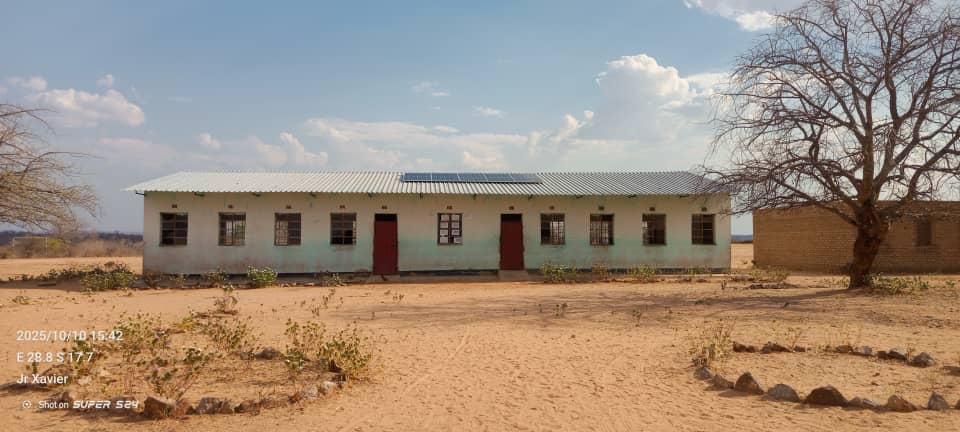
As part of its Corporate Social Responsibility, POSB also donated USD 20,000 to install solar kits in seven schools across Gokwe North, Chipinge, Bubi, and Bindura—a symbolic act reinforcing the tangible impact of the initiative.
“Greening education is not a luxury. It’s a necessity,” said Minister Moyo. “It’s how we prepare our children for the future, while preserving the planet they will inherit.”
With the foundation now laid, both the Ministry and POSB have pledged to expand the initiative and engage more partners to ensure every Zimbabwean child can learn in a clean, connected, and sustainable environment.
About Author


