

By Admore Mbonda in Kariba
HARARE – After a year-long hiatus, the National AIDS Council (NAC) held its Annual General Meeting (AGM) on Wednesday, signaling a fresh start for the organization and a renewed commitment to tackling HIV and AIDS in the country.
The AGM, which had been delayed throughout 2024 following the dissolution of the previous board, comes at a crucial juncture as the newly appointed leadership aims to revitalize Zimbabwe’s HIV response.
During the AGM, NAC Board Chair Mrs Nester Mukwehwa articulated the council’s ambitious vision for the future, emphasizing the need to accelerate efforts toward the goal of ending AIDS as a public health threat by 2030.
“Our main focus is to keep our programmes uninterrupted,” she stated, highlighting the importance of sustained support for individuals living with HIV and AIDS.
The council’s strategy aligns with the UNAIDS 95-95-95 targets, which aim for 95% of people living with HIV to know their status, 95% of those diagnosed to be on treatment, and 95% of those on treatment to achieve viral suppression.
Mukwehwa reaffirmed NAC’s determination to meet these goals, even as the organization navigates challenges posed by recent shifts in donor funding.
One significant hurdle cited was the “Trump stop order” imposed by USAID, which resulted in funding cuts affecting various HIV-related initiatives previously supported by international partners. However, Mukwehwa remained optimistic, stating,
“I wouldn’t call it a challenge as such, because it has not crippled our programmes.” To mitigate the impact, NAC has absorbed staff from affected organizations, ensuring that essential expertise remains within the council.
The AGM also spotlighted a pressing issue: the disparity in HIV service access for children, particularly in rural areas.
Dr. Benard Madzima, NAC’s Chief Executive Officer, addressed this concern, introducing the H2 initiative aimed at improving access to HIV services for children.
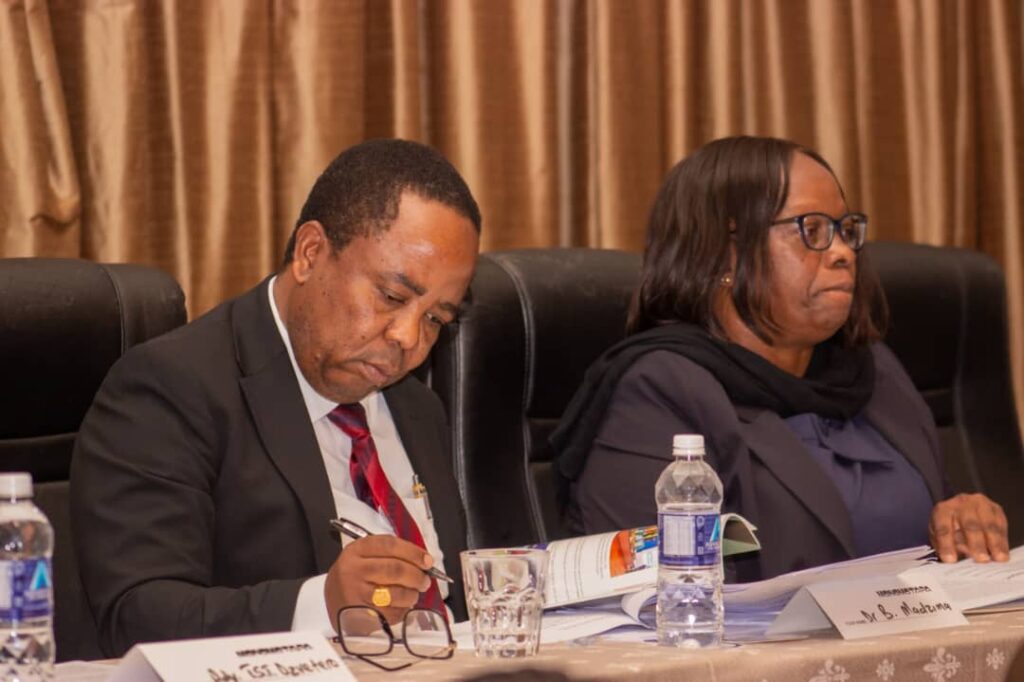
Dr Bernard Madzima (left) attending the NAC Annual General Meeting in Harare. (Pic by Daphne Machiri)
“We now have a national roadmap to improve children’s access to HIV services across all pillars,” he explained, emphasizing the need for comprehensive care from antenatal to postnatal stages.
This roadmap aims to enhance antenatal care coverage, ensuring that pregnant women in rural areas have access to crucial testing and treatment options. Furthermore, it seeks to advance pediatric HIV diagnosis and provide effective antiretroviral regimens for children.
The timing of the AGM is critical, as Zimbabwe, like many countries, adjusts its HIV response strategies in the wake of the COVID-19 pandemic.
The newly reformed NAC board’s focus on securing funding, improving service delivery, and addressing the needs of vulnerable populations reflects a broader commitment to achieving national and global HIV targets.
As the NAC embarks on this new chapter, the emphasis on collaboration with potential partners and the aim to fill funding gaps signal a proactive approach to ensuring that the fight against HIV and AIDS continues unabated.
The council’s renewed energy and strategic initiatives provide hope for a more effective response to one of the country’s most pressing health challenges.
About Author


