

By Jonathan Mbiriyamveka
Government is installing the necessary infrastructure to ensure attainment of digital economy by 2030.
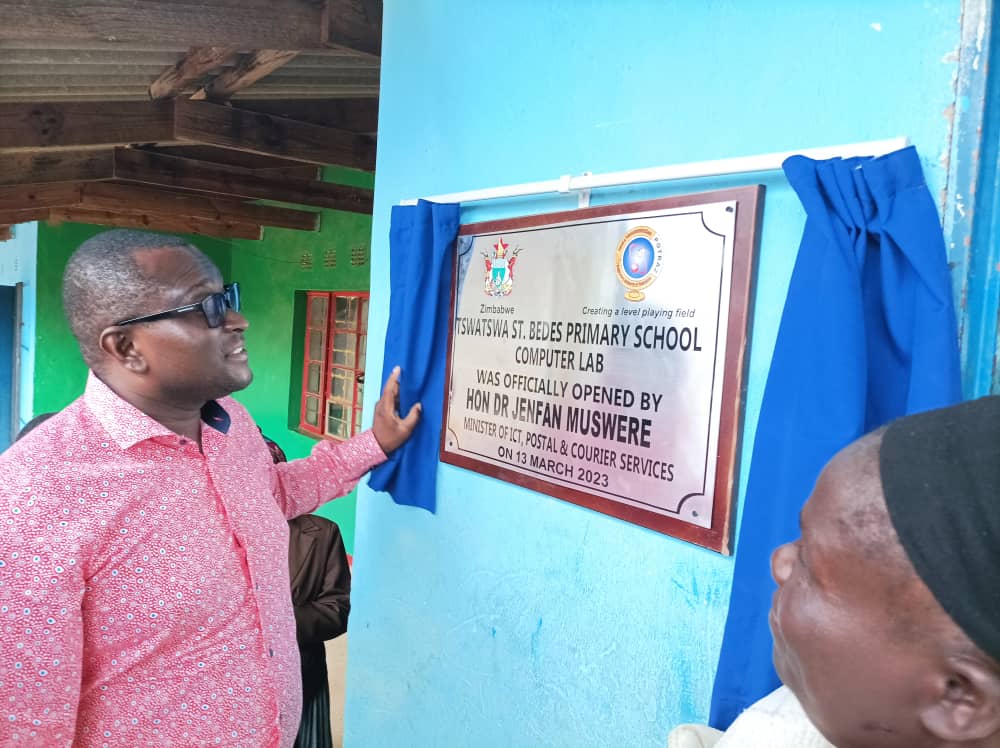
Speaking at the commissioning of computer laboratories at 24 schools in Makoni District, Manicaland province this week, Information Communication Technology, Postal and Courier Services Minister Dr Jenfan Muswere said they were mandated by President Mnangagwa to connect the unconnected to the digital age.

“We are thus here as disciples of His Excellency President ED Mnangagwa whose clarion call is to see Zimbabwe prioritise a digital economy in pursuit of vision 2030.
“So the inclusive approach ensures that all children in Harare, in Binga have got equal access, all the students, all the learners also have equal opportunity through digital empowerment and at the same time all the teachers are also capacitated to have necessary digital skills,” Dr Muswere said.
The ICT ministry working closely with the Postal and Telecommunications Regulatory Authority of Zimbabwe are installing computer labs at every school mostly in rural areas where each school gets at least 30 new laptops.
This is according to a documented plan by the ministry to attain vision 2030 through the Smart Zimbabwe 2030 Masterplan.
One of the focus areas of the master plan is smart education/e- learning.
Smart Education is the application of modern ICT (information communication technology) to not only facilitate learning in the classroom but virtually from any place and at any time.
Added to this, the government through the Ministry of ICT, Postal and Courier Services and in close collaboration with The Ministry of Primary and Secondary Education has set up School ICT laboratories all over Zimbabwe to enable learners and their teachers to have access to ICT services and training.
These facilities are platforms that are bringing ICTs and related services within affordable reach of previously marginalized and disadvantaged communities.
ICT access and use programs are targeting all Zimbabweans young and old with a deliberate focus on pupils so they can compete in the global village – a global village controlled by artificial intelligence, robotic, virtual reality, blockchain and big data.
About Author

