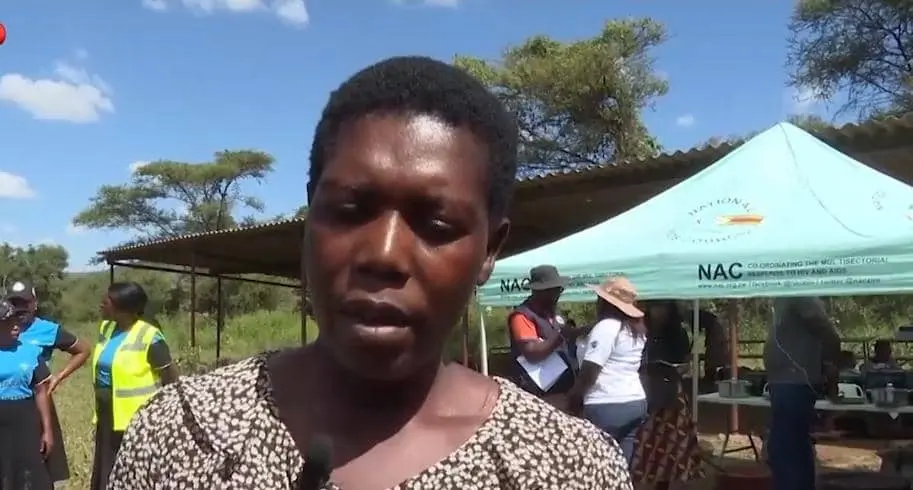
By CATHERINE MUROMBEDZI CORRESPONDENT
A fresh patent fight filed from Harare could decide how easily future HIV medicines reach millions across Southern and East Africa.
On 11 June, 2026, the Pan African Treatment Access Movement (PATAM) and Third World Network (TWN) submitted a “Third-Party Observation” to the African Regional Intellectual Property Organisation, challenging Gilead Sciences’ broad patent application for a family of HIV integrase inhibitor compounds.
The move puts ARIPO’s patent review process under the spotlight, and with it, the cost of HIV treatment in 21 African countries.
What is being challenged here is
Gilead’s application, Bridged Tricyclic Carbamoylpyridone Compounds and Uses Thereof PCT/US2023/065401, filed on 5 April 2023. It claims wide protection over a whole genus of HIV drugs for treatment and prevention.
If it is granted, it would give Gilead exclusive rights across all ARIPO Contracting States under the Harare Protocol.
That list includes Zimbabwe, Botswana, Kenya, Ghana, Uganda, Tanzania, Zambia, Malawi, Namibia and 12 others.
PATAM and TWN argue that the compounds aren’t new at all. In their submission they point to earlier Gilead patents and scientific papers that already disclosed very similar “bridged tricyclic carbamoylpyridone” structures and spirocyclic modifications before Gilead’s 2023 filing date.
Their claim: the application fails on “novelty” and “inventive step”, two basic legal tests for any patent to be awarded.
“ARIPO should provide clarity on how the information submitted has been taken into account,” said PATAM director Tapiwanashe Kujinga.
“We are confident the evidence shows serious deficiencies that warrant scrutiny before any exclusive rights are granted.”
Why does this challenge matters at this juncture?
It lands as African HIV programmes face funding shocks and aid cuts.
For civil society groups, rigorous patent checks aren’t legal nitpicking, they are about keeping medicine prices within reach.
ARIPO doesn’t allow formal “pre-grant opposition” like the US or India.
A Third-Party Observation is the only way researchers, generics makers and public-health groups can flag bad patents before they are granted. But TPOs don’t trigger a full hearing or give challengers a right to respond. That’s why PATAM and TWN are pushing ARIPO to explain exactly how their evidence is weighed.
Local groups have long warned that “secondary patents”, new patents on small tweaks, new uses, or formulations of existing drugs are being used to extend monopolies across the region by big pharma. If ARIPO grants this one without a hard look, generics could be blocked for years, even if the science was already public.
A quick primer on Patents and Medical Products.
What a patent is
A patent is a 20-year legal monopoly granted by a government. In exchange for publicly disclosing an invention, the patent owner gets the exclusive right to make, use, sell, or import that invention. No one else can legally copy it without permission.
Evergreening and the Stakes for Africa
This Gilead case is a textbook example of “evergreening”, the practice where pharmaceutical companies file a series of follow-on patents on small tweaks to an existing drug to extend monopoly control far beyond the original 20-year term. These secondary patents can cover new formulations, delivery methods, or, as here, a broad genus of chemically similar compounds.
For HIV medicines, evergreening is especially risky. Integrase inhibitors are the backbone of current ARV regimens and if a genus patent locks down the whole chemical family, it doesn’t just delay one drug. It can block multiple future generics across 21 ARIPO states.
In a region where treatment programmes are already facing aid cuts, evergreening shifts the question from “can we afford innovation?” to “can we afford access at all?”
What it means for medicines
For drugs, a patent creates:
– Market exclusivity: Only the patent holder, or companies they license, can produce and sell that molecule or use.
– Price control: With no generic competition, the patent holder sets the price. For HIV antiretrovirals, patents have historically kept treatment out of reach until generics entered.
– Geographic reach: ARIPO’s Harare Protocol covers 21 member states with one patent grant. One approval = monopoly from Botswana to Zimbabwe.
– Scope matters: This Gilead case isn’t about one drug. It’s a “genus patent”, claiming a whole family of related chemical structures. If approved, it could block not just one medicine, but future similar integrase inhibitors too.
Novelty vs Inventive Step: How Examiners Judge a Drug Patent
Patent offices don’t just ask “is this new?” They run two separate tests:
1. Novelty: “Has this exact thing been disclosed before?”
An invention must be new. If a single prior document, a patent, journal article, conference abstract – describes the exact same chemical structure or use, novelty fails. PATAM and TWN argue Gilead’s bridged tricyclic carbamoylpyridones were already disclosed in Gilead’s own earlier filings and scientific literature. If examiners agree, the application is dead on arrival.
2. Inventive Step: “Would this be obvious to an expert?”
Even if the exact molecule is new, a patent must involve a real technical advance. The test: Would a skilled medicinal chemist, looking at prior art, have arrived at this compound without inventive effort?
Swapping one chemical group for another that’s already well known, or using “spirocyclic scaffolds” that literature shows improve drug properties, often fails this test. It’s called “obviousness.” PATAM and TWN claim Gilead’s modifications were established strategies before 2023, so no inventive step exists.
For HIV drugs, this distinction is critical. Many secondary patents try to claim minor changes, a new salt form, a slightly different ring structure, a new use for prevention. If “inventive step” is applied loosely, companies can stack 20 years of monopoly on top of 20 more years, a practice called “evergreening.”
The controversy over secondary patents in HIV treatment patents sits at the heart of the access debate. They don’t cover the original breakthrough drug. They cover tweaks.
Why pharma uses them: A primary patent on a drug molecule lasts 20 years. But Research & Development (R&D) and clinical trials can eat 10+ years of that. Secondary patents on formulations, new indications like pre exposure prophylaxis (PrEP), or slight structural changes can extend market control beyond the original expiry.
Why health advocates push back: For HIV, integrase inhibitors are the backbone of modern treatment and prevention. If a genus patent on a chemical family is granted, it can block entire next generations of cheaper generics, not just one product. In a region where 25+ million people rely on ARVs, and budgets are tightening, that translates directly to who gets treatment.
India’s Section 3(d) law is famous for rejecting many secondary patents unless they show a real therapeutic advance. ARIPO doesn’t have an equivalent statutory filter, which is why the rigor of its examiners and transparency around TPOs, matters so much.
What Happens Next
ARIPO is currently doing “substantive examination” of the application. Examiners now have PATAM/TWN’s prior-art evidence on their desk. They must decide if Gilead’s claims clear both novelty and inventive step.
For HIV advocates, ARIPO’s response will be a signal. Does the office apply strict patentability standards when the stakes are public health? With treatment budgets under pressure, they argue the answer has to be yes.
As Kujinga put it, this is “an important test of ARIPO’s willingness to receive, consider and transparently engage with third-party evidence.” The decision could shape generic access to the next wave of HIV integrase inhibitors across a fifth of Africa.
This challenge is a litmus test for access in Africa.
The Gilead application is more than a legal filing. It’s a test of whether ARIPO will prioritise public health over patent breadth when the two collide.
If the office applies strict standards on novelty and inventive step, it signals that African patent systems can push back against evergreening and protect space for generics. If it grants broad protection without transparently weighing the TPO evidence, it risks locking 21 countries into higher drug prices at the exact moment HIV funding is shrinking.
For millions who depend on ARVs, the difference is not theoretical. It’s the gap between a US$2 generic tablet and a US$200 patented one. It’s whether the next integrase inhibitor reaches clinics in Harare, Lilongwe and Kampala, or stays behind a patent wall for another decade.
ARIPO’s decision won’t just settle one case. It will set the bar for how Africa balances innovation incentives with the right to health. That bar, right now, is being drawn in Harare.
● Feedback: cathymwauyakufa@gmail.com
About Author