

Staff Writer
UN Resident and Humanitarian Coordinator Edward Kallon praised FAO’s leadership in addressing food security and resilience at the recent FAO Multi-Disciplinary Team Meeting in Zimbabwe.
Mr Kallon commended FAO and the Zimbabwean government for their collaborative approach, especially as southern Africa faces escalating food insecurity due to climate challenges.
FAO’s technical expertise and interdisciplinary approach are critical, Mr Kallon noted, as the SADC Regional Assessment Programme recently reported that over 40 million people face food insecurity annually, with 27 million currently affected.
The meeting underscored the urgent need to transform agri-food systems to curb malnutrition and ensure sustainable agriculture.
The “UN 2.0” strategy, spearheaded by the UN Secretary-General, was presented as a transformative approach that redefines the UN’s role, integrating innovation, data, and digitalization to support sustainable development.
“We must rethink, refocus, and recharge our commitment to meet the Sustainable Development Goals,” Mr Kallon emphasised, urging the region to leverage FAO‘s expertise.
Mr Kallon highlighted upcoming regional initiatives, including Agribusiness, One Health, and Mechanization, which promise socioeconomic growth and food security if effectively implemented.
The Hand in Hand Initiative also aims to boost trade and investment across Africa under the African Continental Free Trade Area Agreement.
Mr Kallon stressed the need for robust partnerships, particularly with SADC, to deliver on SDG 17’s goal of collaboration.
“The challenges we face are complex, requiring interdisciplinary capabilities,” he noted.
Through a united approach involving governments, civil society, the private sector, and development partners, the region can drive sustainable change and resilience in agriculture to meet the 2030 Agenda.
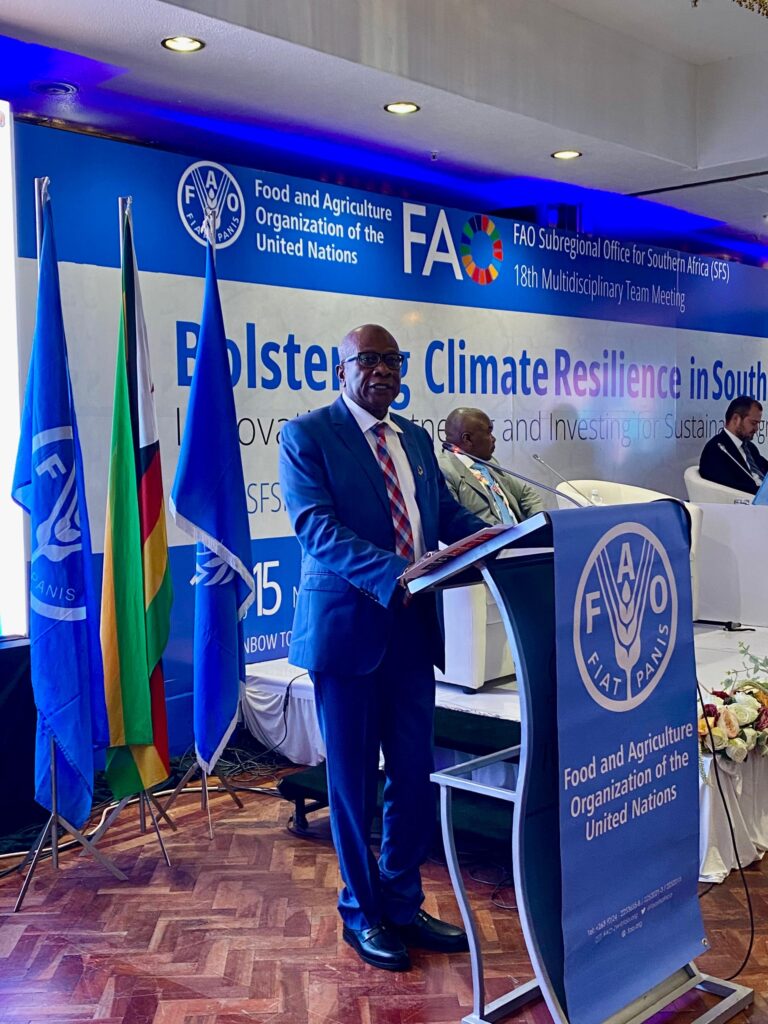
UN Resident and Humanitarian Coordinator Mr Edward Kallon.
About Author

