

BY DR. TONY M MONDA
March is the month Zimbabwe lost Bernard Matemera’s artistic genius. A dominant figure in the evolution of Zimbabwean contemporary stone sculpture, First Generation Shona sculptor Matemera stood out as one of the most original identic artists.
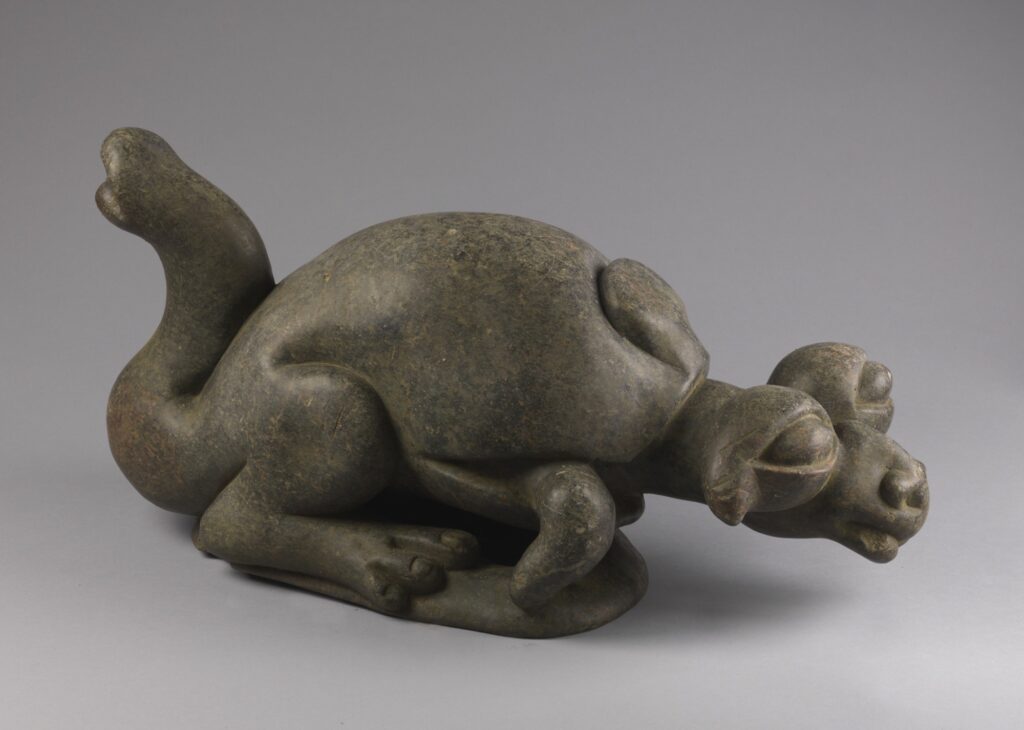
Very African and sometimes grotesque in imagery, his works were initially difficult to assimilate but often disturbingly emotive and imbued with a deep sense of pathos. The round, solid, and massive bodies seem to symbolize the vitality of womanhood.
They were the subject matter of his dreams: animals, spirits, people and creatures, and the ever-present metamorphosis between them. His uncompromising and powerful images are now found in public and private collections throughout the world.
Sub-saharan Africa, an area of the world with the earliest record of artistic human life, the ancient ways of a rural countryside, conflate with and modern cities with high-rise office buildings. These juxtapositions both shock and strengthen; the past and its wisdom are often close at hand, and like the rivers of Africa, run deep as time, not unlike contemporary Zimbabwean Shona sculpture.
The use of the word “primitive” and the anonymity accorded indigenous art by foreign institutions have worked in subtle ways to the artists' detriment, denying them respect and recognition.
These stereotypes are further fostered by pervasive efforts to categorize African art in conformity with western aesthetic criteria. Every aspect of African culture is, in some way, stamped by others. While setting traditional art apart in museums and books has value, it can suggest that it is complete and finished. The reverence accorded it is sometimes construed to suggest that contemporary changes in African art are a travesty. Although traditional elements – the frequent use of symbolism, metaphors, organic forms, inherent rhythms, and (much of the time) religious contexts – do link cultures on the continent, they also connect the continent to the Diaspora and the universe.
These traditional elements are often present in the works of contemporary Africans who like other artists, select qualities appropriate to them. Contemporary African artists have faced difficult struggles, especially when confronting prevailing Western misconceptions and prejudices about Africans and Africa.
Bernard Matemera is acknowledged as one of Zimbabwe’s contemporary master sculptors. In Zimbabwe he was the most resolute complete sculptor; his statues were conceived in the total voluminous round, nothing was left unresolved.
Matemera worked in the style and mould of Botero, Rubens and Saint de Phalle. His work was metamaphorical embodying, surreal, phantasmagorical personages that combined animal, man, and bird.
He often created hybrid beings transmogrifying into hybrid human and animal creatures based on a tree-dwelling group of Shona people known as the Korekore “Vadoma” of the Zambezi Valley, whose limbs and phalanges were bound to create three digital hands and feet to facilitate the climbing of trees to gather wild honey and indigenous forest berries.
Matemera’s work gave an animated, cinematic presence to this rare reclusive ethnic group of Zimbabwean people. His massive pieces had a bewitching character, halfway between the comic and the tragic. Bulbous eyes, flared nostrils, tumescent lips, bloated body limbs, thickset figures, standing with a primeval steatopygia and the frontal vertical stance of ancient African art – like that of Roman-Greek statuary – a relaxed tension. Some of his works had a short fat tail like a dinosaur, as if it came from the nethendral world; with the trans-position of features – i.e mouth became navel; navel became mouth and breasts became eye,– characteristic of surrealist biomorphism.
Humble, humorous and at times intense, especially when he worked, Matemera regarded me, when we met, somewhat suspiciously. I was a young man then and he was concerned about “why a young man like you would be interested in writing about me and not how to learn to sculpture from me . . .” he said.
Matemera was also concerned whether I could write “the Bosses language better than them and maybe explain what I am doing . . .” I said I would give it a try and explained that I was studying Art History and Theory and Anthropological Symbology. It meant nothing to the intuitive sculptor. He reiterated that I finished my schooling first – (High) Secondary school – before I decided to fiddle with stones . . .”this is not for learned people “. He told me. (©Tony Monda (21 Feb 1989), Tengenenge, Horse Shoe Farm, Guruve).
Describing his powerful sculpture, Matemera said to me “All things have a spirit trees, rivers, mountains and even stones; nothing is inanimate. I come from the earth . . . I am the earth”.
The concept of pride and self-consciousness took even clearer expression as Matemera exalted African traditions through his work. The sculpture entitled “Great Spirit Woman”, for instance, exposited the African concept of spirit mediums.
In another interview I had with Matemera, he explained the inspiration for his unusual animalesque figures saying: “in 1963 I had a dream about these three toed and three-fingered people who changed into animals and assisted me to hunt game. They climbed trees and hunted for honey with their deformed limbs – they have fascinated me since that time. . . ”
A dominant personality, Matemera’s style remained unaffected by contemporary developments up to the time of his death. One of the most characteristic features of Matemera’s work was the heroic grandeur and amplitude of his figurative sculpture which he endowed with vitality and static energy. His treatment of figures which were often inflated or deformed to emphasise sensual and expressive qualities, gave his subjects an often-mystical power.
In his sculptures there was an unspent power and reserve of energy, with hints of hermaphroditic qualities which is unusual in Zimbabwean sculpture. His male figures are of womanly proportions with round thighs and buttocks, and his female figures have the aggressive stance of the male. Each sculpture is a celebration to the monumental, yet there is a sense of innocence and a freshness of a new experience.
Fully formed his work was capable of communicating in a universal language of powerful, emotional, sexual, physical and culturally challenging imagery to reveal the relationship between humans, animals and the spirit world.
Italian diplomat and writer Ferdinand Mor, in his book ‘Shona Sculpture’, described Matemera’s work as follows: “His African neo-expressionism, often represented in enormous and deliberately grotesque dimensions, oscillates between the humorous and the tragic.”
As an art critic this writer feels Matemera’s works summon extreme emotions from the viewer-sensuality, fear, empathy and self-consciousness.
Matemera‘s work is amongst Africa’s finest contribution to the world of modern contemporary art.
His bold work dealt in the pleasures of the flesh with a wide distribution of the properties of man, animal and spirit and, even if not universally understood, it always demanded attention. The presence of his sculpture was formidable. All features of the body jutting into space – the breasts, nose, lips – the viewer was confronted by its physiognomy.
Through this technique Matemera achieved a realistic approach at capturing nature in such movement and drama and realism so perfectly and explicitly, – capturing her as a fertile and sensual female nude. The depiction of the human form through his depiction of corpulent women, his plump, tactile figures belied a wry worldview.
Bernard Matemera was born in 1946, in the Northern district of Guruve, in Mashonaland, a Korekore stronghold from the 4 th century. Matemera was the son of a village headman, living in what was then Southern Rhodesia. A Korekore, Zezuru, one of the Shona sub-tribes, like other village boys, he herded cattle, made clay pots and carved wood and had only four years of formal primary schooling.
He started sculpting at Tengenenge, a sculpture community situated in a commercial tobacco farming area near the village of Guruve, north-west of the capital Harare, where he spent his entire professional career. Tengenenge was a former tobacco farm set up by an insolvent tobacco farmer, Tom Bloomfield after the imposition of UN-imposed international sanctions that resulted from Rhodesia’s Unilateral Declaration of Independence (UDI), in 1965, which affected the export of tobacco.
In 1963 Matemera was working as a contract tractor driver at Tengenenge when he met Bloomfield, whose farm had extensive deposits of serpentine stone suitable for sculpture. In 1966, Bloomfield was persuaded to diversify the use of his land which eventually grew into the community of sculptors whose seminal works and original creations became icons of their time.
In 1968, three years after UDI in colonial Rhodesia, at the age of 22, Matemera began to sculpt and quickly established his extraordinarily unique and powerful style to which he remained true throughout many years of exploration, hardship and success. He held his first exhibition in 1969 at Lidtchi Art Gallery, South Africa.
Dr. Tony Michel Monda holds a PhD. in Art Theory and Philosophy and a DBA in Post-Colonial Heritage Studies. He is an arts, culture and music critic for Gemnation News. For Comments E-mail: tonym.MONDA@gmail.com
About Author

