

Gender Reporter
Padare Enkundleni Men’s Forum on gender, an organization that is fighting for a gender just society has partnered with Women’s Academy for Leadership and Political Excellence (WALPE) with a view to lessen the burden of unpaid care and domestic work (UCDW) on women.
The day long engagement which took place at a Harare hotel saw Padare engaging leadership from the Zimbabwe Congress of Trade Union (ZCTU) regional and sector specific structures as well as captains of industry.
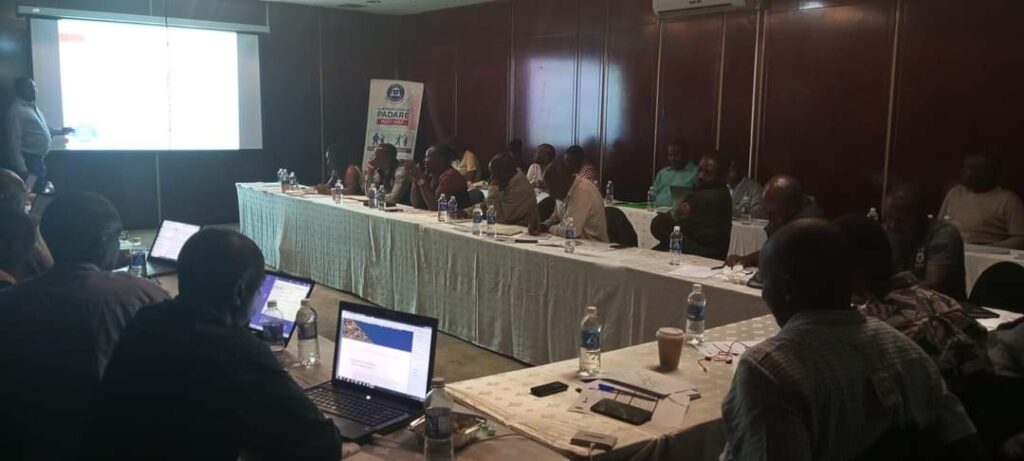
Of this engagement, Padare Programmes Officer Paul Vingi said they are doing all they can to ensure that UCDW is a shared responsibility for men and women.
“Unlike what gender stereotyping and norms have made us believe, UCDW must be a shared responsibility and through this engagement sector, we hope for a policy shift that recognizes the role of women and that man must also play their part.
Over the years we have seen women suffer the brunt of UCDW even in the workplace and through this engagement we are pushing for workplace policies that equally facilitate recognition and redistribution of UCDW,” he said.
Vingi told Gemnation that according to international labour organization (ILO), UCDW is known to have an impact on labour force participation.
“Time constraints are barriers for women to participate in economic activities or labour markets. The higher the gender gaps in distribution of care responsibilities, the higher the gender gaps in labour force participation.
“There is coherence between female labour force rate and time spent for unpaid care and domestic work. In countries where women spend an average of five hours on unpaid care activities, 50 per cent of women in the working age-population are active in the labour force, while in countries where women spend three hours on unpaid care work, 60 per cent of women are active.
“Performing unpaid care and domestic work is one of the reasons for not being in the labour force, as reported by 25 per cent of women and 3 percent of men in European countries,” he said.
Vingi also intimated that according to UN Women, UCDW also has a bearing on earnings in the market place hence the need to engage the private sector over this anomaly.
‘Persistent gender pay gaps are found in almost all labour markets. Globally, women on average are paid 24 per cent less than men. At the regional level, the pay gap ranges from 33 per cent in South Asia, to 14 per cent in the Middle East and North Africa.
Overall, gender pay gaps have narrowed slightly in the last decade, but the pace of change has been slow and large gaps remain in most countries. Our engagement with ZCTU is that beyond education and awareness on UCDW, we also push for policies that ensure equality and justice for all,” he said.
Various speakers at the UCDW workshop thanked the organisers and partners for the eye-opening engagement and highlighted that it is through such honest liaison that there can be a solution to the burden of UCDW.
Padare working with various partners among them Oxfam, WALPE and WILSA has pushed for legislation that recognises UCDW and has since engaged parliamentarians and the media among other key stakeholders.
About Author

